Table of Contents
Introduction
In the online travel landscape, affiliate marketing has emerged as a cost-effective means of generating revenue. It enables the business of travel affiliate profits through hotel price scraping, exploring how this technique can be effectively optimized to maximize earnings.
However, travel affiliates compete in a crowded market where traffic is expensive, and margins are thin. Many rely only on standard affiliate links and basic comparison widgets provided by large booking platforms. This limits differentiation and pricing transparency.
When every site shows the same rates in the same format, users have no reason to choose yours. The pressure increases as dominant brands control inventory, advertising budgets, and search visibility. Smaller affiliates must find effective strategies to compete.
Hotel price scraping (HPC) helps these affiliates to compete. When HPC is used within legal and contractual boundaries, it gives affiliates deeper market visibility. It supports pricing intelligence, spotting arbitrage, niche comparison, and data-driven monetization strategies.
This article explains how travel affiliates structure profit models around hotel price scraping, where revenue comes from, what infrastructure is required, and which risks must be managed. Thus, using powerful scraping tools such as Outscraper to

Understanding Hotel Price Scraping
Hotel price scraping involves extracting data from various hotel booking websites to gather information. This data can include room rates, availability, amenities, and customer reviews. This is helpful for market analysis, as businesses can make informed decisions regarding pricing strategies, promotional offers, and market positioning. This data can also be used to compare prices across different platforms, providing users with the best deals. The process typically involves the following steps:
- Data Collection: Using web scraping tools, data is collected from multiple hotel booking sites. May include prices, amenities, promotions, customer reviews, etc.
- Data Processing: The collected data is cleaned and organized to ensure accuracy and usability. A structured and comprehensive dataset is essential to spot trends, sudden price fluctuations, and market opportunities.
- Data Presentation: The processed data is displayed on a website or application, allowing users to easily compare hotel prices and make informed decisions.
Why Scrape Hotel Prices?
Scraping hotel prices provides valuable insights into competitive analysis, market trends, dynamic pricing, and consumer behavior or insights. By gathering data from multiple sources, businesses can make informed decisions, improve pricing strategies, and develop a better quality of customer experiences.
- Competitive Analysis: Understanding how competitors price their rooms can help businesses adjust their rates to remain competitive. It also allows for benchmarking on what is effective and what should not be implemented in the business, particularly on the deals or promotions that can gain more traction with customers.
- Market Trends: Analyzing price fluctuations over time can reveal trends that inform pricing strategies. It also opens an opportunity to determine which products or services have a lasting and effective impact on customers’ patronage.
- Dynamic Pricing: Real-time data allows hotels to implement dynamic pricing models, adjusting rates based on demand and competition. A highly effective benchmark to help customers make decisions decisively without compromising quality and value for their money.
- Customer Insights: Gathering customer reviews and ratings can provide insights into guest preferences and areas for improvement. It builds reputation and improves brand PR, giving confidence and assurance that customers’ concerns will be taken care of.
The Role of Affiliate Marketing
Affiliate marketing is a performance-based marketing strategy where businesses reward affiliates for driving traffic or sales to their websites. In the context of hotel price scraping, affiliates can earn commissions by directing users to booking sites through their unique affiliate links. Here’s how it works:
- Partnerships: Affiliates partner with hotel booking platforms that offer affiliate programs. It is a performance-based marketing strategy where businesses reward affiliates for driving traffic or sales to their products or services. They are often bloggers, influencers, or website owners who promote the business’s offerings through unique affiliate links.
- Link Generation: Affiliates generate unique tracking links to the hotel booking sites. Affiliate links are special URLs that contain a unique identifier for each affiliate. When a user clicks on an affiliate link, the identifier allows the merchant to track the traffic and sales generated by that affiliate. This tracking is essential for calculating commissions and ensuring that affiliates are compensated for their efforts.
- Traffic Generation: Affiliate marketing plays a pivotal role in traffic generation, offering a range of methods and benefits for both affiliates and merchants. By taking advantage of content marketing, social media, email marketing, SEO, and paid advertising, affiliates can effectively drive traffic to merchant websites. Despite the challenges, the advantages of cost-effectiveness, expanded reach, enhanced credibility, scalability, and data-driven insights make affiliate marketing a valuable strategy for businesses looking to increase their online presence and sales.
- Commission Earnings: When users book hotels through the affiliate links, the affiliate earns a commission based on the sale. Commission earnings in affiliate marketing can vary widely based on several factors, including the type of product, the commission structure, and the affiliate’s marketing strategy. Here are the primary commission structures:
- Pay-per-sale (PPS): Affiliates earn a commission when a consumer makes a purchase through their referral link. This is the most common model, with commissions typically ranging from 5% to 50% of the sale price.
- Pay-per-click (PPC): Affiliates earn a commission based on the number of clicks generated through their referral links, regardless of whether a sale is made. This model is less common and often used for low-cost products.
- Pay-per-lead (PPL): Affiliates earn a commission when a consumer takes a specific action, such as signing up for a newsletter or filling out a contact form. This model is often used in service-based industries.
- Recurring commissions: Some affiliate programs offer recurring commissions for subscription-based products or services. Affiliates earn a percentage of each recurring payment made by the customer they referred.
Benefits of Affiliate Marketing for Hotels
- Increased Visibility: Partnering with affiliates allows hotels to reach a broader audience, including potential guests who may not have discovered them through traditional marketing channels.
- Cost-Effective Marketing: Since affiliate marketing is performance-based, hotels only pay for actual bookings generated through affiliates, making it a cost-effective strategy.
- Enhanced Credibility: Affiliates, especially well-known travel bloggers or influencers, can lend credibility to a hotel’s offerings, encouraging their followers to consider the hotel for their travel needs.
- Diverse Marketing Channels: Hotels can diversify their marketing efforts by collaborating with various affiliates, each targeting different demographics and travel preferences.
Building a Hotel Price Scraping Business Model
1. Market Research
Before diving into hotel price scraping, it’s essential to conduct thorough market research. Identify your target audience, analyze competitors, and understand the demand for hotel price comparison services. This information will guide your strategy and help you position your business effectively.
2. Choosing the Right Tools
Selecting the right web scraping tools is crucial for the success of your business. Choose a tool that aligns with your technical expertise and business needs. That fits perfectly with Outscrapers user-friendly interface with structured and enriched data that adds value.
3. Compliance with Legal Regulations
When scraping data from websites, it’s vital to comply with legal regulations and the terms of service of the sites you are scraping. Some websites may prohibit scraping, while others may have specific guidelines. Always check the robots.txt file of the website and consider reaching out for permission if necessary.
4. Data Storage and Management
Once data is scraped, it needs to be stored and managed effectively. Consider using databases like MySQL or MongoDB to store the data securely. Implementing a robust data management system will ensure that your data is easily accessible and up-to-date.
5. User Experience and Interface Design
Creating a user-friendly interface is essential for attracting and retaining users. Focus on:
- Responsive Design: Ensure your website or application is mobile-friendly.
- Intuitive Navigation: Make it easy for users to search for hotels and compare prices.
- Clear Call-to-Actions: Use prominent buttons and links to guide users towards booking.
6. SEO and Content Marketing
To drive organic traffic to your site, invest in search engine optimization (SEO) and content marketing. Create valuable content related to travel, hotel reviews, and destination guides to attract users. Optimize your website for relevant keywords to improve search engine rankings.
7. Monetization Strategies
In addition to affiliate commissions, consider diversifying your revenue streams. Potential monetization strategies include:
- Sponsored Listings: Charge hotels for featured placements on your site.
- Ad Revenue: Utilize Google AdSense or other ad networks to generate income from ads displayed on your site.
- Subscription Models: Offer premium features or services for a subscription fee.
Challenges and Solutions of Hotel Price Scraping
1. Data Accuracy
One of the primary challenges in hotel price scraping is ensuring data accuracy. Prices and availability can change rapidly, leading to discrepancies. To reduce this, implement regular scraping intervals and update your database frequently.
2. Website Blocking
Some websites may employ measures to block scraping attempts. To avoid this, consider using rotating IP addresses, user-agent rotation, and implementing delays between requests to mimic human behavior.
3. Competition
The travel affiliate market is competitive, with many players vying for attention. To stand out, focus on niche markets, provide unique value propositions, and build a strong brand presence.
What is Outscraper?
Outscraper is a web scraping service that enables users to extract data from websites without the need for extensive programming knowledge. It provides a user-friendly interface and a range of features that make it suitable for various data extraction tasks. With Outscraper, users can scrape data from multiple sources, including hotel booking websites, review platforms, and travel aggregators, to gather insights into pricing trends and competitor strategies.
Benefits of Hotel Price Scraping Using Outscraper
- Competitive Analysis: By scraping hotel prices from competitors, businesses can gain insights into market positioning and pricing strategies. This information can help identify gaps in the market and opportunities for differentiation.
- Dynamic Pricing Strategies: Understanding how prices fluctuate based on demand, seasonality, and local events allows businesses to implement dynamic pricing strategies. This can lead to increased occupancy rates and higher revenue.
- Market Trends: Scraping data over time can reveal trends in hotel pricing, helping businesses anticipate changes in consumer behavior and adjust their marketing strategies accordingly.
- Affiliate Marketing Optimization: For affiliate marketers, having access to real-time pricing data enables them to promote the best deals to their audience, increasing conversion rates and commissions.
How to Use Outscraper for Hotel Price Scraping
Step 1: Set Up an Outscraper Account
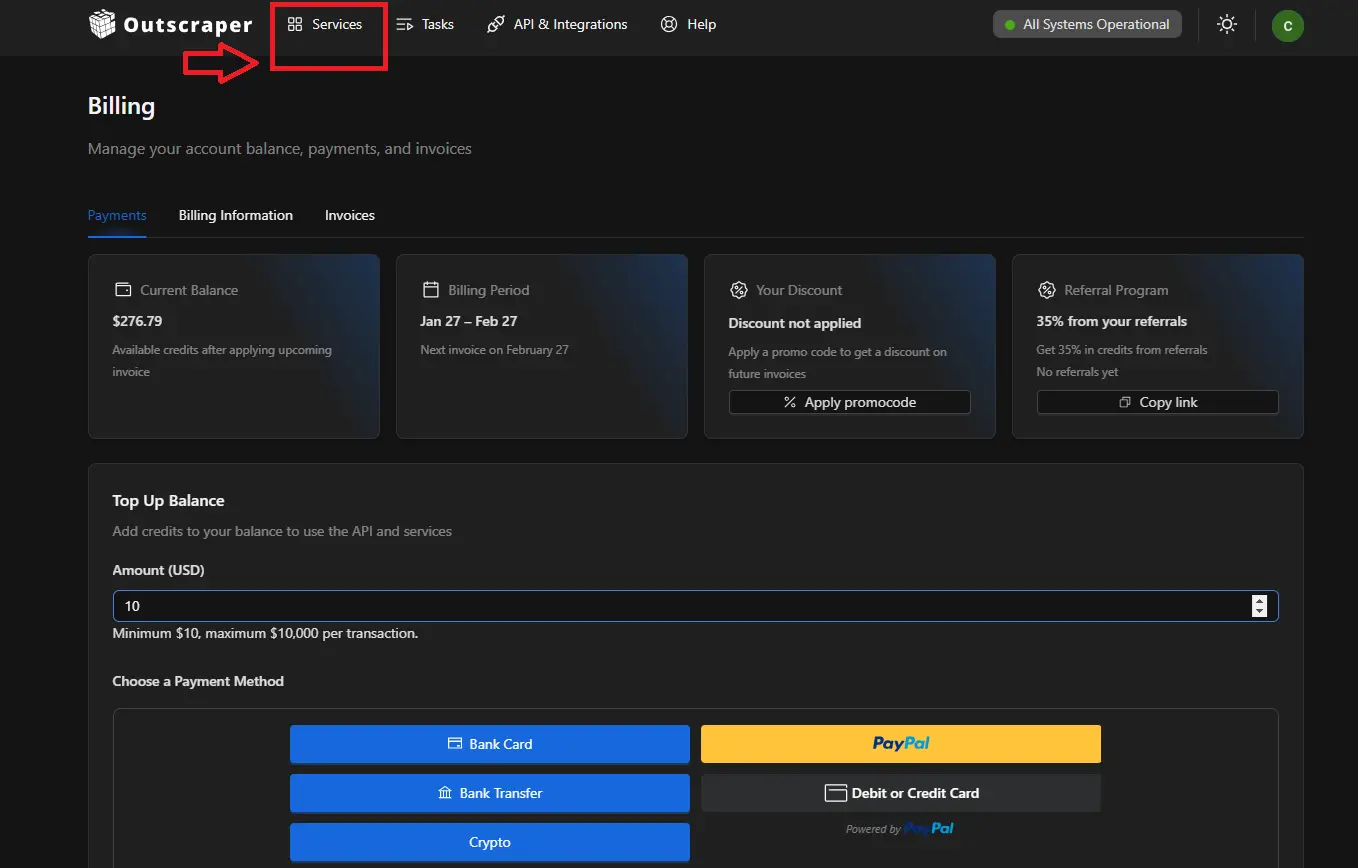
To get started, create an account on the Outscraper platform. Once registered, you can access the dashboard and choose your services.
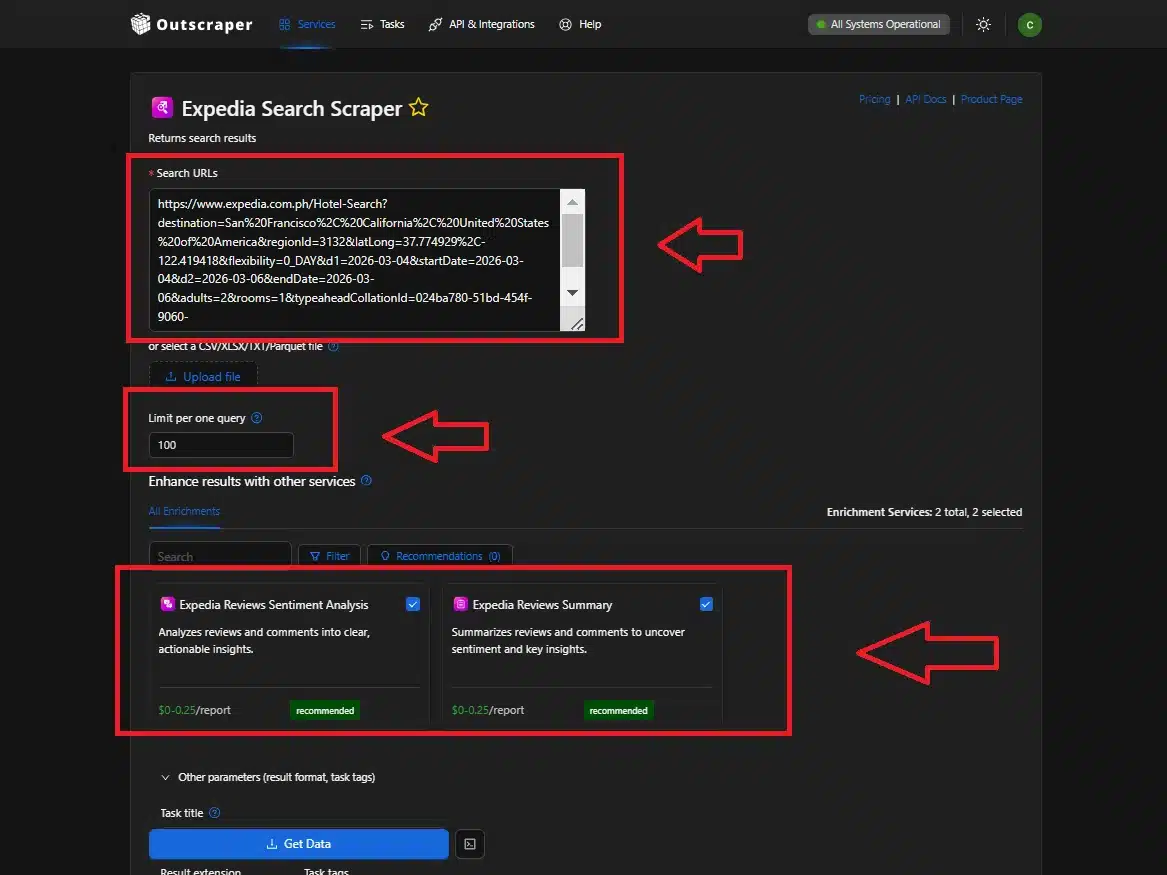
Step 2: Define Your Scraping Parameters
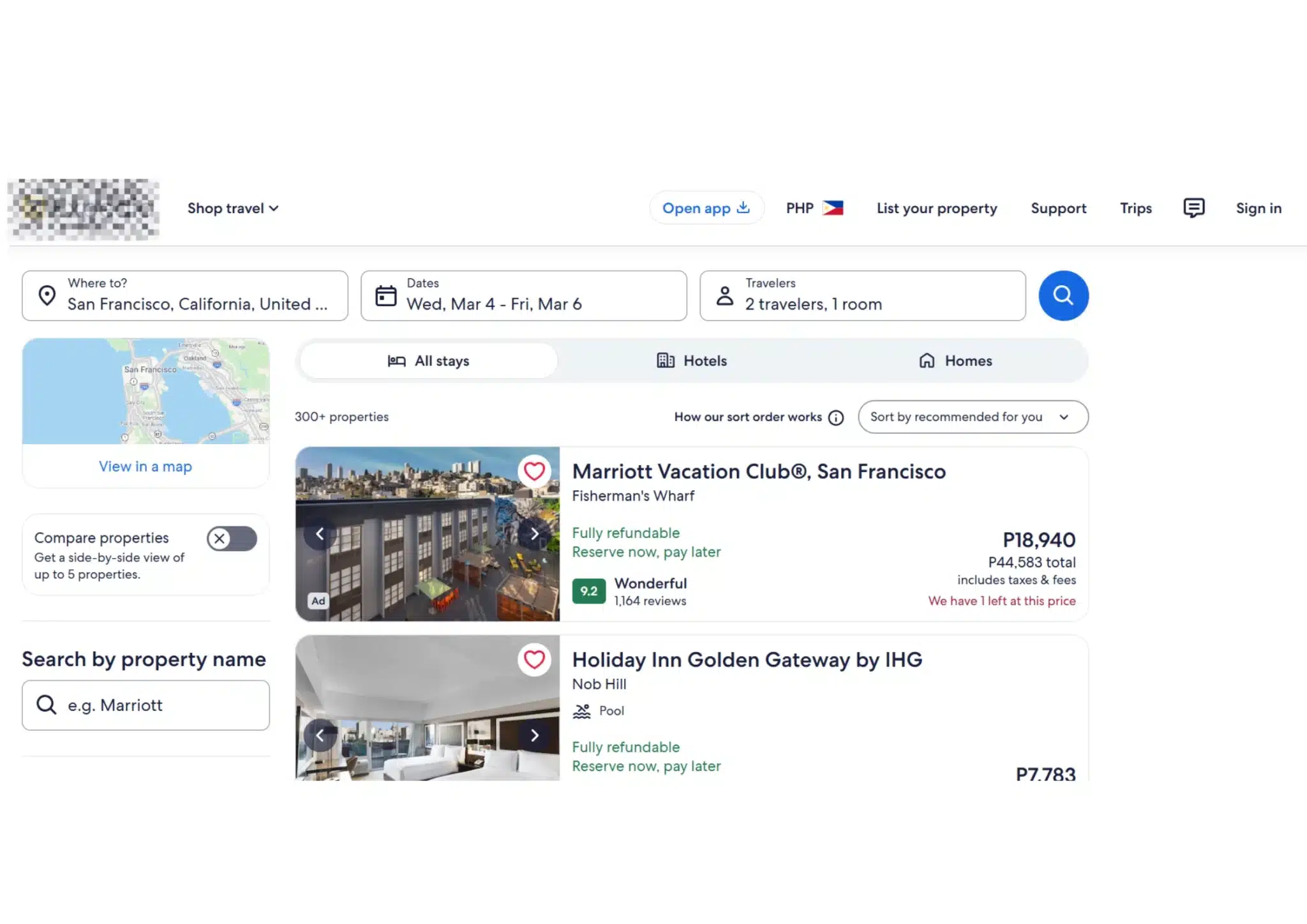
Identify the specific hotel booking websites you want to scrape. Popular booking sites (Booking.com, Expedia, Hotels.com, Airbnb, etc.).
Specify the parameters for your scraping task, such as:
- Location (city or region)
- Check-in and check-out dates
- Number of guests
- Type of accommodation (hotel, hostel, etc.)
Step 3: Run the Scraping Task
Once your parameters and data fields are set, initiate the scraping task. Outscraper will collect the data from the specified websites and compile it into a structured format, such as XLSX, CSV, JSON, or Parquet.
Step 4: Inspect Data Fields
In using Outscraper, enriched values are included when extracting hotel insights. Typical fields include hotel name, price per night, rating, number of reviews, amenities offered, etc. Checking data fields may help users prioritize which parts are included or excluded from your database.
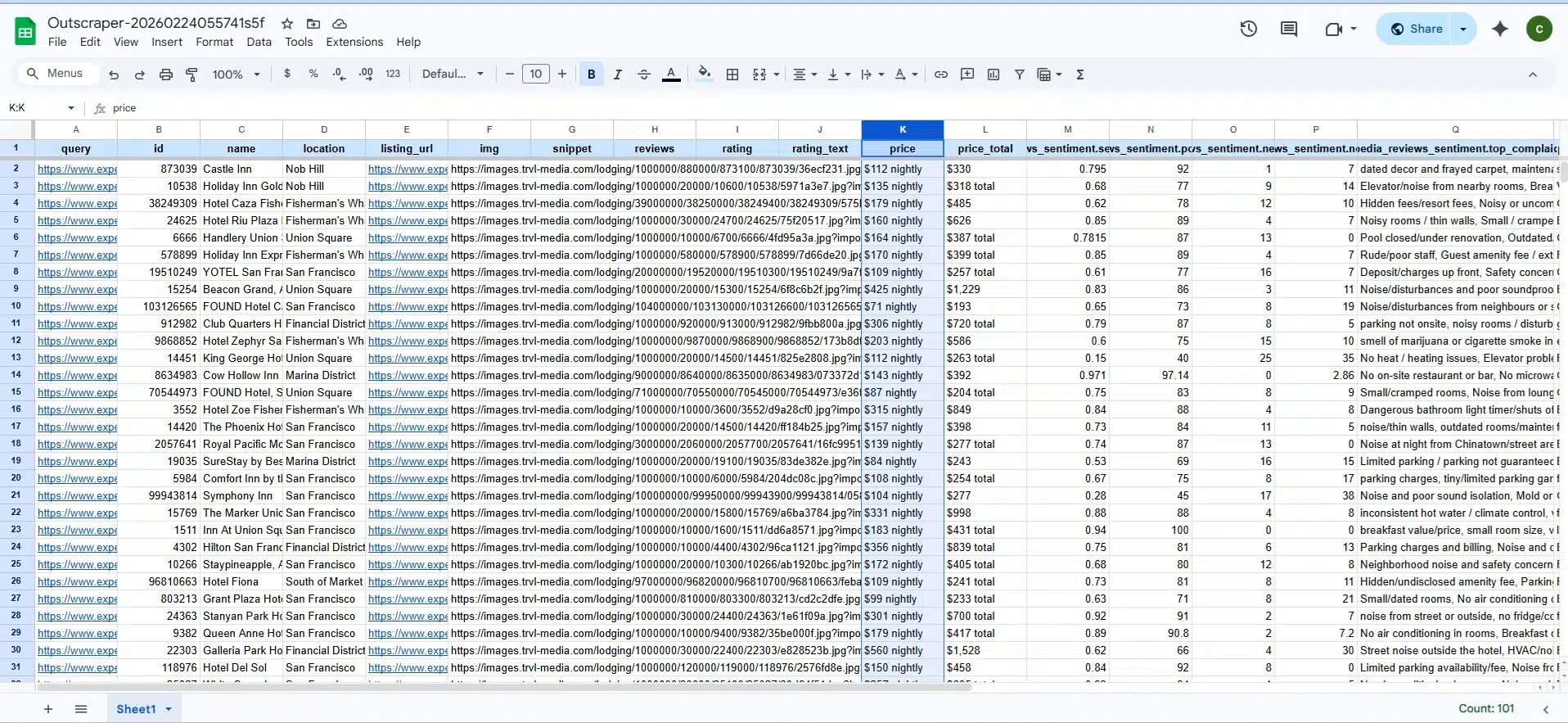
Step 5: Analyze the Data
After the scraping is complete, analyze the collected data to identify trends, pricing strategies, and competitive positioning. Use this information to inform your marketing strategies and optimize your affiliate offerings.
Conclusion
Travel affiliate profits depend on differentiation, pricing intelligence, and execution discipline. Standard affiliate widgets rarely create an edge because many sites display identical inventory and rates. Hotel price scraping changes this dynamic when you operate within legal and contractual limits. It gives you structured visibility into pricing, availability, reviews, and positioning across booking platforms.
With reliable data collection, cleaning, and presentation, you improve competitive analysis, detect pricing gaps, monitor trends, and support dynamic content strategies. This strengthens your value proposition, improves conversion rates, and supports multiple revenue models such as pay-per-sale, sponsored listings, ads, and premium features. A sustainable model also requires infrastructure for storage, frequent updates, compliance review, and user-focused interface design.
Outscraper supports this workflow by enabling large scale extraction of hotel related data from booking and review platforms without heavy effort. Users define locations, dates, accommodation types, and required fields, then export structured datasets in formats such as CSV, JSON, XLSX, or Parquet. This reduces manual collection time and supports faster analysis and monetization decisions.
If you want to compete in a crowded travel affiliate market, you need more than traffic. You need pricing intelligence, operational discipline, and tools that help you transform raw hotel data into structured insights. Outscraper fits into this model as the data acquisition layer that powers comparison, optimization, and revenue growth.
FAQ
Most frequent questions and answers
Affiliate marketing is a performance-based strategy where individuals or businesses (affiliates) promote another company’s products or services online and earn commissions for driving traffic, leads, or sales.
A hotel price comparison website is an online platform that aggregates and compares room rates, availability, and deals for hotels (and often other accommodations like resorts or B&Bs) across multiple booking sites.
A Restaurant and Hospitality Business Database is a specialized dataset compiling detailed information on restaurants, hotels, and related hospitality venues for B2B purposes like lead generation and market analysis.
Reputation management involves monitoring, influencing, and maintaining a positive public image for individuals, businesses, or brands, particularly online.
Sentiment analysis determines the emotional tone behind text data, classifying it as positive, negative, or neutral. Businesses apply it to customer feedback, social media, and reviews to gauge opinions and detect trends
Negative reviews signal customer dissatisfaction but can also enhance authenticity and drive sales from discerning buyers. They impact revenue by deterring impulse purchases while offering opportunities for improvement and engagement.
Qualifying opportunities from negative reviews involves scraping feedback for pain points, prioritizing high-intent signals like recent complaints, and personalizing outreach to convert dissatisfied businesses into leads.