Mục lục
A Google Maps cạp Có thể trả về hàng nghìn bản ghi hôm nay nhưng lại gặp lỗi khi thực hiện cùng một tác vụ đó sau này do một phần của quy trình trích xuất đã thay đổi.
Các yêu cầu bị chặn, sự cố proxy, CAPTCHA, các lô xử lý thất bại và những thay đổi trong quá trình phân tích đều tạo ra công việc bảo trì. Khi công cụ thu thập dữ liệu trở thành một phần của quy trình làm việc định kỳ, sẽ cần có người theo dõi các tác vụ, khắc phục sự cố, quản lý hạ tầng và đảm bảo logic trích xuất dữ liệu vẫn hoạt động bình thường.
Công việc đang diễn ra đó rất dễ bị bỏ qua trong lần triển khai đầu tiên. Một nhóm có thể cảm thấy thoải mái khi đảm nhận công việc này khi các yêu cầu trích xuất là bất thường hoặc việc thu thập dữ liệu đã là một phần trong công việc bảo trì của các kỹ sư trong nhóm.
Việc ra quyết định sẽ trở nên khó khăn hơn khi dữ liệu Google Maps chỉ là một trong những nguồn đầu vào phục vụ cho việc tạo khách hàng tiềm năng, nghiên cứu, cơ sở dữ liệu hoặc các ứng dụng nội bộ. Trong những trường hợp đó, thời gian dành ra để duy trì hoạt động của lớp trích xuất dữ liệu sẽ trở thành một phần của chi phí liên quan đến chính dữ liệu đó.
Câu trả lời ngắn gọn: Bạn có nên tự phát triển công cụ trích xuất dữ liệu từ Google Maps không?
- Hãy xây dựng nó để thực hiện trích xuất theo yêu cầu và kiểm soát toàn diện.
- Sử dụng công cụ thu thập dữ liệu được quản lý để giảm bớt công việc bảo trì.
- Sử dụng API được quản lý để duy trì quy trình làm việc của riêng bạn mà không cần phải bảo trì công cụ trích xuất dữ liệu.
- So sánh thời gian kiểm soát, bảo trì, khối lượng công việc và thời gian kỹ thuật trước khi đưa ra quyết định.
Việc duy trì một công cụ thu thập dữ liệu Google Maps tự làm bao gồm những gì
Viết phiên bản đầu tiên của một công cụ trích xuất dữ liệu chỉ là một phần của công việc. Khi công cụ này đã được chạy lặp đi lặp lại, công việc bảo trì sẽ chuyển sang các khía cạnh khác liên quan đến quy trình trích xuất dữ liệu.
Một hệ thống tự thiết lập có thể cần đến tính năng tự động hóa trình duyệt, quản lý proxy, logic thử lại, giám sát và các bản sửa lỗi định kỳ khi hành vi của trang web thay đổi. Những tác vụ này trở nên rõ rệt hơn khi công cụ thu thập dữ liệu được sử dụng cho việc tạo khách hàng tiềm năng định kỳ, nghiên cứu thị trường hoặc các quy trình xử lý dữ liệu nội bộ.
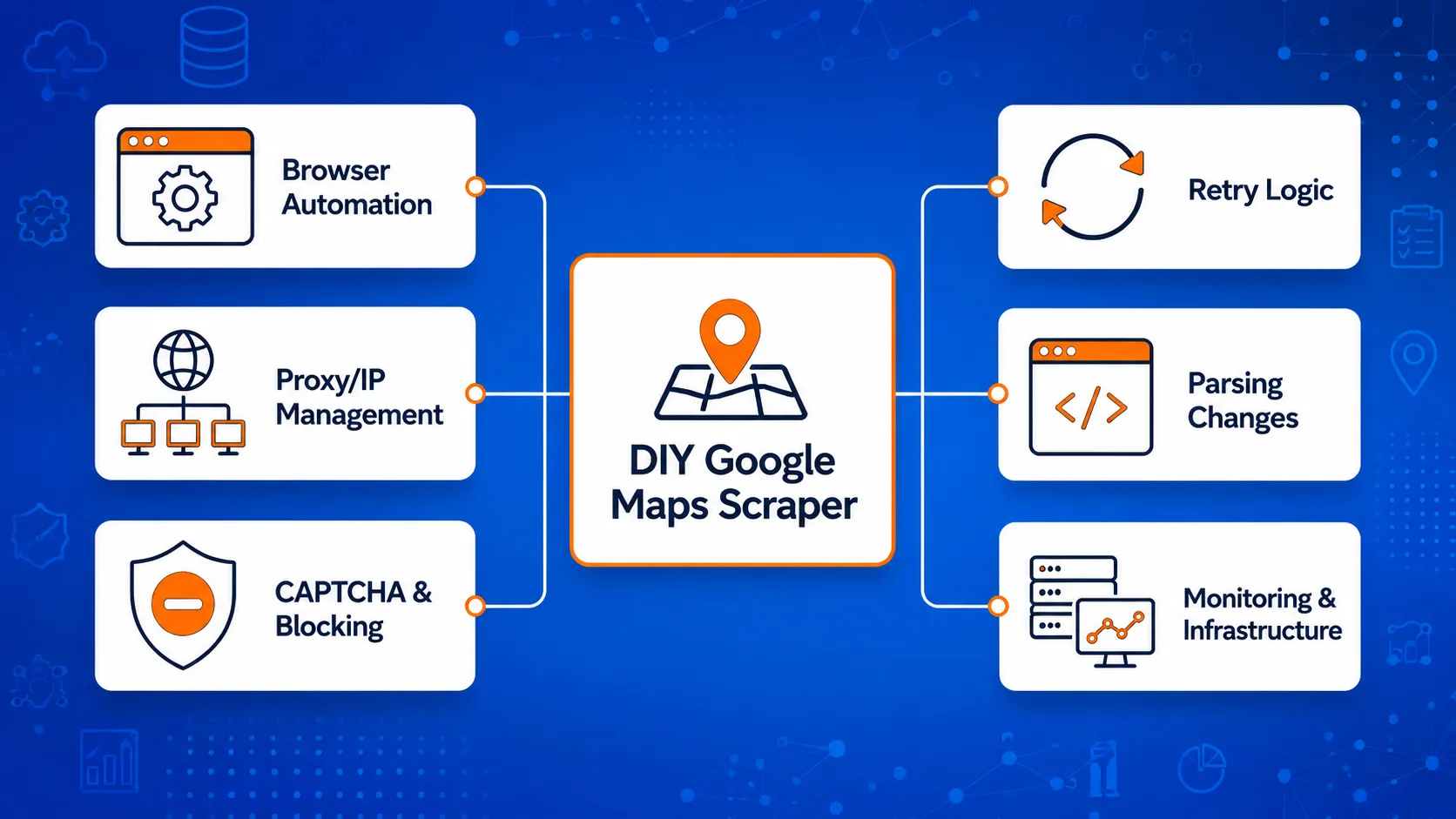
Tự động hóa trình duyệt và logic trích xuất
Google Maps phụ thuộc rất nhiều vào nội dung trang động, do đó nhiều công cụ thu thập dữ liệu tự làm thường dựa vào tự động hóa trình duyệt hoặc các phương pháp tương tự để tải và thu thập dữ liệu.
Logic trích xuất cũng phải xác định chính xác các phần tử cần thiết, xử lý tình huống cuộn trang hoặc tải lại trang, đồng thời trả về các trường dữ liệu mà quy trình làm việc của bạn yêu cầu. Nếu cấu trúc trang thay đổi, một số phần của logic đó có thể cần được cập nhật.
Nếu bạn muốn tìm hiểu chi tiết hơn về cấu hình kỹ thuật, hãy tham khảo hướng dẫn của chúng tôi về Trích xuất dữ liệu từ Google Maps bằng Python bao gồm việc trích xuất dữ liệu trên trình duyệt và các công việc hỗ trợ liên quan.
Quản lý máy chủ proxy và địa chỉ IP
Việc liên tục đưa ra các yêu cầu có thể tạo thêm một khối lượng công việc mới liên quan đến quản lý quyền sở hữu trí tuệ.
Một nhóm vận hành công cụ thu thập dữ liệu riêng có thể cần phải quản lý các nhóm proxy, loại bỏ các proxy không hoạt động, theo dõi các yêu cầu bị chặn và quyết định cách phân phối các yêu cầu. Chất lượng proxy cũng có thể ảnh hưởng đến mức độ tin cậy trong việc hoàn thành các tác vụ.
Ở quy mô nhỏ, vấn đề này có thể vẫn còn trong tầm kiểm soát. Tuy nhiên, khi công cụ thu thập dữ liệu xử lý nhiều lượt tìm kiếm hoặc nhiều vị trí, vấn đề này sẽ trở nên khó bỏ qua hơn.
CAPTCHA và Chặn truy cập
CAPTCHA và các yêu cầu bị chặn có thể làm gián đoạn tác vụ trích xuất trước khi nó hoàn tất.
Do đó, quy trình làm việc trong sản xuất cần có cơ chế để phát hiện những sự cố này và quyết định bước tiếp theo. Một số yêu cầu có thể cần được thử lại, hoãn lại hoặc chuyển qua một địa chỉ IP khác.
Nếu không có bước xử lý đó, công cụ thu thập dữ liệu có thể trông như đang hoạt động hiệu quả nhưng thực tế vẫn trả về các tập dữ liệu chưa đầy đủ.
Các lần thử lại và các tác vụ không thành công
Một yêu cầu không thành công thường dễ xử lý hơn so với một tác vụ được hoàn thành một phần.
Ví dụ, một công cụ trích xuất dữ liệu có thể hoàn thành 80% một lô dữ liệu lớn trước khi một phần của quy trình bị dừng lại. Lúc đó, hệ thống cần xác định được những tác vụ nào đã thành công, những tác vụ nào đã thất bại và những tác vụ nào cần được chạy lại mà không tạo ra các bản sao không cần thiết.
Điều đó đòi hỏi phải có các quy tắc theo dõi tác vụ và thử lại, bên cạnh chính mã trích xuất.
Các thay đổi trong quá trình phân tích cú pháp
Công cụ thu thập dữ liệu cũng phụ thuộc vào cấu trúc mà nó dự kiến sẽ tìm thấy.
Sự thay đổi về nhãn, các thành phần trên trang hoặc cách dữ liệu được tải có thể ảnh hưởng đến các trường dữ liệu được trình phân tích cú pháp trả về. Trình trích xuất dữ liệu vẫn có thể tiếp tục chạy nhưng đồng thời tạo ra các giá trị bị thiếu hoặc được ánh xạ không chính xác mà không báo lỗi.
Do đó, cần tiến hành kiểm tra định kỳ để xác nhận rằng kết quả đầu ra vẫn phù hợp với những gì các hệ thống ở giai đoạn sau mong đợi.
Cơ sở hạ tầng và giám sát
Khi một công cụ thu thập dữ liệu đã được triển khai để thực hiện các tác vụ định kỳ, cần phải có người theo dõi xem nó có còn hoạt động bình thường hay không.
Điều này có thể bao gồm máy chủ, nhật ký, bộ nhớ lưu trữ, trạng thái công việc, cảnh báo, các lô xử lý bị lỗi và kiểm tra kết quả đầu ra. Việc giám sát trở nên đặc biệt quan trọng khi dữ liệu được truyền sang một hệ thống khác và việc trích xuất dữ liệu bị lỗi có thể không được phát hiện ngay lập tức.
Đây là phần của công cụ thu thập dữ liệu Google Maps tự làm mà người ta thường dễ đánh giá thấp. Đoạn mã thu thập dữ liệu chỉ là một phần trong số đó. Nhóm phát triển còn phải quản lý các hệ thống cần thiết để duy trì quá trình thu thập dữ liệu diễn ra liên tục.
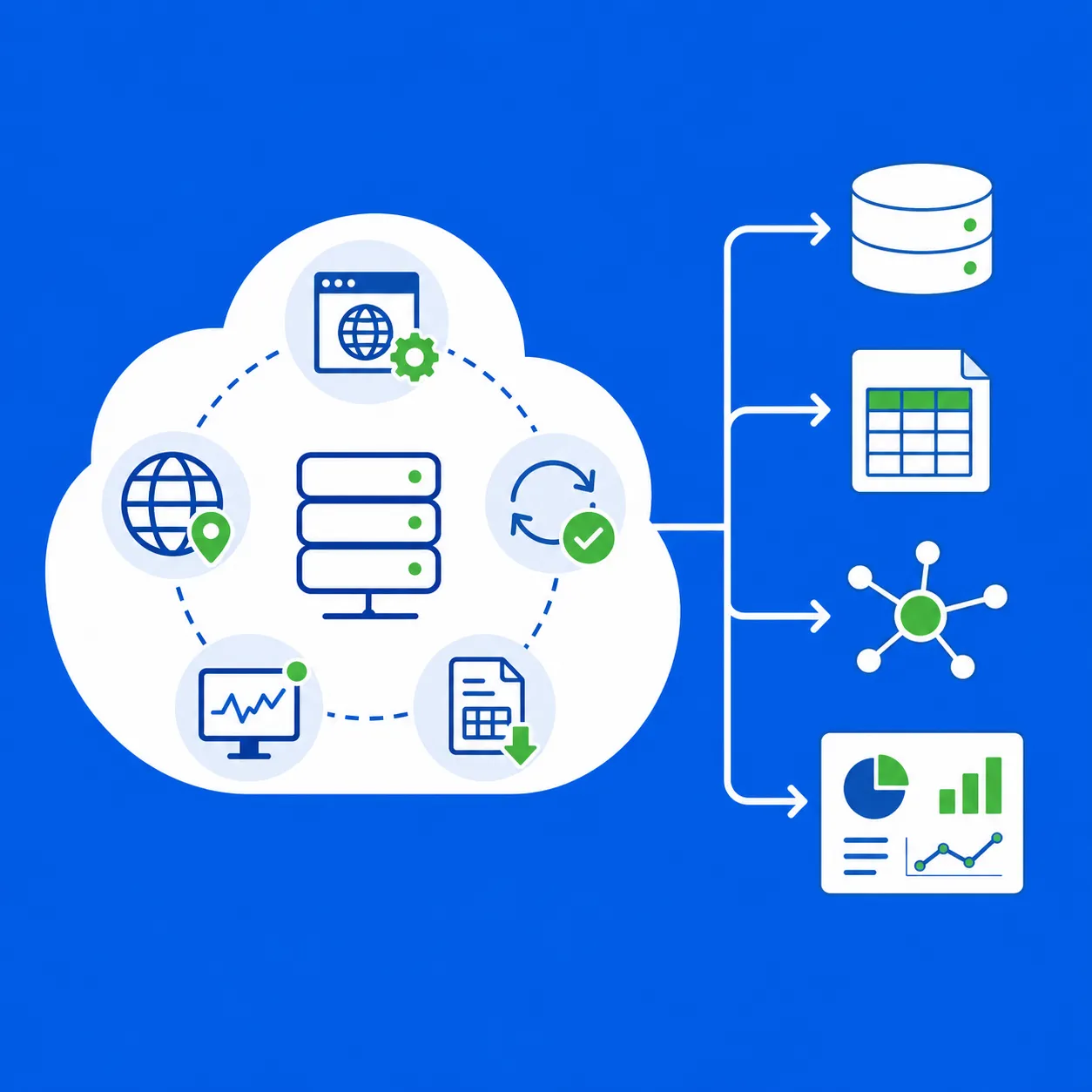
Outscraper đảm nhận việc xử lý lớp trích xuất dữ liệu từ Google Maps để đội ngũ của bạn có thể tập trung vào việc xử lý dữ liệu kinh doanh thu được, thay vì phải duy trì hệ thống trích xuất dữ liệu.
Chi phí để tự xây dựng công cụ trích xuất dữ liệu từ Google Maps là bao nhiêu?
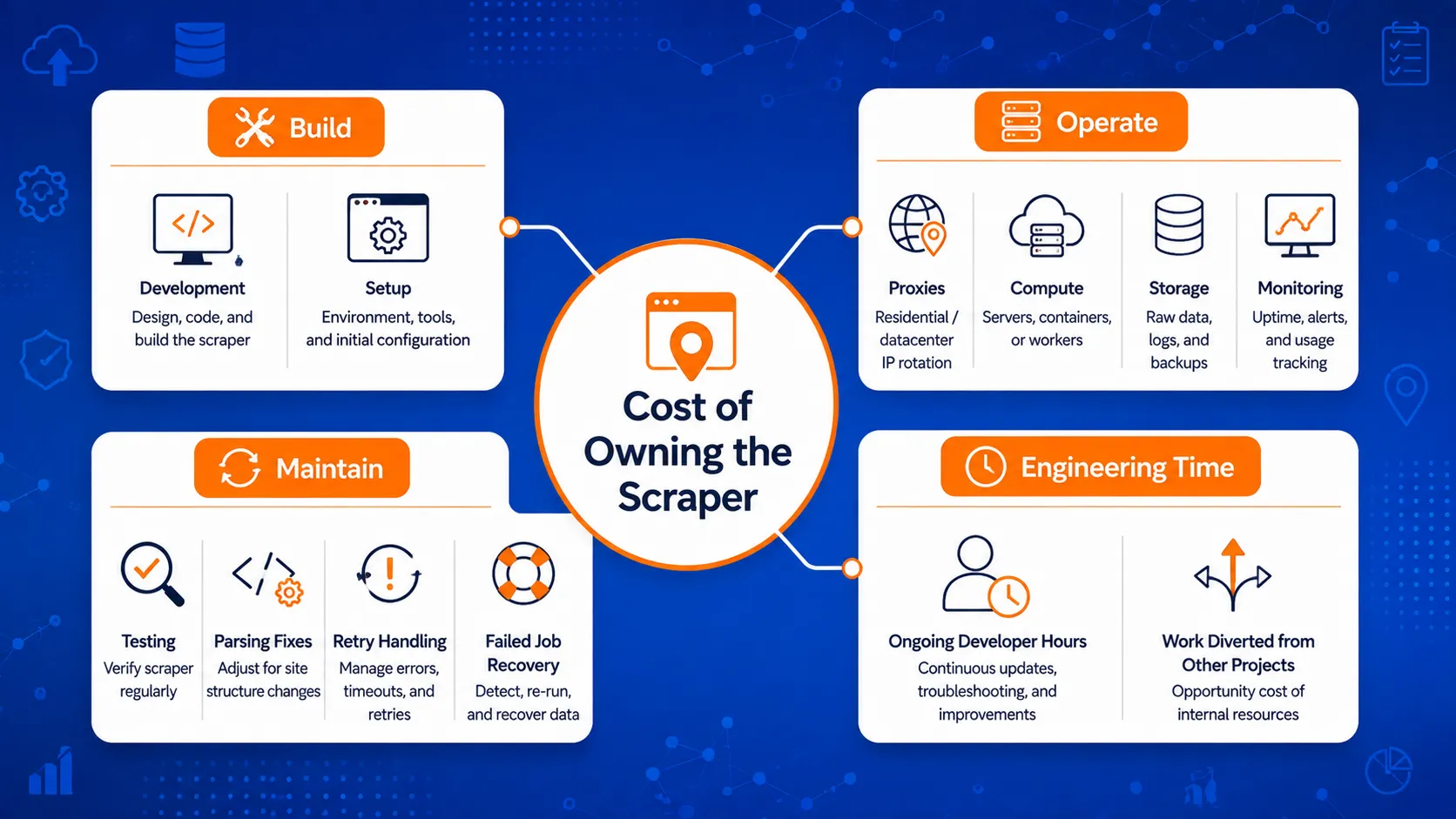
Chi phí để tự phát triển một công cụ trích xuất dữ liệu không chỉ dừng lại ở việc viết phiên bản mã nguồn đầu tiên. Khi công cụ này đã hỗ trợ các tác vụ định kỳ, nhóm phát triển còn phải chi trả cho các hệ thống và thời gian làm việc của đội ngũ kỹ sư cần thiết để duy trì hoạt động của nó.
Hãy so sánh chi phí chế tạo máy cạo với chi phí duy trì hoạt động của nó.
Initial Engineering Time
The first build may include more than the extraction script itself.
Engineers may also need to set up browser automation, request handling, proxy routing, data storage, retry rules, logging, and output checks. The amount of work depends on how much data the scraper needs to collect and how reliable the workflow needs to be.
A small internal test has very different requirements from a scraper feeding a production database every week.
Proxy and Infrastructure Costs
Recurring scraping may require paid infrastructure such as proxies, servers, storage, and monitoring.
These costs can grow with the number of searches, locations, and records being collected. They can also change when the scraper needs additional resources to handle larger jobs or failed requests.
The important point is that infrastructure usually remains part of the operating cost after development is finished.
Maintenance Time
A scraper needs attention when extraction behavior changes or output stops matching expectations.
That work may include:
- fixing selectors or parsing rules
- replacing failing proxies
- checking incomplete jobs
- updating browser automation
- reviewing logs
- testing changes before running the next batch
Even short fixes add up when the scraper becomes part of a recurring data process.
Failure and Recovery Costs
Failed jobs also consume time.
Someone needs to identify what failed, determine which records were already collected, rerun the missing work, and check the final output for gaps or duplicates.
This matters more when a failed batch delays another process, such as lead-list preparation, market research, or an internal application that depends on the data.
Engineering Opportunity Cost
Engineering time has another cost: the work that does not get done while developers maintain the scraper.
A team may prefer to spend those hours building reporting tools, improving its database, adding enrichment steps, or developing features around the collected data.
That makes scraper maintenance a business decision as well as a technical one.
| Cost Area | During the Initial Build | During Ongoing Use |
|---|---|---|
| Engineering | Extraction logic and setup | Fixes, testing, and updates |
| Proxies | Setup and testing | Recurring usage |
| Infrastructure | Servers, storage, logging | Hosting and monitoring |
| Job Recovery | Retry logic | Failed and partial jobs |
| Data Checks | Output setup | Missing or incorrect fields |
| Engineering Time | Building the scraper | Maintaining the extraction process |
To compare these internal costs with the managed option, you can also review how Bảng giá công cụ trích xuất dữ liệu Google Maps works and which settings can affect task cost.
The lowest-cost option at the start may not remain the lowest-cost option once maintenance, failed jobs, and engineering time are included.
When the DIY Route Makes Sense
Building your own scraper can still be the better choice when the extraction work itself matters to the product or the team has a clear reason to control the full setup.
You Need Highly Custom Extraction Logic
A managed scraper may cover the fields and workflow most teams need, but some projects require extraction rules that are specific to one application.
That can include unusual parsing logic, custom page behavior, special validation steps, or a workflow built around data that standard providers do not return.
In those cases, owning the scraper gives the engineering team more freedom to change how the extraction works.
You Already Have Internal Scraping Engineers
The maintenance burden looks different when a company already has engineers responsible for scraping systems.
They may already have proxy infrastructure, monitoring, retry logic, storage, and internal tools for handling failed jobs. Adding a Google Maps scraper to that setup can be more reasonable than introducing another external service.
The main question is whether the team has spare capacity to maintain it without pulling attention away from higher-priority work.
The Workflow Is Narrow or Experimental
A small test does not always need production-grade infrastructure.
For a short research project, proof of concept, or limited internal experiment, a basic scraper may be enough to answer the question the team is testing.
The decision changes if that temporary script starts becoming a recurring data source. At that point, the maintenance work covered earlier begins to matter more.
Full Infrastructure Control Matters
Some teams need direct control over how requests are made, where data is processed, how logs are stored, or how the system behaves when a job fails.
Those requirements may come from internal engineering standards, security policies, or product architecture.
If that level of control is required, building in-house can be easier to justify even when it creates more maintenance work.
Scraping Is Part of the Product
For some companies, scraping is not just a way to collect input data. The extraction system itself is part of what the company builds and maintains.
A team developing its own data product, crawler, or extraction platform may have stronger reasons to own the underlying technology.
In that situation, the engineering effort supports the product directly rather than sitting beside the team’s main work.
The DIY route makes the most sense when the extra control has a clear purpose. If the scraper only exists to supply data to another workflow, the value of owning the extraction layer becomes harder to justify.
When a Managed Google Maps Scraper Makes More Sense
A managed scraper becomes more practical when the team needs the data regularly but does not want to own the systems that keep the extraction process running.
You Run Recurring Jobs
A one-time data pull is easier to manage than a workflow that runs every week or every day.
Recurring jobs create more chances for blocked requests, partial results, failed batches, and parsing changes to interrupt the process. A managed scraper can reduce the amount of internal work needed to keep those jobs running.
You Need Repeated or Larger Datasets
The maintenance burden grows when the same workflow has to cover more searches, locations, or records.
At that point, the challenge is no longer limited to extraction logic. The team also has to manage retries, job tracking, infrastructure, and output checks across a larger volume of work.
A managed service can be easier to justify when the team needs repeatable access to business data without expanding the scraping setup internally.
Your Team Needs the Data, Not the Scraper
Many teams use Google Maps business data as an input for another task.
That may include lead generation, market research, local business analysis, internal databases, or application features. In those workflows, maintaining the scraper does not directly improve the final use of the data.
Outscraper’s managed Google Maps data extraction service fits this type of setup by handling the extraction side while the user works with the resulting business data.
You Need API-Based Data Access
Manual exports may be enough for occasional research, but recurring workflows often need data to move into another system automatically.
An API can let an application or internal process request data programmatically and continue working with the results after extraction.
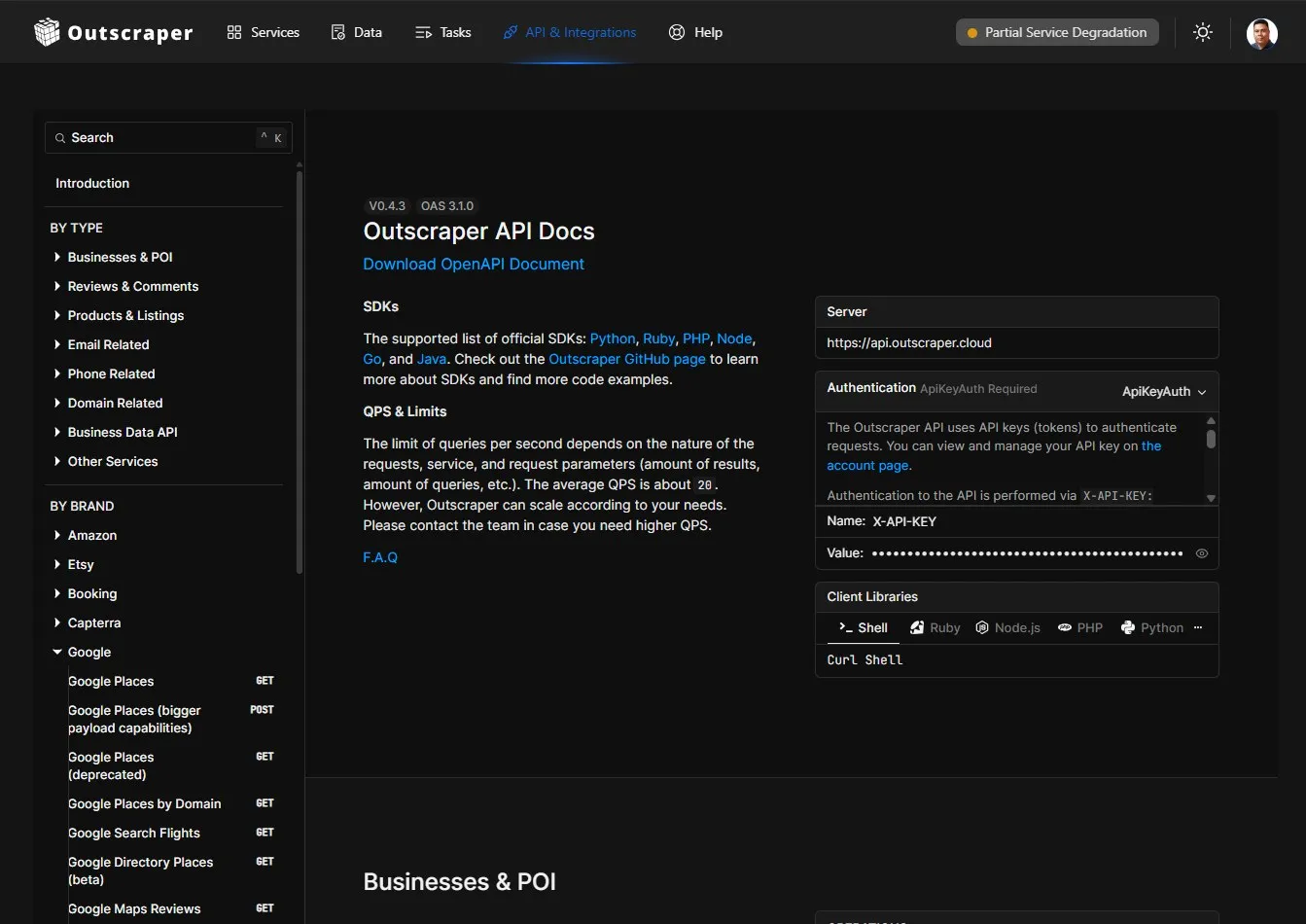
Developers can review the Outscraper API documentation for current endpoints, parameters, responses, and code examples.
This gives developers control over the parts that matter inside their own system without requiring them to maintain the underlying Google Maps scraper.
Engineering Time Is Better Used Downstream
The cost of maintaining a scraper also includes the work developers are not doing elsewhere.
A team may get more benefit from using engineering time on database design, internal tools, reporting, enrichment, analysis, or product features built around the collected data.
A managed scraper makes the strongest case when the extraction layer is necessary but not central to what the team is trying to build.
Use Outscraper for recurring Google Maps data collection while keeping your lead generation, research, database, or application workflow on your side.
Should You Build a Google Maps Scraper or Use a Managed Service?
The choice becomes easier when you compare who owns each part of the workflow.
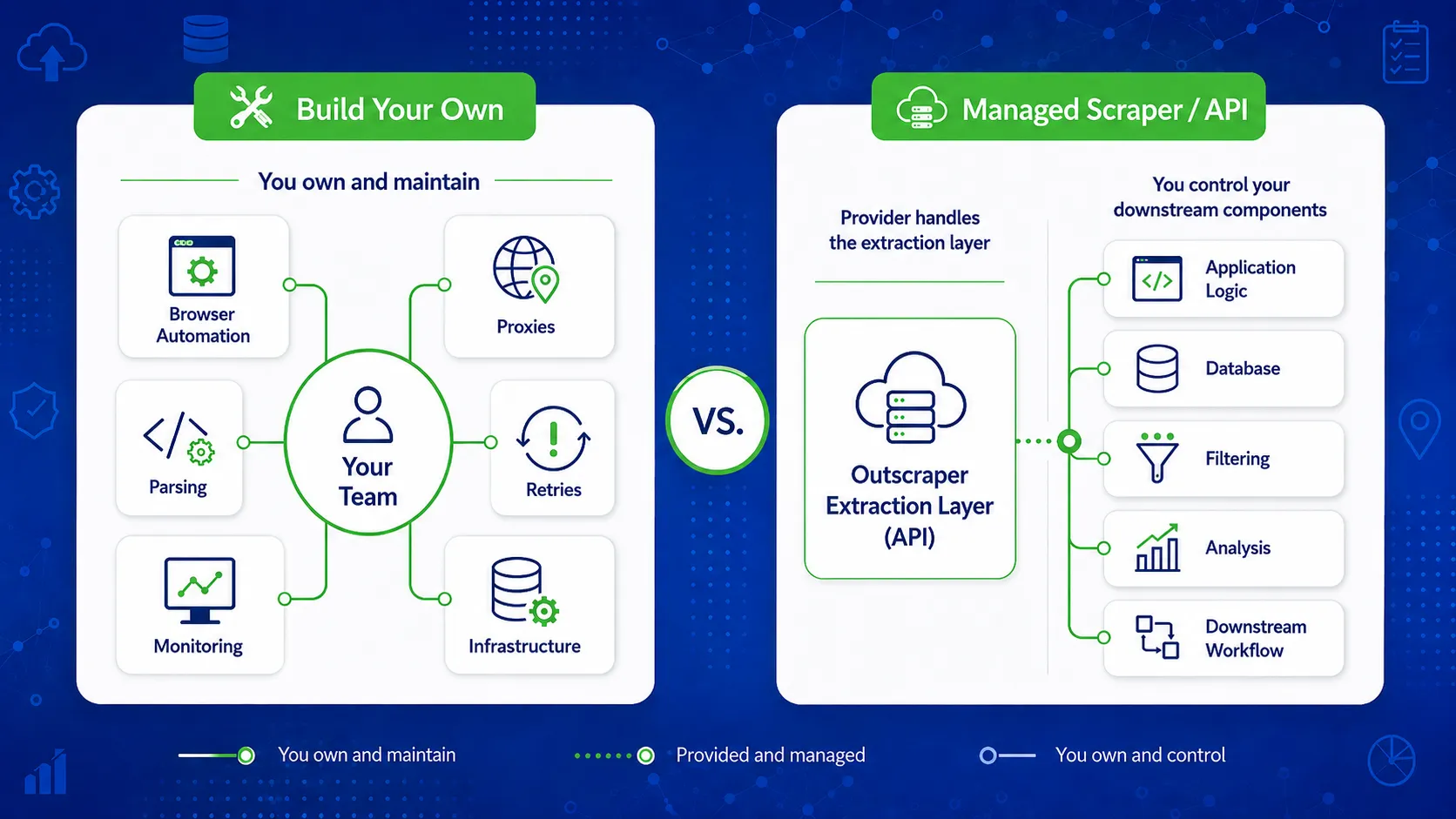
| Factor | Build Your Own | Managed Scraper / API |
|---|---|---|
| Extraction Control | Full control | Limited to provider capabilities |
| Initial Engineering Work | Higher | Lower |
| Browser Maintenance | Your team | Provider |
| Proxy Management | Your team | Provider |
| Các thay đổi trong quá trình phân tích cú pháp | Your team | Provider |
| Retry Handling | Your team | Usually handled by provider |
| Monitoring | Your team | Provider handles the extraction layer |
| Workflow Customization | Highest | High around API and output |
| Scaling | Requires more engineering | Usually easier to expand |
| Best Fit | Teams with specific technical requirements | Teams focused on using the data |
Neither option is automatically better. The right choice depends on how much control your team needs and how much maintenance it wants to keep in-house.
A Third Option: Build the Workflow, Not the Scraper
The decision does not have to stop at building everything yourself or handing the whole workflow to a provider.
A team can keep control over its application, query logic, storage, filtering, enrichment, and downstream processing while using a managed scraper API for the extraction step.
For the technical side of this setup, see how Outscraper APIs can be used inside custom data workflows.
A setup may look like this:
Your application or automation
→ Managed scraper API
→ Google Maps business data
→ Your database, CRM, reporting tool, or internal system.
This approach can fit developers and data teams that want programmatic access without maintaining browsers, proxies, parsing logic, and extraction infrastructure.
The team still controls how the data is used after collection. The provider handles the part responsible for collecting it.
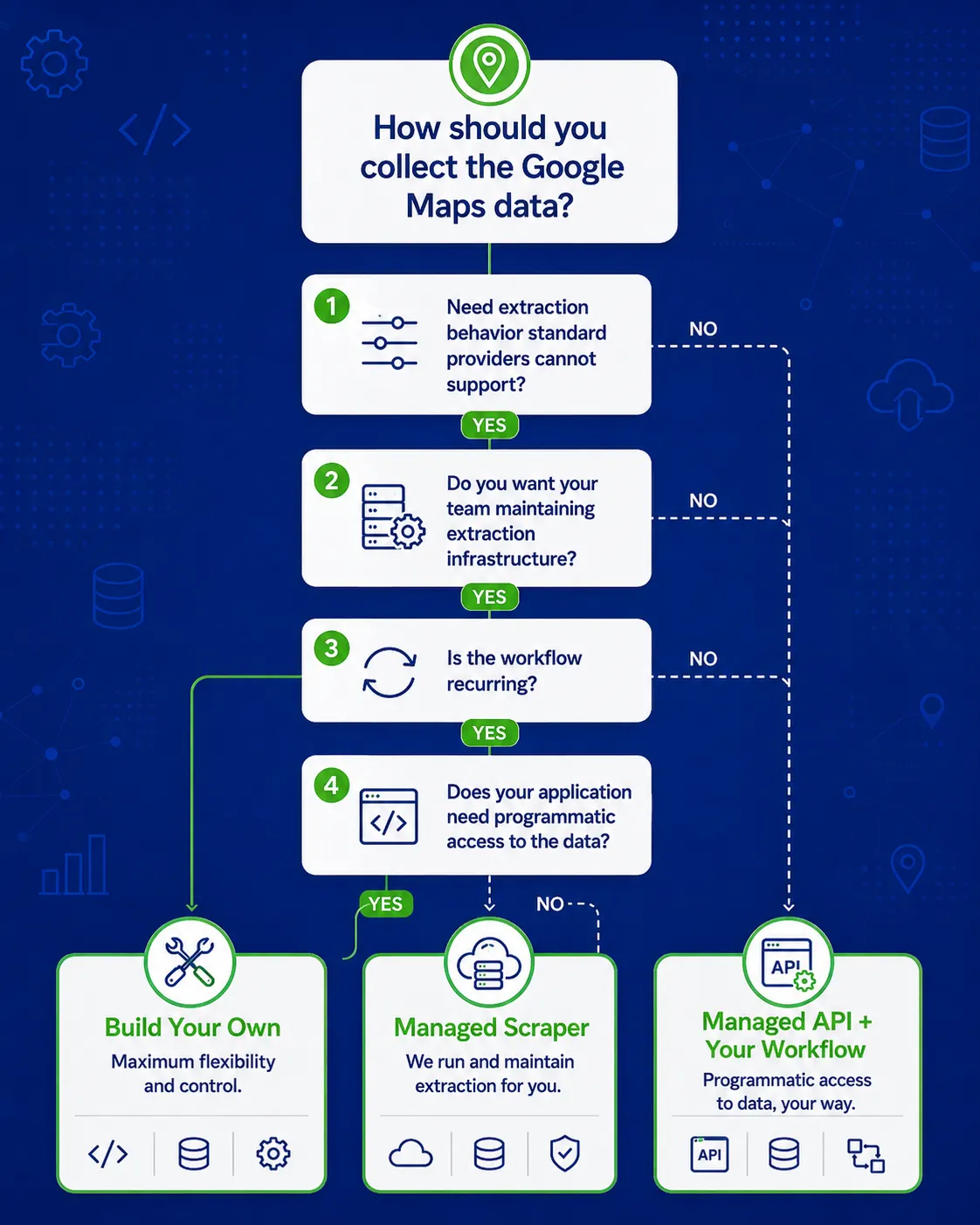
Keep control of your application logic, storage, filtering, and downstream processing while Outscraper handles Google Maps data extraction.
Questions to Ask Before You Choose
The technical choice becomes easier when you define how the scraper will be used, who will maintain it, and what happens when the workflow stops working as expected.
How Often Will You Run It?
A scraper used for a one-time research job has different requirements from one that runs every day or every week.
Recurring jobs create more maintenance work because failures, parsing changes, and infrastructure issues have more opportunities to interrupt the process.
How Much Data Do You Need?
A few searches for an internal test are easier to manage than collecting business data across hundreds of locations or categories.
As volume increases, job tracking, retries, proxy usage, storage, and monitoring become a larger part of the workload.
How Custom Are Your Extraction Requirements?
List the fields and extraction rules you need before deciding to build.
If your requirements depend on unusual page behavior or fields that managed providers do not support, a custom scraper may be easier to justify.
If the required business data is already available through a managed service, owning the extraction logic may add work without adding much benefit.
Who Maintains It When Something Breaks?
Someone needs to take responsibility when a job stops, a field disappears, or the output changes.
Identify that person or team before treating a DIY scraper as a finished project. The maintenance work needs an owner just like any other production system.
Do You Need an API?
An API matters when another application, database, or automation needs to request data without someone manually starting and downloading each job.
This is also where the build decision can change. A team may still write its own application while using a managed API for the extraction step.
How Much Does Engineering Time Cost?
Proxy fees and servers are visible expenses. Engineering time is easier to overlook.
Estimate the time needed for monitoring, debugging, testing, recovery, and future changes. Then compare that work with other tasks the same engineers are responsible for.
What Happens When Jobs Fail?
Plan for partial results as well as complete failures.
Ask how the system will identify missing records, retry unfinished work, prevent duplicate data, and alert the team when a job needs attention.
A scraper that works when everything goes well is only part of a production workflow.
What Legal, Contractual, or Data-Use Requirements Apply?
Scraping rules can depend on the source, its terms, the type of data collected, the jurisdiction, and how the data will be used.
Google also publishes its own Google Maps Platform Terms of Service and related policy guidance, which should be reviewed when a workflow depends on Google Maps Platform services.
Review the requirements that apply to your specific workflow before deciding how data will be collected or processed. This section is not legal advice.
Google Maps Scraper Decision Checklist
- Define how often you need the data.
- List the fields and extraction rules you require.
- Estimate the maintenance and engineering work.
- Decide who will own failures and fixes.
- Check whether programmatic API access is needed.
- Compare the value of full scraper control with the work required to maintain it.
- Review the rules that apply to your data workflow.
Outscraper can handle the Google Maps extraction layer while your team focuses on using the data for lead generation, research, databases, or applications.
Câu hỏi thường gặp
Các câu hỏi và câu trả lời thường gặp nhất
Việc tạo bản mẫu cho một công cụ trích xuất dữ liệu cơ bản có thể tương đối đơn giản. Phần khó hơn là đảm bảo công cụ này hoạt động ổn định trong các tác vụ lặp đi lặp lại, khi gặp yêu cầu bị chặn, thay đổi trang, các lần thử lại và khối lượng công việc lớn hơn.
Mức độ phức tạp phụ thuộc vào tần suất thực thi, lượng dữ liệu thu thập được và mức độ bảo trì mà quy trình làm việc đó yêu cầu.
Không có mức chi phí cố định nào áp dụng cho mọi dự án.
Tổng chi phí phụ thuộc vào thời gian phát triển, các máy chủ proxy, máy chủ, dung lượng lưu trữ, giám sát, bảo trì và khôi phục các tác vụ bị lỗi. Một bài kiểm tra nội bộ ngắn có thể tốn kém ít hơn nhiều so với một công cụ thu thập dữ liệu chạy liên tục trong hệ thống sản xuất.
Điều đó còn tùy thuộc vào khối lượng công việc.
Một công cụ thu thập dữ liệu tự phát triển có thể có chi phí ban đầu thấp hơn khi dự án có quy mô nhỏ và đã có sẵn các nguồn lực kỹ thuật. Một công cụ thu thập dữ liệu được quản lý có thể trở nên thực tế hơn khi đưa các yếu tố như bảo trì định kỳ, chi phí proxy, các tác vụ thất bại và thời gian của nhà phát triển vào so sánh.
Đúng vậy. Nhà phát triển có thể xây dựng ứng dụng, cơ sở dữ liệu, các bộ lọc, quy tắc kinh doanh và quy trình xử lý tiếp theo, đồng thời sử dụng API trích xuất dữ liệu được quản lý để trích xuất dữ liệu. Outscraper hỗ trợ loại cấu hình này thông qua các dịch vụ trích xuất dữ liệu và API của mình.
Cách tiếp cận này giúp bạn vẫn kiểm soát được logic ứng dụng mà không cần đội ngũ của bạn phải bảo trì lớp trích xuất dữ liệu.
“An toàn” có thể đề cập đến một số vấn đề khác nhau.
Trước khi chọn nhà cung cấp, hãy kiểm tra cách các tác vụ được thực thi, liệu địa chỉ IP của bạn hoặc tài khoản Google có bị lộ hay không, cách xử lý thông tin đăng nhập API và dữ liệu thu thập được, điều gì sẽ xảy ra khi tác vụ thất bại, cũng như các yêu cầu pháp lý hoặc hợp đồng nào áp dụng cho trường hợp sử dụng của bạn.
Một dịch vụ của bên thứ ba nên được đánh giá dựa trên những tiêu chí đó, thay vì được coi là an toàn chỉ vì nó được quản lý.
Đúng vậy, tùy thuộc vào dữ liệu và quy trình làm việc mà bạn cần.
Các API của Google Maps Platform và việc thu thập dữ liệu từ web là những cách khác nhau để truy cập thông tin liên quan đến địa điểm, với các trường dữ liệu, giới hạn, chi phí và quy tắc sử dụng khác nhau. Nếu đó là yếu tố chính mà bạn đang xem xét, thì phần dành riêng cho So sánh giữa API Google Maps và việc thu thập dữ liệu từ web là nơi thích hợp hơn để xem xét những điểm khác biệt đó.