विषयसूची
अधिकांश बिक्री टीमें बर्बाद करती हैं अपने समय का 60% Google Maps से फोन नंबर और पते मैन्युअल रूप से स्प्रेडशीट्स में कॉपी करना। यह प्रक्रिया धीमी, त्रुटियों से ग्रस्त और जब आपको किसी विशिष्ट क्षेत्र में हजारों व्यवसायों का डेटा चाहिए तो इसे बड़े पैमाने पर करना असंभव है। जबकि आप मैन्युअल एंट्री में घंटों बिताते हैं, आपके प्रतिस्पर्धी पहले ही स्वचालित उपकरणों का उपयोग करके उन्हीं संभावित ग्राहकों तक पहुंच रहे हैं।.
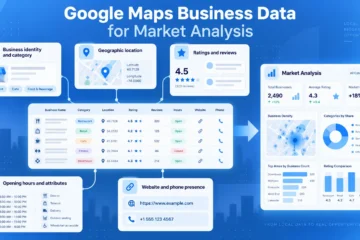
गूगल मैप्स स्क्रैपिंग यह सॉफ़्टवेयर का उपयोग करके सार्वजनिक व्यावसायिक डेटा, जैसे नाम, वेबसाइटें, फ़ोन नंबर और रेटिंग, को CSV या JSON जैसे स्वच्छ प्रारूप में निकालने की प्रक्रिया है। 2026 में, 15 लाख से अधिक नए व्यवसाय हर महीने मैप्स में नए स्थान जोड़े जाते हैं। मैन्युअल खोजों पर निर्भर रहने का मतलब है कि आप रीयल-टाइम में आने वाले नए लीड्स से चूक जाते हैं।.
मैंने SaaS और B2B कंपनियों के लिए डेटा निष्कर्षण का प्रबंधन करने में वर्षों बिताए हैं, और लक्ष्य हमेशा एक ही रहता है: प्राप्त करो बिना सटीक डेटा ब्लॉक हो रहा है. यह मार्गदर्शिका बताती है कि एक विश्वसनीय लीड सूची कैसे तैयार करें, तकनीकी सीमाओं को पार करें, और इस डेटा का उपयोग वास्तविक वृद्धि को बढ़ावा देने के लिए कैसे करें।.
गूगल मैप्स स्क्रैपिंग क्या है और यह कैसे काम करता है?
Google Maps स्क्रैपिंग सार्वजनिक व्यावसायिक डेटा, जैसे नाम, फोन नंबर और पते, को CSV जैसी संरचित फ़ाइल में स्वचालित रूप से निकालने की प्रक्रिया है। कई ऑपरेटरों के लिए मुख्य चुनौती डेटा ढूंढना नहीं, बल्कि उन तकनीकी बाधाओं से निपटना है जो खोज पूरी होने से पहले ही उसे रोक देती हैं।.
कठोर कोड से एआई इरादे तक
पहले स्क्रैपर्स CSS सेलेक्टर्स का उपयोग करते थे, जो वेबसाइट के कोड में स्थिर निर्देशांक होते थे। यदि Google ने अपना लेआउट थोड़ा भी बदल दिया, तो ये “लिंक्स” टूट जाते थे और स्क्रैपिंग रुक जाती थी।.
2026 में, आधुनिक उपकरण AI इंटेंट का उपयोग करते हैं। यह मॉडल सॉफ़्टवेयर को एक पृष्ठ को मानव की तरह “समझने” की अनुमति देता है। यह फोन नंबरों को केवल कोड में उनकी स्थिति के आधार पर नहीं, बल्कि उनकी सामग्री के आधार पर पहचानता है। इससे निष्कर्षण प्रक्रिया Google के निरंतर अपडेट्स के प्रति लचीली बन जाती है।.
120-सूची सीमा को बाईपास करना
Google Maps आमतौर पर खोज परिणामों को लगभग 120 लिस्टिंग तक सीमित करता है। एक ही शहर से हजारों लीड्स प्राप्त करने के लिए, आपको भौगोलिक संकीर्णन का उपयोग करना होगा।.
यह विधि एक बड़े क्षेत्र को छोटे-छोटे उप-खंडों के ग्रिड में विभाजित करती है, विशिष्ट निर्देशांकों द्वारा खोज या ज़िप कोड। एआई एजेंट अब इस पूरी प्रक्रिया को स्वचालित कर देते हैं: वे सर्वोत्तम ग्रिड आकार की गणना करते हैं, सैकड़ों सूक्ष्म खोजें चलाते हैं, और परिणामों को एक सुव्यवस्थित डेटाबेस में संयोजित करते हैं।.
क्या गूगल मैप्स को स्क्रैप करना कानूनी है? (2026 अनुपालन)
Google Maps से डेटा निकालने की वैधता संघीय अपराध और सिविल अनुबंध कानून के बीच एक प्रमुख अंतर पर निर्भर करती है। इस वर्ष, कानूनी सहमति यह है कि सार्वजनिक डेटा स्क्रैप करना “हैकिंग” नहीं है, फिर भी यह अनुबंध उल्लंघन के मुकदमे का कारण बन सकता है।.
अमेरिका में, ऐतिहासिक फैसलों ने यह स्थापित किया कि जनता को दिखाई देने वाले डेटा को स्क्रैप करना कंप्यूटर धोखाधड़ी और दुरुपयोग अधिनियम (CFAA) का उल्लंघन नहीं है। हालांकि, 2022 में एक मामले में हुए समझौते ने पुष्टि की कि प्लेटफ़ॉर्म फिर भी अनुबंध उल्लंघन के लिए मुकदमा कर सकते हैं। एक अन्य चुनौती है गूगल द्वारा अपने डेटाबेस की सुरक्षा के लिए लगाए गए तकनीकी ब्लॉकों का प्रबंधन करना।.
एआई बनाम एआई शस्त्र दौड़
इन कानूनी और तकनीकी जालों से बचने के लिए, उद्योग ने “लॉग्ड-आउट” मॉडल की ओर रुख किया है। गूगल उन्नत एआई का उपयोग करके आईपी पतों की निगरानी के माध्यम से “बॉट-जैसा” व्यवहार पहचानता है। यदि कोई स्क्रैपर गणितीय सटीकता के साथ गति करता है, तो उसे चिह्नित कर ब्लॉक कर दिया जाता है।.
आधुनिक उपकरण अब एआई-संचालित व्यवहार मॉडलिंग का उपयोग करते हैं। कच्चे डेटा अनुरोध भेजने के बजाय, सॉफ़्टवेयर एक मानवीय उपयोगकर्ता की तरह कार्य करता है। यह प्राकृतिक रूप से “स्क्रॉलिंग” करता है, सामग्री “पढ़ने” के लिए रुकता है, और माउस को गैर-रैखिक पैटर्न में चलाता है।.
नैतिक डेटा मानक और व्यक्तिगत रूप से पहचान योग्य जानकारी
जबकि सार्वजनिक व्यावसायिक डेटा स्क्रैप करना एक मानक अभ्यास है, आप उस डेटा को कैसे संभालते हैं, यह निर्धारित करता है कि आप के अनुपालन के साथ इस तरह के नियम जीडीपीआर. कुंजी PII (व्यक्तिगत रूप से पहचान योग्य जानकारी) से बचना है, जो कोई भी डेटा है जो कर सकता है पहचान करना एक विशिष्ट निजी व्यक्ति।.
अपने लीड जनरेशन को अनुपालन में बनाए रखने के लिए, आपको सख्ती से व्यावसायिक डेटा पर ध्यान केंद्रित करना चाहिए:
- पंजीकृत व्यापार नाम और कार्यालय पते
- सार्वजनिक रूप से सूचीबद्ध व्यावसायिक फोन नंबर
- स्टार रेटिंग और समीक्षाओं की संख्या
ध्यान दें कि इन सार्वजनिक विवरणों पर ध्यान केंद्रित करने से आपकी सूचियाँ कानूनी सीमाओं के भीतर रहती हैं। व्यक्तिगत घर के पते या निजी मोबाइल नंबरों से बचना आपकी कंपनी को आधुनिक प्लेटफ़ॉर्म द्वारा अब लागू किए जा रहे “अनुबंध उल्लंघन” और गोपनीयता जोखिमों से बचाता है।.
डेटा निष्कर्षण के लिए लोकप्रिय विधियाँ और उपकरण
खोजना सर्वश्रेष्ठ गूगल मैप्स स्क्रैपर टूल यह आपकी तकनीकी क्षमता और आपके द्वारा आवश्यक डेटा की मात्रा पर निर्भर करता है। हाल ही में, बाजार चार मुख्य श्रेणियों में विभाजित हो गया है: सरल ब्राउज़र एक्सटेंशन, एआई-संचालित कोडिंग लाइब्रेरीज़, आधिकारिक Places API, और पेशेवर-स्तरीय स्क्रैपर्स।.
त्वरित लीड कैप्चर के लिए नो-कोड एक्सटेंशन
If you only need a few dozen leads for a local project, a Google Maps scraping extension is the easiest starting point. These tools live directly in your Chrome, Firefox, or Edge browser. You simply run a search on Google Maps, click the extension icon, and it “grabs” the visible results into a table.
Many of these tools offer a Google Maps scraper free tier, which is great for one-off tasks. However, keep in mind that extensions are limited. They can only scrape what you can see on your screen, and often the first tools to break when Google updates its layout. They also lack the “grid search” ability needed to bypass the 120-listing limit.
This is the perfect way to scrape Google Maps without coding if you only need a few dozen leads for a local project.
AI-Native Python Libraries for Developers
For those comfortable with coding, Google Maps scraping using Python has entered a new era. Traditional libraries like BeautifulSoup or Selenium are being replaced by AI-native frameworks such as ScrapeGraphAI and Crawl4AI.
These libraries use Large Language Models (LLMs) to parse page data. Instead of writing 100 lines of code to find a phone number, you simply tell the library: “Find the business name and contact info on this page.” The AI handles the logic. This makes your scripts much shorter and more resistant to website changes. Note that while powerful, these still require you to manage your own proxies to avoid IP blocks.
Official Google Places API vs. AI-Powered Scrapers
When scaling, you must choose between the official Google Maps scraping API and third-party API tools providers or AI scrapers.
The official API is stable but expensive and lacks deep lead data. Third-party tools and AI-powered scrapers are usually better for lead generation because they can find emails, social media profiles, and lead enrichment that Google does not provide.
Cloud-Based Tools: Traditional vs. AI-Powered
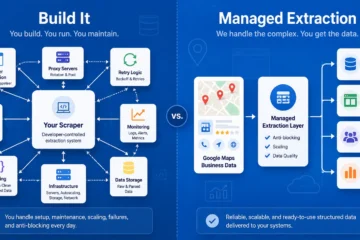
Cloud scrapers (like Outscraper or Apify) run on a server, so you do not need to stay online. Traditional cloud tools use “static rules” that fail whenever Google changes a button or font. This has caused a maintenance crisis for operators.
AI-powered scrapers solve this with “Self-Healing” technology. The AI “sees” the page and adapts to layout changes automatically, making it a more reliable, low-maintenance choice.
Step-by-Step: Google Maps Extraction Using Outscraper
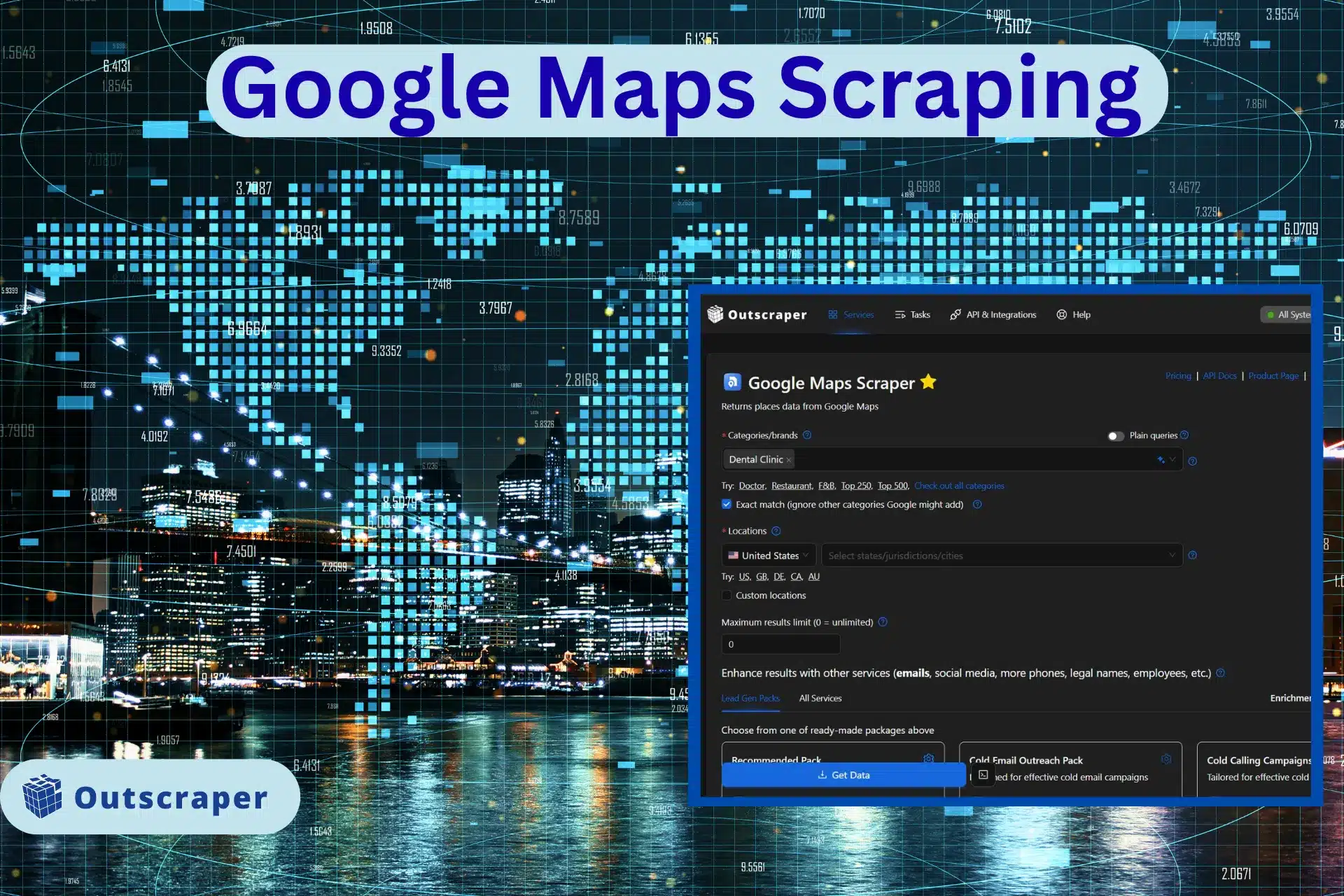
The most popular way to use the platform is through its specialized Google Maps Scraper task. This method handles the grid search and anti-bot measures automatically. You can also visit our detailed guide on how to scrape Google maps data for lead generation.
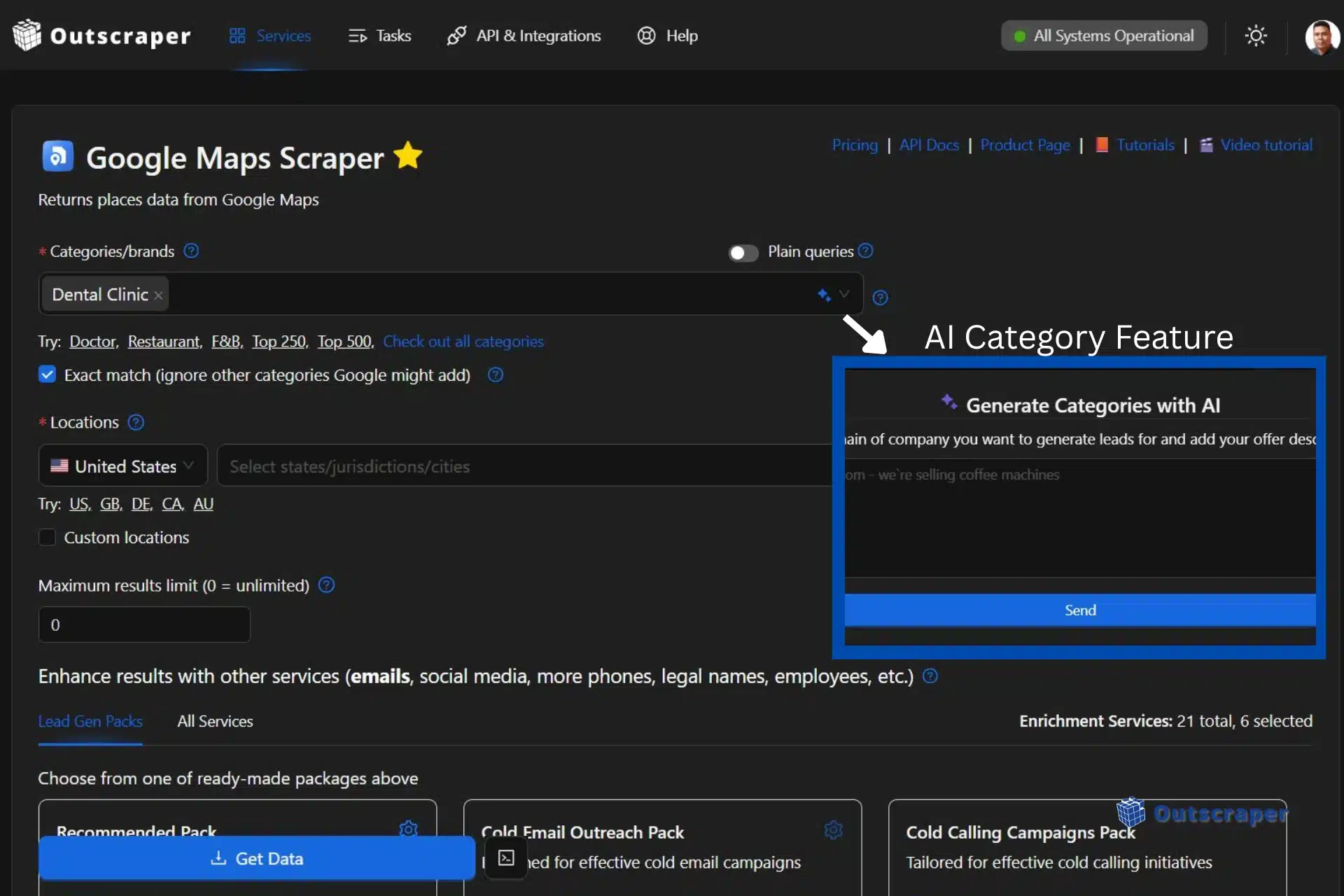
- Select Your Category: Type in your target niche (e.g., “Dental Clinics” or “HVAC Contractors”). You can enter multiple categories at once to broaden your search. You can enter multiple categories at once to broaden your search. You can also use our AI Category feature and use plain query search.

Selecting categories using dropdown or using the AI feature
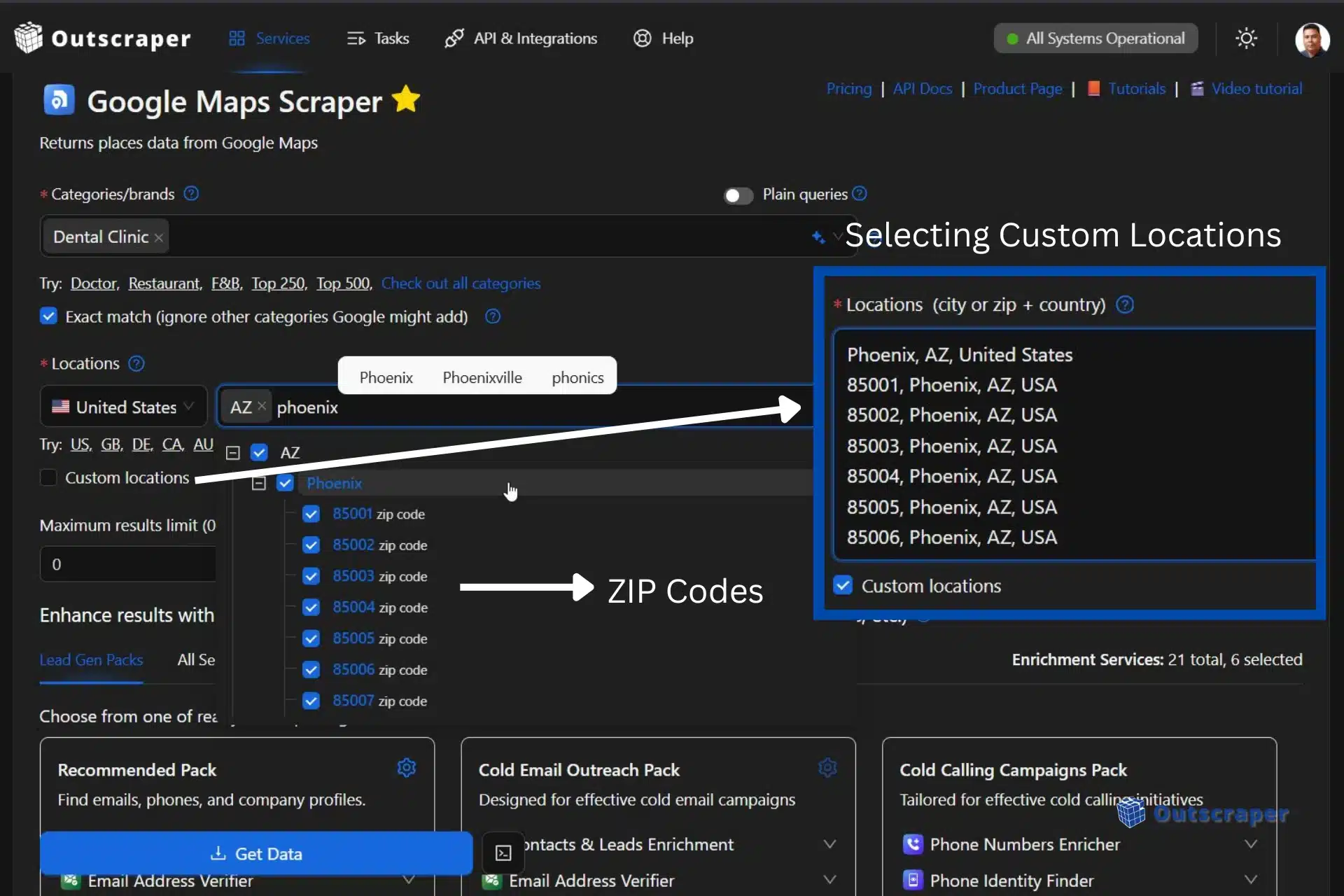
- Define the Location: Choose your target country, state, or city. For large-scale projects, you can select the ZIP codes via a dropdown or upload a list by clicking Custom locations. Using this feature will ensure the scraper visits every neighborhood.
Selecting locations via dropdown or using custom locations
- Configure Results: Set the “Total Results” limit. If you want every single business in a city, set this to 0 (unlimited). The tool will then calculate the number of micro-searches needed to bypass Google’s 120-listing cap.
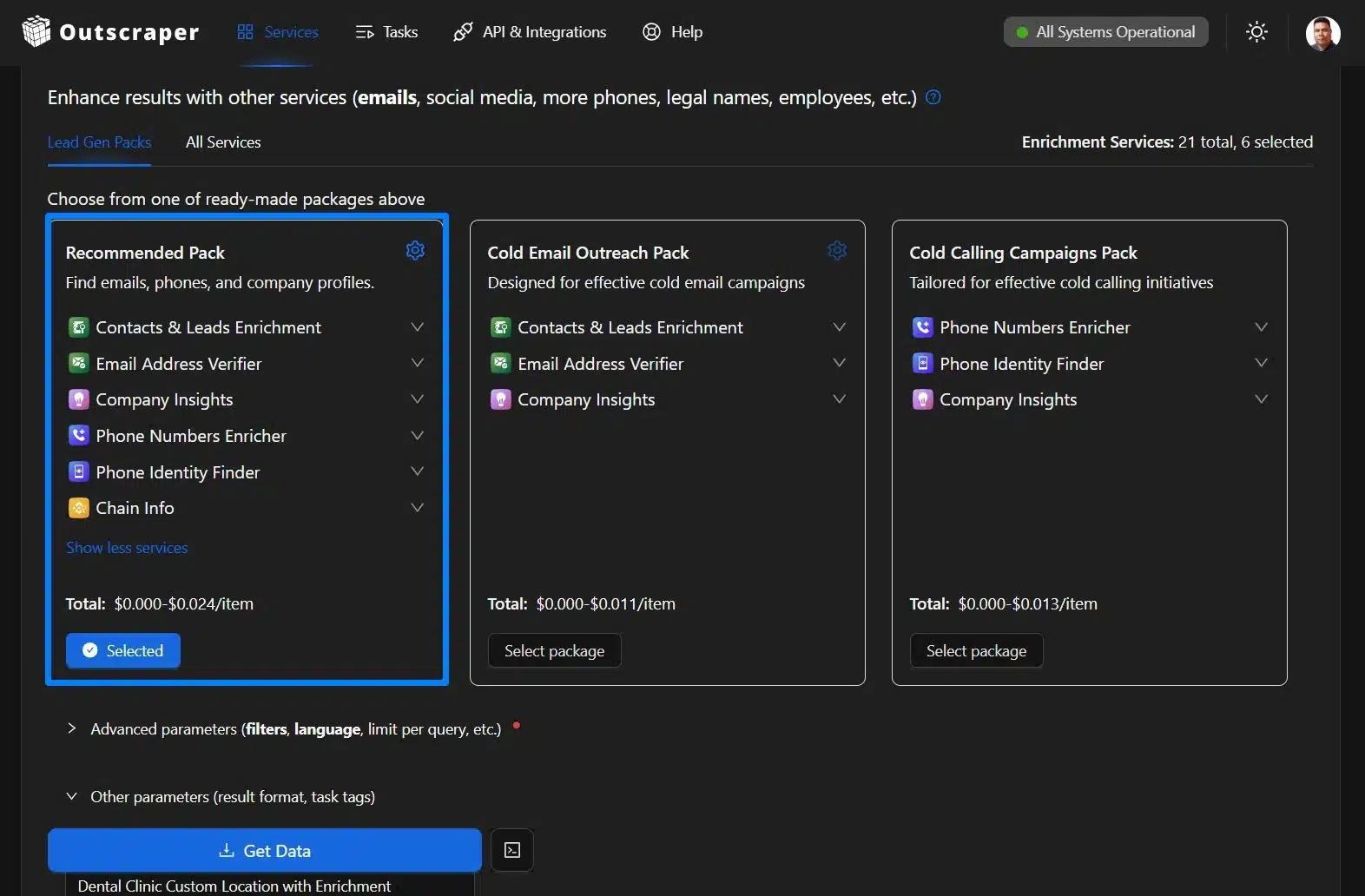
- Enrich Your Data: Check the boxes for “Lead Gen Packs,” recommended for lead generation. You can find emails, phones, and company profiles. The system will first pull the data from Maps and then visit the business websites to find contact details that Google doesn’t list.

Selecting the lead gen packs of Outscraper’s enrichment
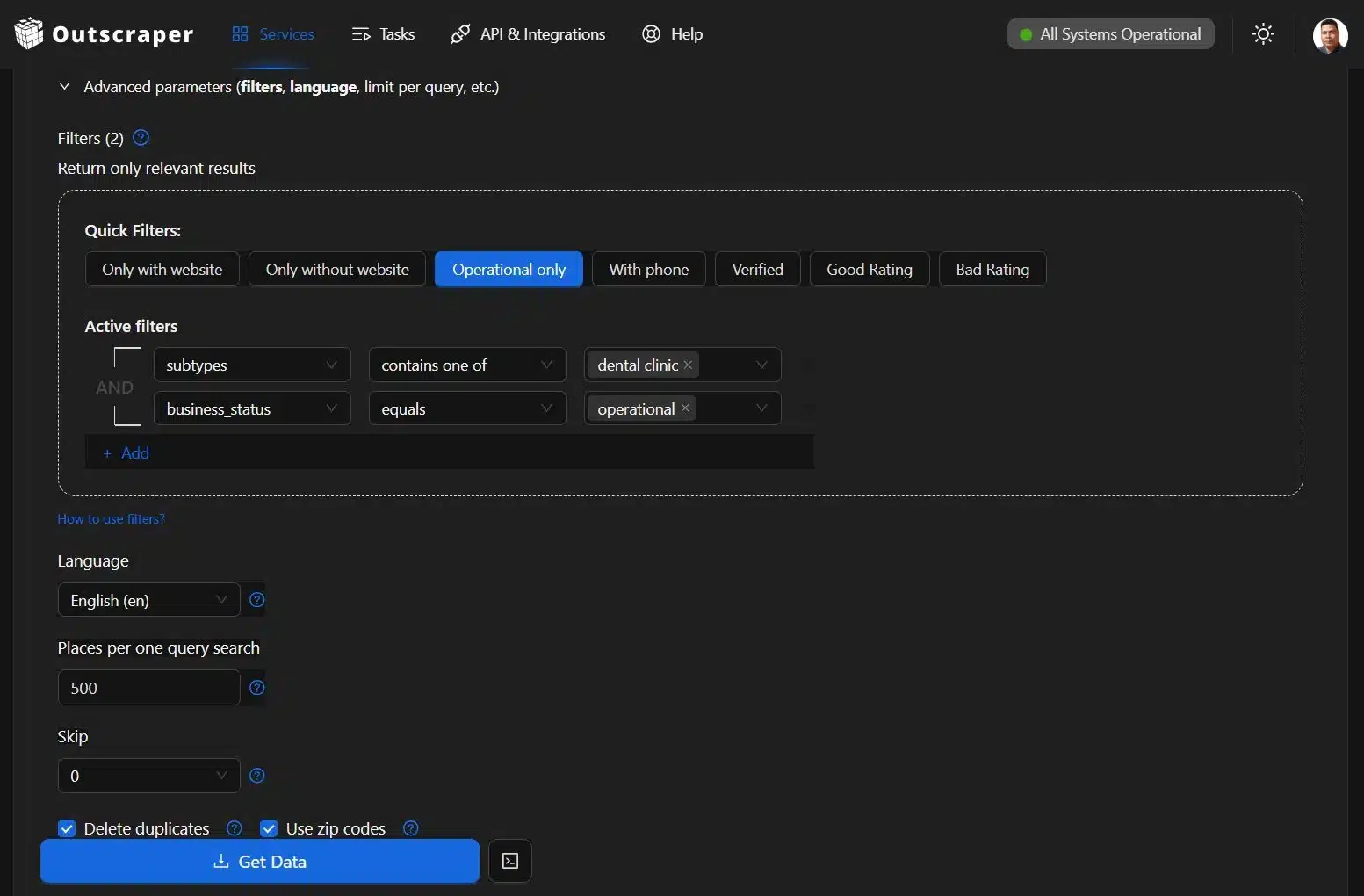
- Add Filters and Download your Leads: Check for additional filters and parameters, making sure that you delete duplicates, use ZIP codes, and select the result extension before confirming the download. Once complete, click “Get Data” and confirm download.

Adding advanced filters, deleting duplicates and using ZIP codes.

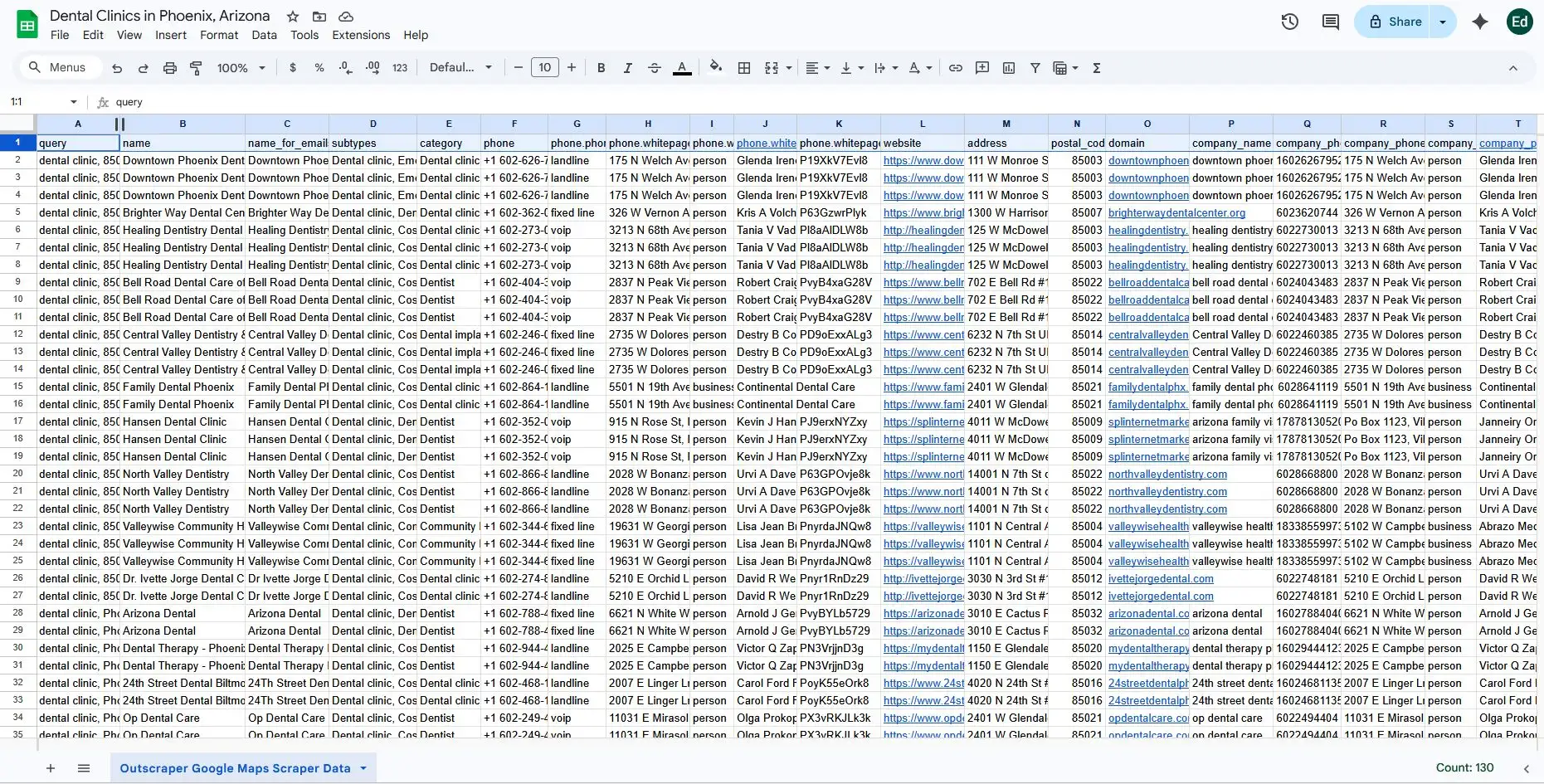
Sample Google Maps scraped data of Dental Clinics in Phoenix, Arizona
Specialized Spotlight: Outscraper’s Business Data Platform
The gap between a “tool” and a “platform” is defined by how much manual work the user has to do. आउटस्क्रैपर has transitioned from an ordinary scraper into a full-fledged business data and enrichment platform. This allows operators to move away from the technical maintenance of code and focus on high-level lead strategy.
The core of Outscraper’s reliability is its move away from fixed scraping rules. Traditional scrapers fail when Google Maps updates its code, but Outscraper uses GPT-based models to interpret page data in real-time.
Instead of looking for a specific HTML tag to find a phone number, the AI “reads” the page content to identify the intent. If Google moves the “Website” button or renames a field, the AI recognizes the change based on context. This “Self-Healing” technology means you don’t need a developer to fix broken code every time a website updates its layout.
Beyond Scraping: Automated Enrichment and Verification
A list of names and phone numbers is no longer enough for a modern sales pipeline. The new workflow has shifted from simple extraction to Automated Enrichment. Outscraper handles this multi-step process in one go:
- Extract: Pull business names and locations from Google Maps.
- Enrich: The tool automatically crawls the business’s own website to find social media profiles and hidden email addresses.
- Verify: Every email found is run through a verification process to check for bounces and “catch-all” addresses.
To make this even faster for everyday tasks, Outscraper provides a Chrome extension for email verification. This allows you to validate addresses directly on any webpage or CRM without switching tabs.
Web Data for AI Agents and Machine Learning
Google Maps lead generation is no longer just about cold calling. Companies are now using scraped data to feed Autonomous AI Agents and local Machine Learning models.
Outscraper has also integrated with the ChatGPT ecosystem by offering custom GPTs like the Local Leads Finder inside the generative AI chatbot. These specialized AI agents allow you to generate lead lists or analyze business data using natural language prompts.
Instead of a human reading through 1,000 listings, an AI agent can ingest the scraped data to identify specific patterns, such as “businesses with low ratings but high foot traffic.” By providing structured web data to these agents, businesses can automate their market research and lead scoring, giving them a significant advantage in speed and precision.
How to Use Scraped Data for Growth
In 2026, raw data is only the starting point. To drive revenue, you must turn information into “growth signals” for your sales and marketing teams.
Building CRM-Ready Contact Lists
The primary use for a Google Maps email scraper is creating a high-quality prospecting list. Modern growth workflows उपयोग करें “Waterfall Enrichment” to build a complete view of a lead. It is a process of using multiple data providers in sequence to ensure that if one tool misses a lead’s email, the next tool in the chain finds them.
This includes matching the business name to its website, identifying its tech stack (such as WordPress or Shopify), and finding the professional profiles of key decision-makers. This ensures your CRM is filled with qualified opportunities and verified emails, not just random contacts.
While a basic Google Maps contact scraper might only pull what is on the surface, modern enrichment finds hidden emails and social profiles.
Competitor Monitoring and Sentiment Analysis
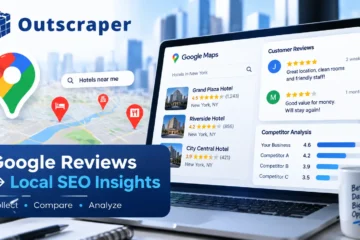
What is the purpose of scraping if not to find the gaps in your market? Savvy businesses now use AI to perform Sentiment Analysis on thousands of Google Reviews.
Instead of reading every comment, an AI can summarize the data into a “Market Gap” report. This reveals common complaints about competitors or specific features customers are asking for. Tracking these trends इजाज़त देता है you to build a strategy based on what customers actually want, giving you a clear advantage in your niche.
Using Google Maps data for local seo helps you identify exactly which keywords your competitors are ranking for in the local pack.
Frequently Asked Questions
Yes. Extracting public business data is legal and does not violate the Computer Fraud and Abuse Act (CFAA). However, you must avoid personal data (PII) to stay compliant with GDPR and be aware of a website’s specific Terms of Service.
Use Geographic Narrowing. This method divides a large area into a grid of tiny sub-sections or ZIP codes. AI-powered tools automate these micro-searches to gather thousands of leads that a single search would miss.
Yes, if the bot moves with mathematical precision. Modern tools prevent blocks by using AI-driven behavioral modeling. This mimics human patterns like organic scrolling and varied clicking to stay undetected.
The official Google Places API is stable but expensive and lacks deep lead data. AI scrapers are more cost-effective for lead generation because they can find emails and social media links that the official API does not provide.
Traditional scrapers break when a website’s code changes. Self-Healing tools use AI to “read” a page by its content. If Google moves a button, the AI recognizes it by context and continues working without manual repairs.
Never skip the Email Address Verifier step. High-quality platforms include this in the workflow to filter out “catch-all” addresses and potential bounces, keeping your CRM data clean and your sender reputation safe.
To find a Market Gap. AI can summarize thousands of reviews into a report that highlights what customers hate about your competitors. This allows you to build a sales strategy based on real customer pain points.