目录
What SaaS Lead Generation Means for B2B Software Companies
SaaS lead generation for B2B companies is about attracting and qualifying businesses that are likely to pay for software over time, not consumers making one-time purchases. The goal is to identify teams with a real use case, budget authority, and a problem that your product can solve on a recurring basis.
Unlike e-commerce or consumer apps, SaaS revenue depends on subscriptions, renewals, and long-term use. That changes how leads are evaluated. A lead is not valuable because they filled out a form. A lead is valuable because they match your ideal customer profile (ICP) and shows signs that it is ready to evaluate software seriously.
Free trials, product demos, and pilot programs play a central role here. They act as filters. A trial user who activates key features and invites teammates signals a stronger intent than someone downloading a generic resource. These signals help sales and marketing teams focus on accounts that are more likely to convert and stay.
B2B SaaS sales cycles also tend to be longer. Decisions often involve multiple people, including end users, managers, and finance teams. Lead generation must account for this reality by supporting research, comparison, and internal approval over a period of weeks or months. That means fewer leads, better fit, and clearer buying signals.
For most B2B software brands, the goal is a steady pipeline of qualified SaaS marketing leads that match your ICP and are ready for serious evaluation.
What SaaS Means in Marketing and Sales
In SaaS, marketing and sales focus less on pushing features and more on proving value early. Prospects want to see how the software fits into their workflow, solves a specific problem, and delivers results they can measure. Content, onboarding flows, and demos all support this proof.
Retention also shapes how leads are handled. A poor-fit customer can churn quickly and drain support and sales resources. In 2025, B2B SaaS companies can see an average churn rate of 3.5%, with roughly 2.6% voluntary churn and 0.8% involuntary churn. That’s why SaaS teams care more about lead quality than raw volume. A smaller group of well-matched accounts often produces more revenue than a large list of unqualified contacts.
Sales teams rely on usage data, engagement history, and account context to guide conversations. Marketing supports this by attracting leads that already understand the problem and are actively searching for a solution. When both teams align on lead quality, pipelines become easier to manage, and forecasts become more reliable.
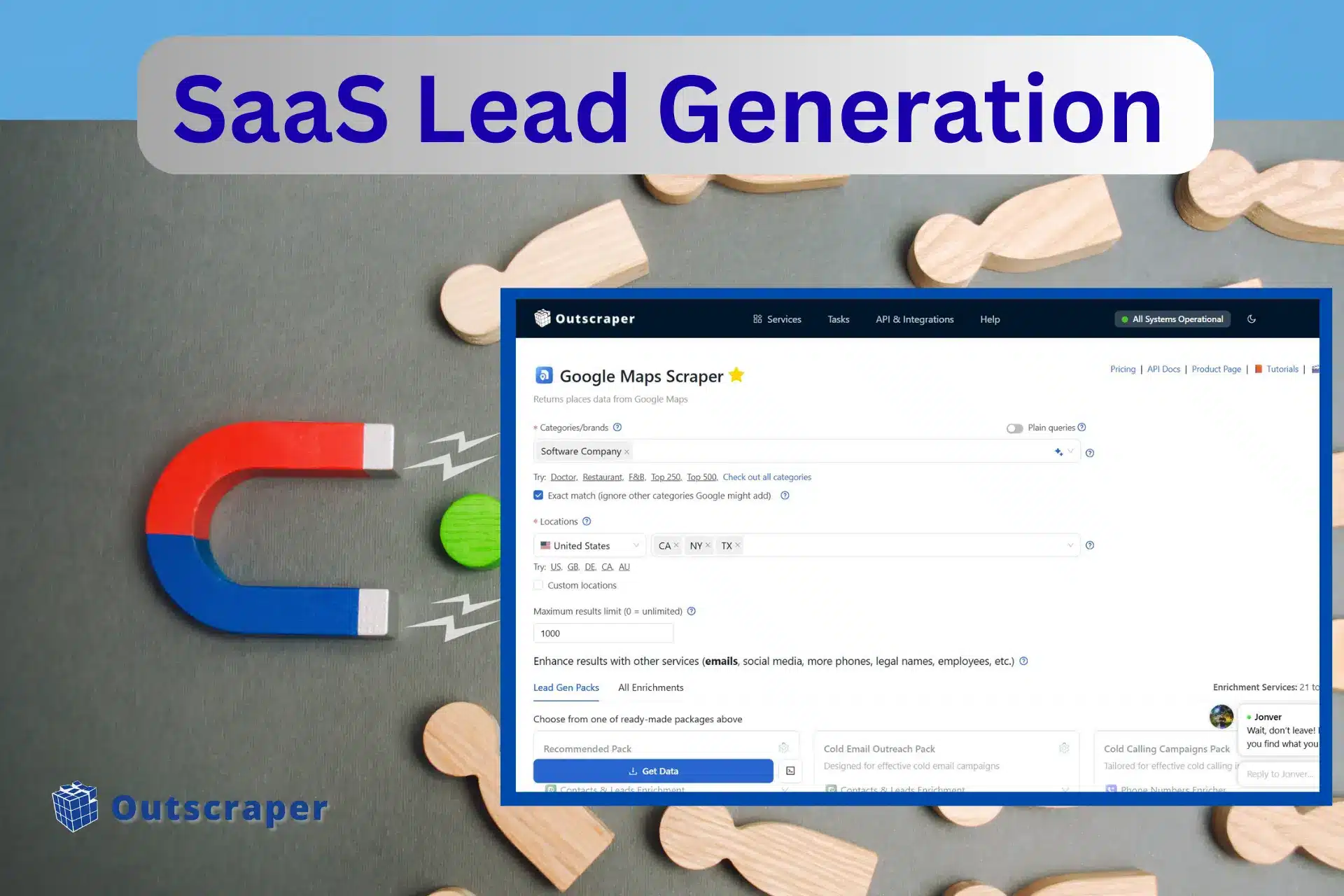
使用每月可更新的免费套餐,免费试用Outscraper。
How SaaS Lead Generation Works From Prospecting to Demo
SaaS lead generation follows a clear flow, even if the tactics vary by company size or market. It starts with targeting the right accounts, moves through outreach and engagement, and ends with a trial or demo that confirms buying intent.
Practical SaaS Lead Gen Process Step-by-Step:
- Define Target Accounts: Identify the industries, company sizes, and roles that fit your ideal customer profile.
- Research and Gather Leads: Collect accurate prospect data from databases, professional networking sites, and verified contact lists.
- Initial Outreach: Engage prospects via personalized emails, social media messages, or targeted ads.
- Engage with Content: Share case studies, guides, and demos to demonstrate the value of your solutions.
- Invite to Trial or Demo: Offer interactive trials or demos and monitor engagement to qualify leads. You can also implement an email automation for different types of ICPs.
- Follow up and Qualify: Confirm budget, authority, and readiness to purchase to focus on high-potential accounts.
Using Tech Stack and Industry Data for Better SaaS Leads
Using a prospect’s technology stack and industry as filters helps SaaS teams focus on accounts that are most likely to convert. Instead of broad outreach, this approach targets businesses that have the right tools, workflows, and needs for your software.
By combining stack and industry data, marketing and sales teams reduce low-intent prospecting. This saves time, increases the quality of conversations, and helps prioritize technology company leads that can generate recurring revenue.
What Tech Stack Data Shows & How to Find It
Tech stack data reveals the tools a business uses, from website framework and CMS to CRM systems, analytics, and cloud services. While some tools are visible on websites, others run internally and require specific enrichment to identify.
Identifying these tech staks is key to targeting prospects with high relevance, effectively creating aa living software company database that can be filtered by location and firmographics.
These are several proven methods to uncover these tools:
- Website Analysis: Examining the source code and scripts reveals frameworks and integrations.
- Job Postings: Open positions often list the internal software and development frameworks employees use.
- Database Filtering: Specialized platforms categorized companies by technologies they use for easy filtering.
While these methods are powerful, data accuracy can vary. Teams should use this info as a strong indicator, combining it with other research for the best results.
The Role of Industry Filters and Specialized Tools
Industry context shapes messaging, pricing, and use cases. Filtering by industry ensures your outreach addresses specific business challenges and resonates with decision-makers.
For example:
- Pairing stack data with company size identifies high-growth startups using modern tools.
- Matching tech stack with industry verticals shows where your solution solves critical operational needs.
This combination of filters increases the likelihood of engaging accounts that can adopt your software quickly 和 remain long-term customers.
To streamline this process, several platforms specialize in collecting and verifying this data:
- BuiltWith: Tracks website technologies and integrations.
- Outscraper BuiltWith Enricher: Bulk verifies tech stacks and enriches lead lists.
- TheirStack: Focuses on SaaS usage and internal tools.
- Other Platforms: Cross-Reference public websites, APIs, and enriched databases for accuracy.
By combining multiple sources, teams can cross-check information and reduce errors, ensuring that leads are more accurately qualified before outreach.
How Outscraper Fits Into SaaS Lead Generation and Tech Stack Research
Outscraper’s Business Data and Enrichment platform helps SaaS teams turn raw company lists into actionable technology company leads. By combining company discovery, contact data, and tech stack intelligence, teams can focus on accounts most likely to convert.
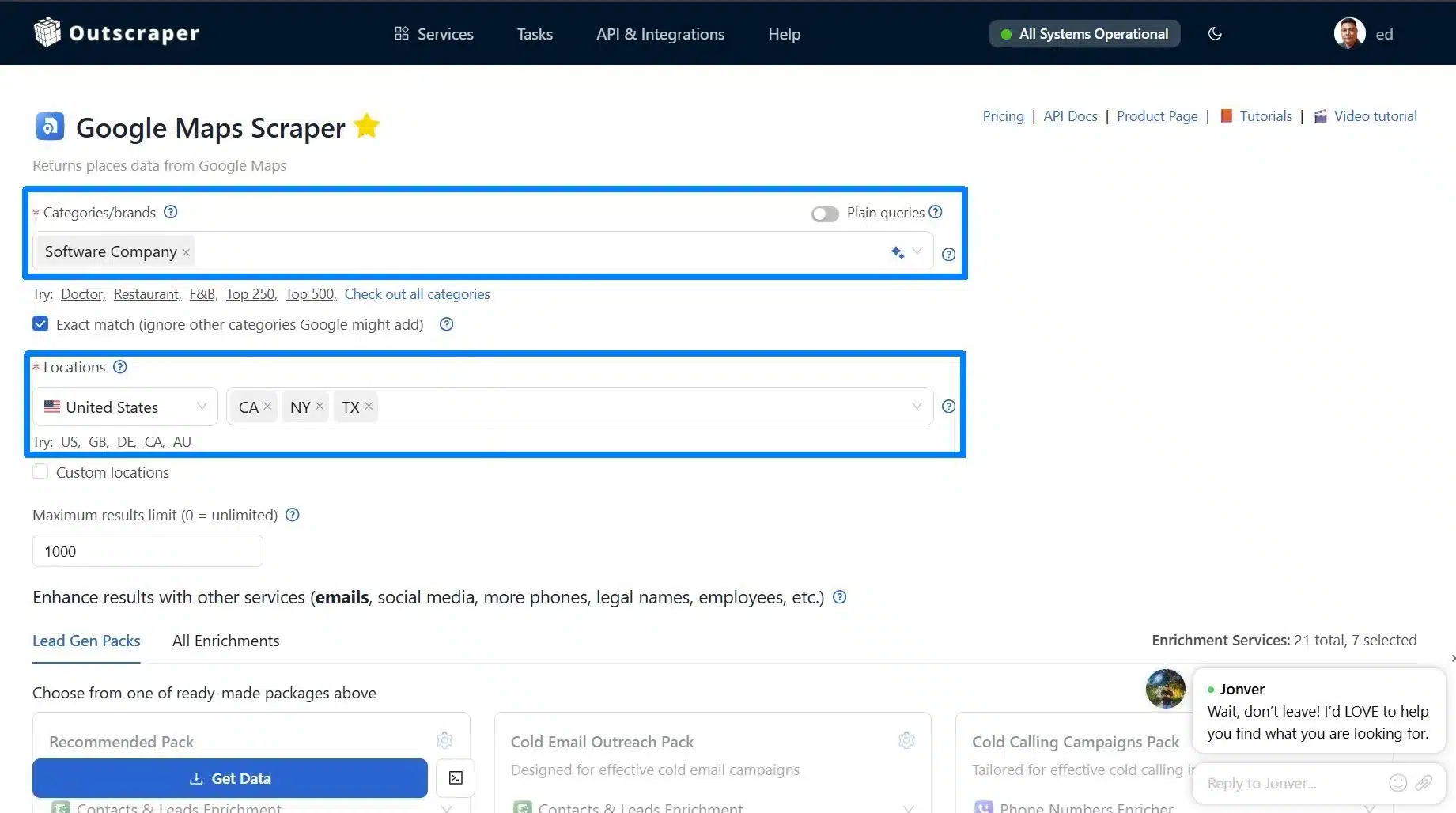
To start your SaaS lead generation strategies log in with your Outscraper account, or sign up for free if you don’t have one. Once inside your dashboard, proceed to 服务 and select 谷歌地图抓取工具. You can enriched with multiple layers of insights, ensuring leads are relevant, up-to-date, and qualified before outreach.
This approach saves time, increases pipeline efficiency, and supports personalized engagement.
Finding and Enriching SaaS Leads
The first step is identifying SaaS, software, or tech companies and preparing them for outreach. Outscraper tools make this process practical:
- Google Maps Data Scraper: Locate companies by category, location, industry, business status and profile signals.
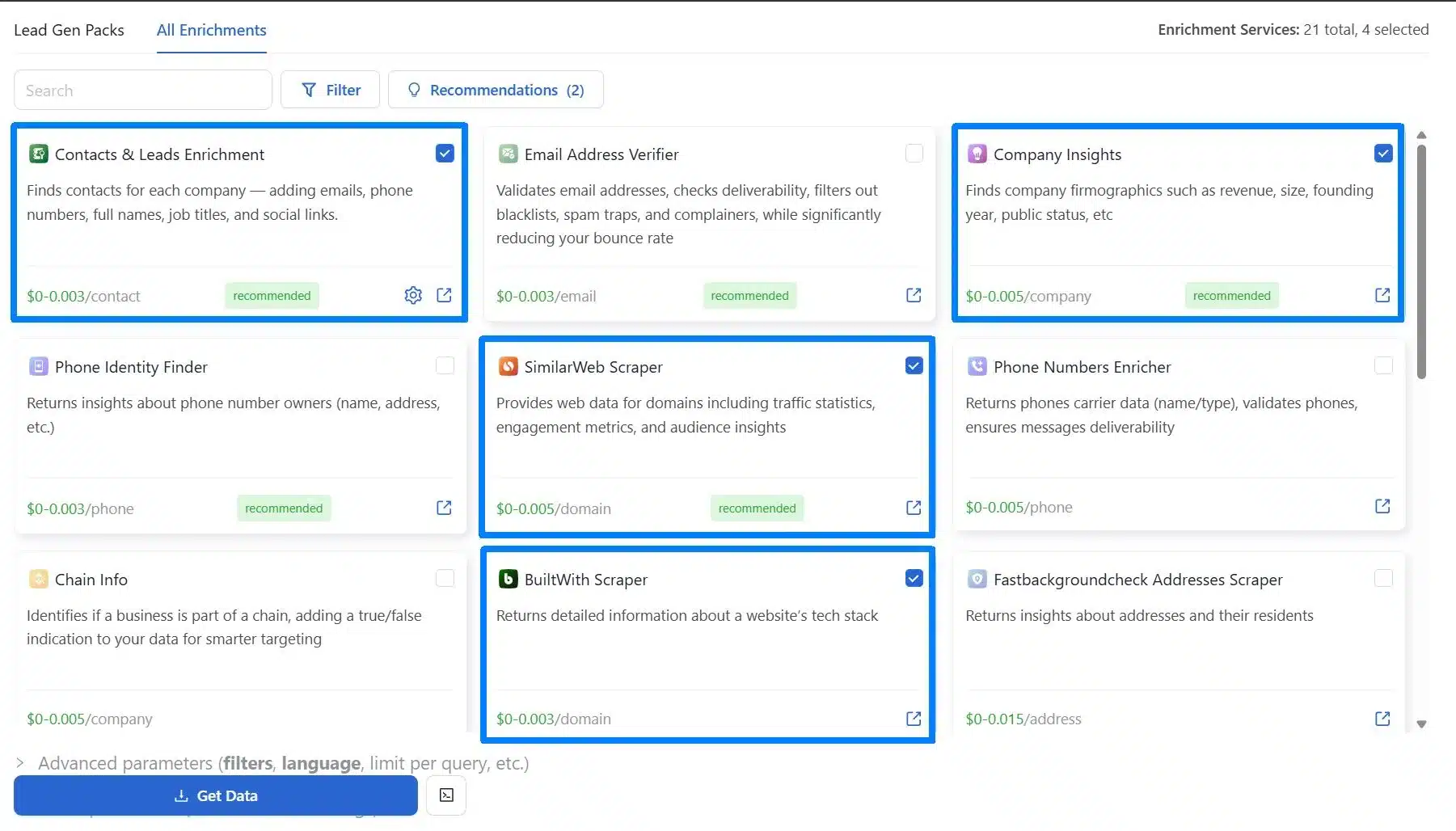
- Contacts & Leads Enrichment: Find decision-makers with full names, job titles, verified emails, phone numbers, and social profile links.
- BuiltWith Enrichment: See the technology stack used by each company.
- SimilarWeb Enrichment: Collect web traffic estimates, engagement metrics, and audience insights.
- DomainInfo Enrichment: Collect structured domain ownership and registration data at scale.
- Email Address Verifier: Validate emails, check deliverability, remove blacklists, spam traps, and risky addresses.
Enriching leads early ensures outreach is personalized and actionable, reducing wasted time on low-intent accounts. 有 other additional enrichments, but right now, we will focus only on enrichment tools that we find very useful in SaaS lead generation.
Unified Account Intelligence
In high-growth SaaS, Outscraper enables Unified Account Intelligence by layering different data streams into a single lead profile.
By merging these insights, you move from cold outreach to data-backed consulting.
- Market & Digital Maturity: Combining company context (revenue, size, founding year) with Website Intelligence (SimilarWeb traffic and engagement) allows you to filter for “Account Fit.”
- Trigger-Based Opportunity: By layering technology and reputation signals, you can identify “sales triggers.” Seeing a tech stack via BuiltWith or reading customer dissatisfaction reviews in Google Maps 和 Trustpilot reviews gives you a specific problem to solve.
- Verified Execution: Once lead is qualified, Outscraper provides the Contact & Leads data needed to reach the human behind the company. To ensure your efforts aren’t wasted, the Email Address Verifier protects your domain reputation, improves deliverability and ROI.
Advanced Filtering & Downloading of Data
After enrichment, teams can apply filters to refine lead lists further:
- Only with website / Only without website
- Operational businesses only
- Verified contacts only
- With phone numbers
- Good rating or bad rating
These filters make it easy to create lists for specific campaigns without manual cleanup.
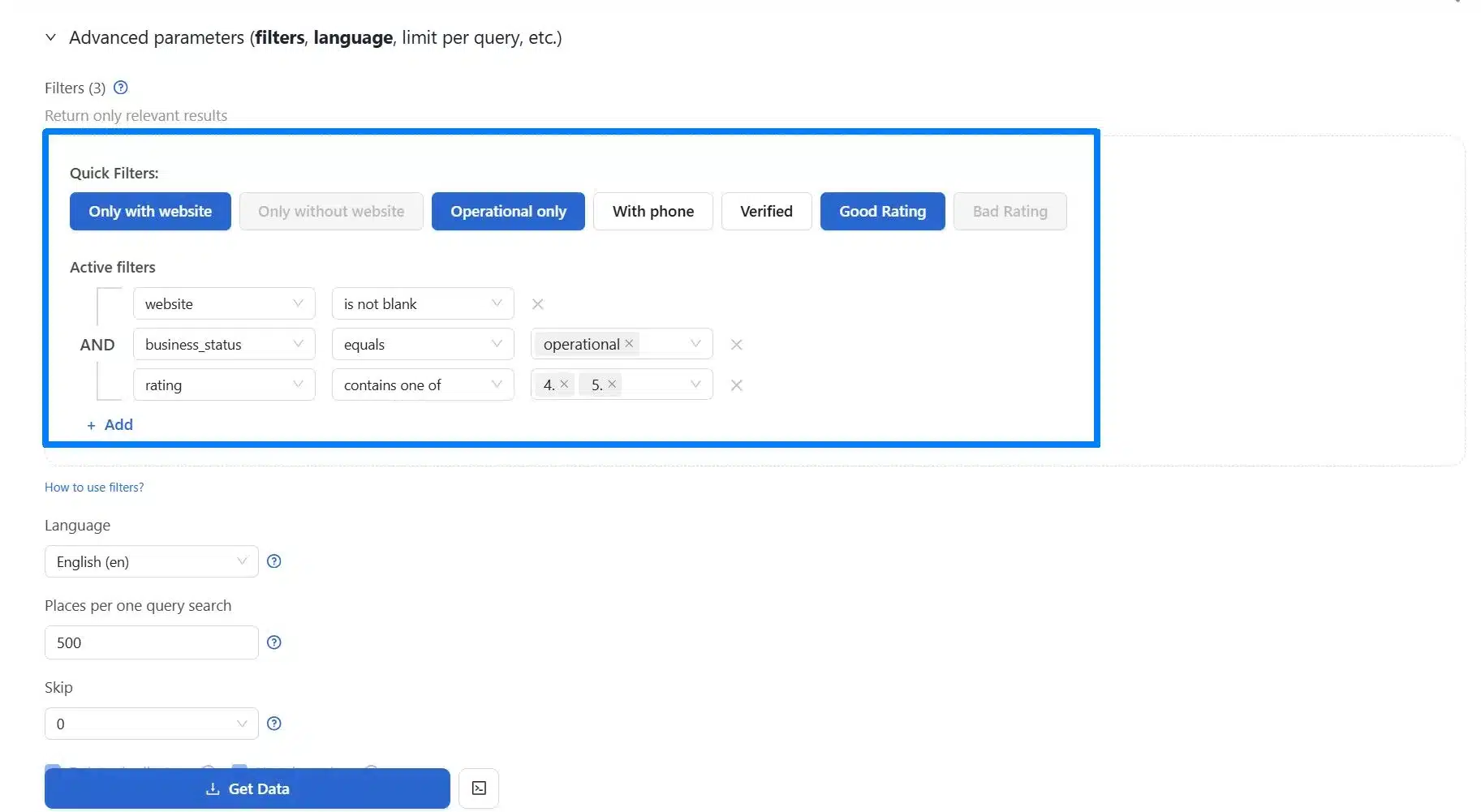
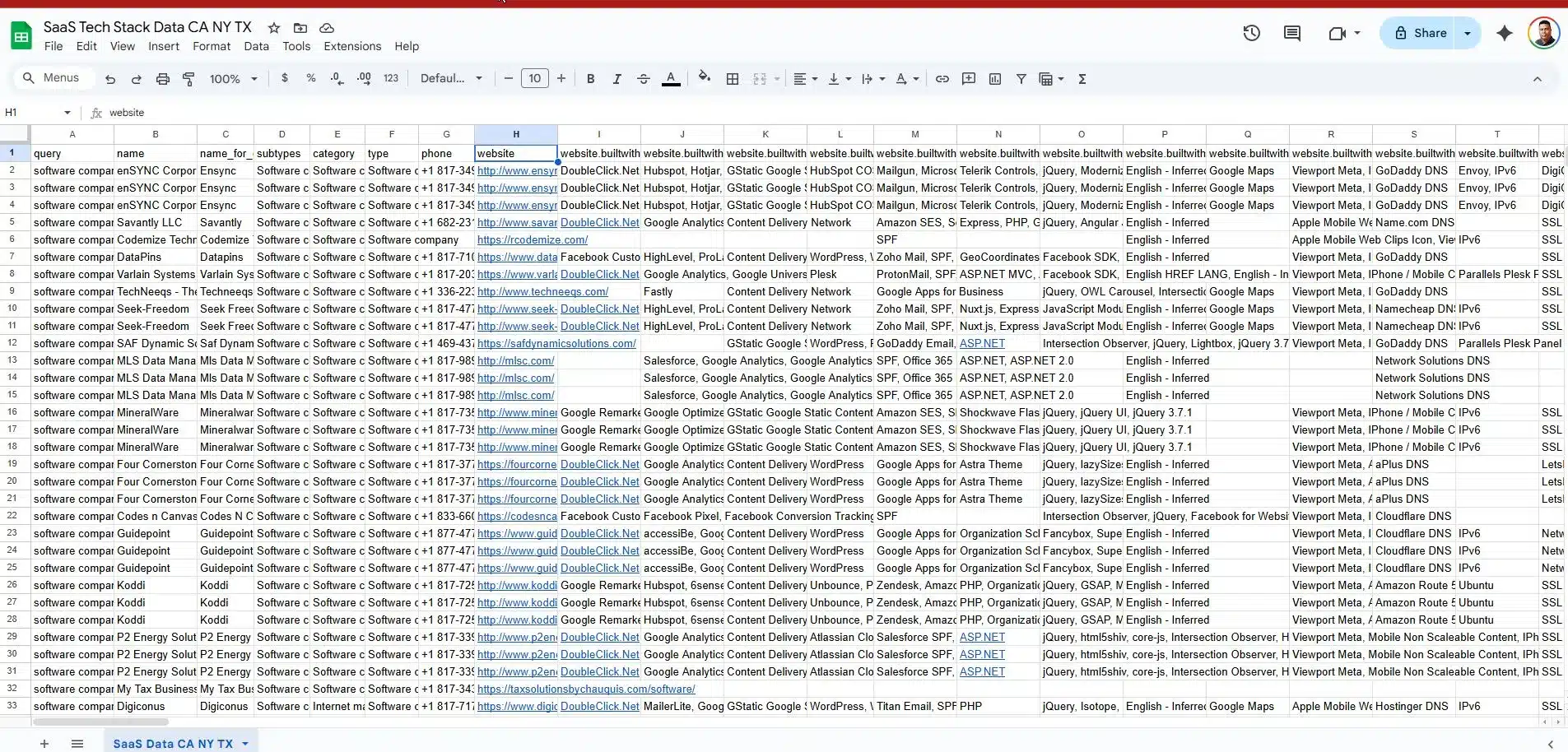
After reviewing all the parameters for your SaaS lead generation strategies, you can now download the data. By combining Outscraper enrichment with tech stack insights and advanced filters, SaaS teams can build highly targeted segments. Examples include:
- Companies using a competitor’s tool with poor reviews
- SaaS-ready businesses with verified decision-maker emails
- Growing companies with active websites but outdated tech stacks
- High-traffic companies that match a specific industry profile
This approach ensures outreach focuses on the right accounts, improves relevance, and increases the likelihood of demo requests and conversions.
使用每月可更新的免费套餐,免费试用Outscraper。
SaaS Lead Generation Approaches That Use Tech Stack and Industry Data
Using stack and industry data helps teams make outreach and demand-generation efforts more precise. By understanding the tools and context your target accounts already use, you can personalize messaging, improve relevance, and prioritize the right prospects.
Account-Based Outreach for SaaS
Account-based outreach uses enriched company and technographic data to personalize emails and professional networking sites’ messages.
Key steps include:
- Highlight the tools and platforms the prospect already uses.
- Address the specific challenges your product solves for that stack.
- Focus on accounts that are already close to the problem your SaaS addresses.
This approach reduces wasted effort and increases engagement with decision-makers because the outreach is relevant and timely.
SaaS Demand Generation With Better Segments
Stack and industry data also improve demand-generation campaigns by shaping ads, content, and landing pages around your audience’s existing tools and needs.
Best practices include:
- Segment campaigns based on tech stack or industry vertical.
- Tailor messaging to align with the platforms and workflows your prospects already use.
- Optimize landing pages and content to reflect relevant use cases.
This ensures marketing spend focuses on high-intent segments, increasing conversions and reducing wasted impressions.
Solving SaaS Targeting Challenges to Drive Sales Conversations
Relying on a single data source is a common mistake. Tools like Google Maps or BuiltWith provide useful insights, but rarely cover everything.
Missing accounts or outdated information can waste time. Combining multiple sources improves accuracy and coverage. Success requires combining multiple data streams to eliminate outdated info and fill coverage gaps.
High-converting outreach must prioritize decision-makers over end-users and include industry context to ensure the message is clear.
Transforming Data Into Strategy
Accurate data and role-based targeting are the foundation of credible outreach. By referencing a prospect’s specific tools and industry challenges, you shift the focus from features to outcomes. Segmenting your campaigns by company size and tech stack allows you to tailor ads and landing pages, resulting in more meaningful interactions and demo requests.
To maintain peak efficiency, teams must continuously measure results by tracking replies and pipeline contributions to refine their filters. Many high-performing teams use Outscraper to consolidate this tech stack and industry data into a single workflow. It helps ensure outreach focuses on the right prospects at the right time.
总结
High-quality SaaS lead generation focuses on relevance over volume. Combining company, contact, tech stack, and industry data helps target the right accounts. Personalizing outreach to decision-makers increases engagement. This approach reduces wasted effort and improves pipeline productivity.
Teams must consider context, roles, and software usage when planning for campaigns. Proper segmentation and messaging ensure outreach resonates with prospects. Measuring replies, demos, and conversions guides ongoing improvements. Updated enrichment data keeps lists actionable and timely.
Tools like Outscraper make it easier to collect, enrich, and organize lead information. Combining Google Maps data with tech stack insights focuses outreach on the most promising accounts. This workflow saves time while boosting response rates.
常见问题
最常见的问题和答案
SaaS lead generation is the process of attracting and qualifying business accounts and clients of your cloud-based services that are likely to pay for software on a recurring basis.
Tech stack data shows which tools and platforms a company uses, helping teams prioritize accounts that are compatible with their software.
Industry filters ensure outreach addresses specific business challenges, making messaging more relevant and increasing the chance of engagement.
No, single-source data often misses accounts or contains outdated information; combining multiple sources improves accuracy and coverage.
Trials and demos act as signals of intent, showing which leads are actively evaluating the software and likely to convert.
Outscraper collects company, contact, and enrichment data from Google Maps and other technology stack sources, helping teams create targeted and actionable prospect lists. It is not just a scraping tool but a very reliable business data and enrichment platform.