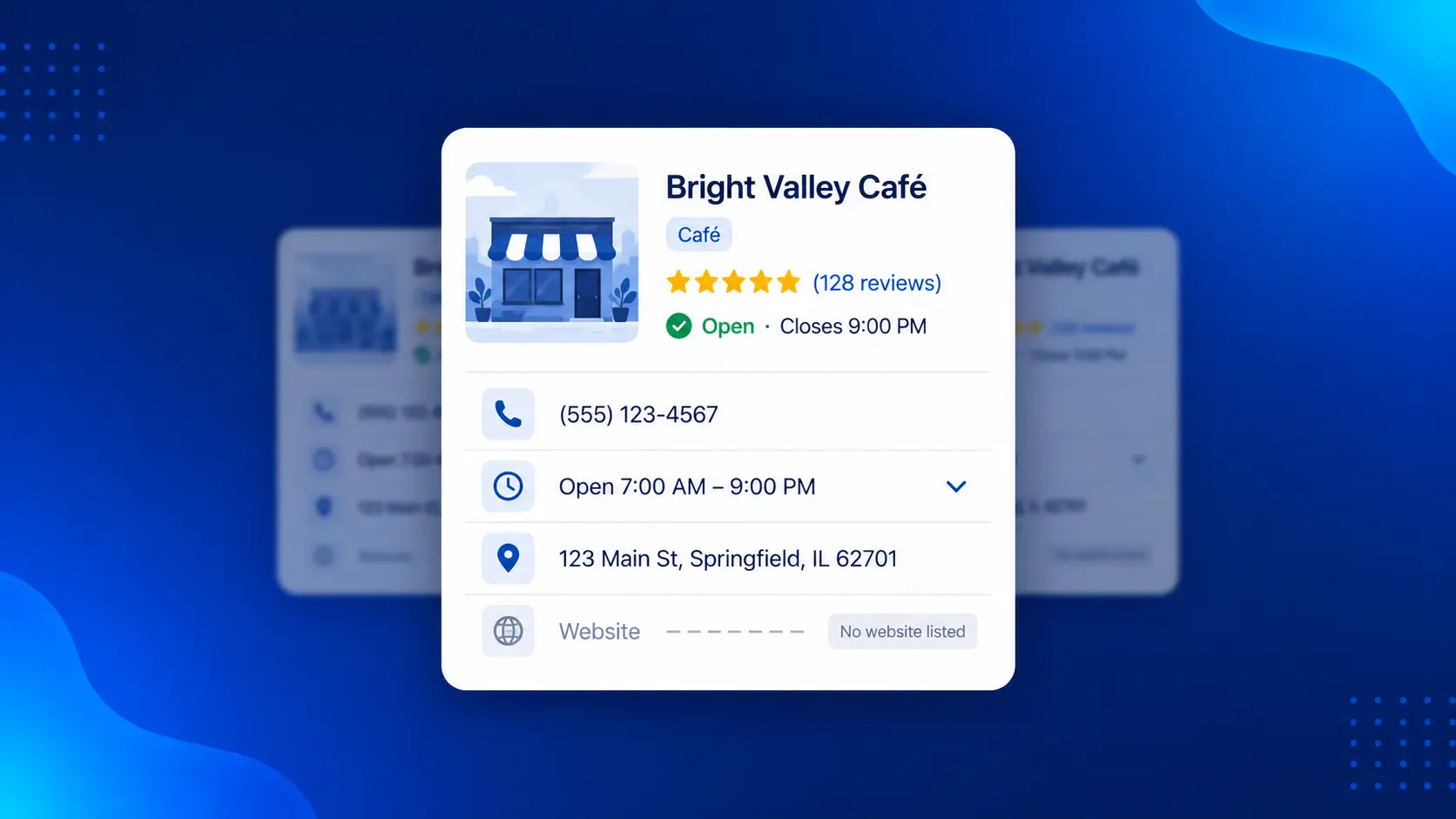
Banyak usaha lokal yang tidak memiliki situs web masih beroperasi, telah ditinjaudan mudah untuk dicari di Google Maps. Mereka mungkin memiliki nomor telepon yang aktif, jam operasional yang padat, dan ulasan pelanggan yang positif, tetapi tidak mencantumkan situs web khusus.
Kesenjangan di situs web ini penting karena dapat menunjukkan di mana agensi, pekerja lepas, tim penjualan, dan peneliti pasar dapat menemukan peluang bisnis yang jelas.
Prospek terbaik tidak selalu berasal dari bisnis yang tidak memiliki kehadiran daring. Indikator yang lebih kuat adalah bisnis yang aktif, dilengkapi dengan ulasan, nomor telepon, kategori yang jelas, dan tidak ada kolom situs web.
Artikel ini membahas 12 sektor industri lokal yang belum memiliki situs web masih umum terjadi pada tahun 2026 dan cara mengidentifikasinya dengan menggunakan umum data bisnis.
Jawaban singkat:
- Lokal perusahaan yang tidak memiliki situs web mungkin muncul di Google Maps, media sosial, direktori, atau platform pemesanan, tetapi tidak memiliki situs web khusus yang terdaftar.
- Beberapa sektor usaha yang umum meliputi layanan rumah tangga, kontraktor, jasa kebersihan, salon, pusat penitipan anak, layanan hewan peliharaan, jasa penyelenggaraan acara, dan layanan profesional lokal.
- Data situs web yang hilang paling efektif sebagai sinyal prospek ketika dipadukan dengan penilaian, ulasan, nomor telepon, kategori, jam operasional, dan status bisnis.
- Outscraper dapat membantu mengumpulkan data bisnis Google Maps berdasarkan kategori dan lokasi, lalu menyaring catatan yang kolom situs web-nya kosong.
Pemeriksaan Lapangan Singkat: Cara Mengenali Usaha Lokal yang Tidak Memiliki Situs Web
Jangan menganggap setiap kolom kosong di situs web sebagai peluang yang baik.
Bisnis yang kolom situs webnya kosong, tidak memiliki ulasan, tidak mencantumkan nomor telepon, dan detailnya tidak jelas mungkin tidak layak untuk ditambahkan ke daftar Anda. Pilihan yang lebih baik adalah bisnis yang aktif dengan kategori yang jelas, nomor telepon yang aktif, ulasan pelanggan, dan tidak mencantumkan situs web khusus.
Perbedaan itu penting.
Sebagai contoh, sebuah perusahaan kontraktor atap di San Diego, California, yang memiliki 90 ulasan, peringkat 4,7 bintang, jam operasional, dan tidak mencantumkan situs web, mungkin merupakan prospek yang lebih baik daripada bisnis yang tidak memiliki situs web dan tidak menunjukkan tanda-tanda aktivitas.
Gunakan pemeriksaan lapangan singkat ini sebelum menyusun daftar calon terpilih Anda:
| Kolom yang Harus Dicentang | Apa yang Dapat Anda Ketahui dari Hal Ini | Mengapa Hal Ini Penting |
|---|---|---|
| Kolom situs web | Apakah bisnis tersebut memiliki situs web yang terdaftar | Inilah celah utama yang sedang Anda periksa |
| Kategori bisnis | Layanan apa saja yang ditawarkan oleh perusahaan tersebut | Membantu mengelompokkan calon pelanggan berdasarkan sektor industri |
| Nomor telepon | Apakah bisnis tersebut dapat dihubungi | Bisnis yang mudah dihubungi lebih mudah untuk dihubungi |
| Peringkat | Bagaimana pelanggan memandang bisnis tersebut | Peringkat yang tinggi dapat menunjukkan kepercayaan |
| Jumlah ulasan | Seberapa aktif atau seberapa terkenalkah bisnis tersebut | Semakin banyak ulasan dapat menunjukkan adanya permintaan |
| Jam buka | Apakah bisnis tersebut tampak aktif | Jam operasional membantu menyaring catatan yang kurang valid |
| Status bisnis | Apakah penawaran tersebut masih terbuka atau sudah ditutup | Bisnis yang sudah tutup sebaiknya dihapus |
| Lokasi atau wilayah layanan | Di mana perusahaan tersebut beroperasi | Membantu menyortir berdasarkan kota, wilayah, atau daerah |
Sinyal terkuat bukanlah sekadar kolom kosong di situs web itu sendiri.
Sinyal yang lebih kuat adalah:
Bisnis aktif + kategori yang jelas + nomor telepon + ulasan + kolom situs web belum diisi.
Di sinilah data bisnis publik menjadi berguna. Dengan Pengikis Google Maps, Anda dapat mengumpulkan catatan bisnis berdasarkan kategori dan lokasi, lalu menyaring hasilnya berdasarkan kolom situs web yang belum terisi.
Bagi agensi, hal ini dapat membantu menemukan prospek di bidang desain web atau SEO lokal. Bagi tim penjualan, hal ini dapat membantu menemukan perusahaan yang mungkin membutuhkan alat pemesanan, formulir penawaran, CRM, atau halaman kontak yang lebih baik. Bagi para peneliti pasar, hal ini dapat membantu membandingkan berapa banyak usaha dalam suatu kategori yang masih bergantung di Google Maps, media sosial, direktori, atau platform pemesanan bukannya situs web mereka sendiri.
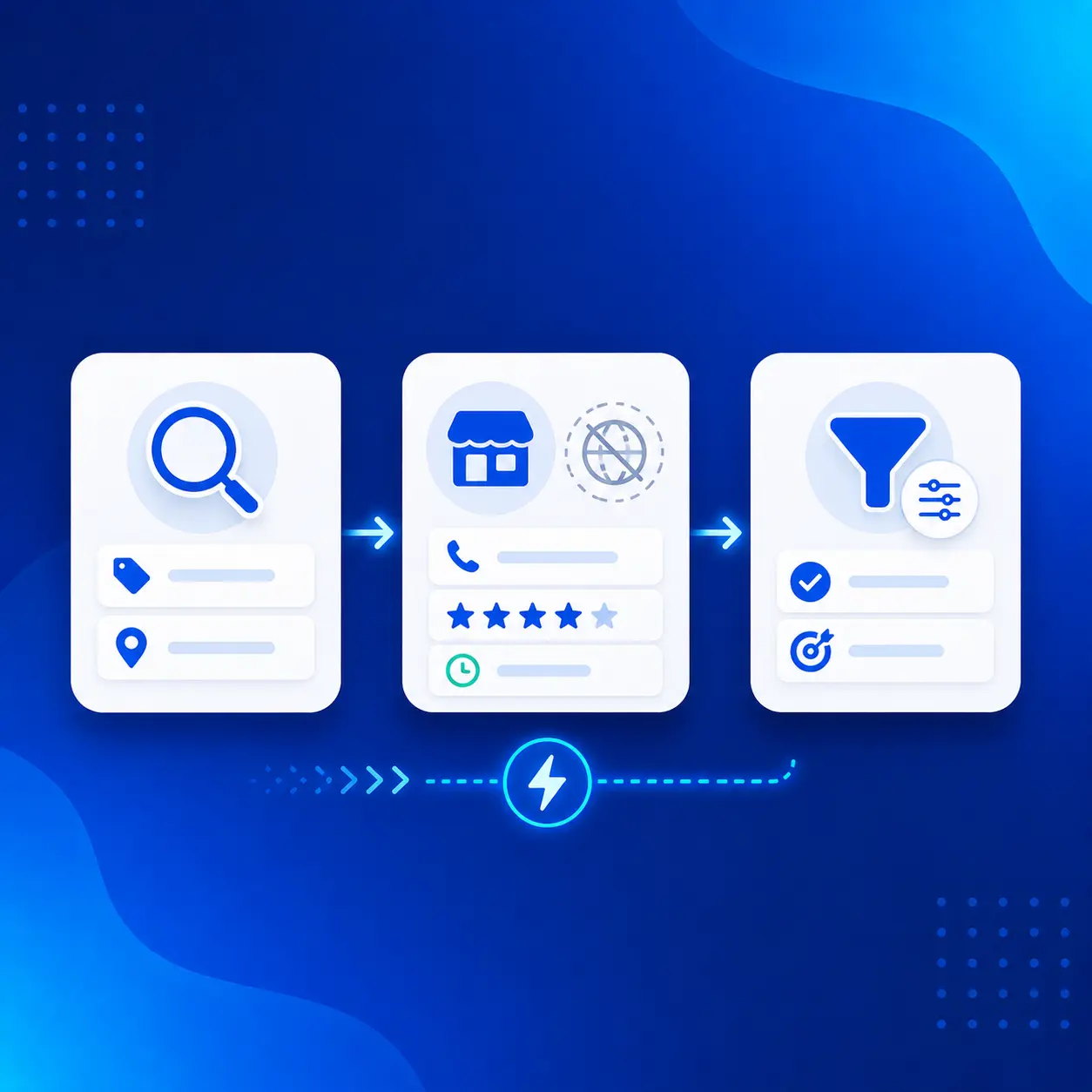
Gunakan Outscraper untuk mencari berdasarkan kategori bisnis dan lokasi, lalu saring hasil pencarian untuk menemukan bisnis yang masih aktif namun belum melengkapi kolom situs web, nomor telepon, ulasan, dan indikator prospek potensial lainnya.
12 Sektor yang Harus Diperiksa Terlebih Dahulu untuk Mengidentifikasi Kekurangan Situs Web
Situs web yang tidak tercantum seringkali lebih mudah ditemukan di sektor-sektor yang berbasis layanan, didorong oleh rekomendasi, dan dikelola langsung oleh pemiliknya. Banyak dari bisnis ini masih beroperasi. Mereka mungkin memiliki ulasan, nomor telepon, foto, jam operasional, dan permintaan yang stabil, namun tidak ada situs web khusus yang tercantum.
Survei-survei terbaru mengenai usaha kecil masih menunjukkan bahwa kepemilikan situs web belum merata. Kopling Laporan tersebut menyebutkan bahwa 83% usaha kecil memiliki situs web, yang berarti 17% di antaranya masih belum memilikinya. CFIB Penelitian tersebut juga menemukan bahwa 78% usaha kecil di Kanada memiliki situs web perusahaan, sementara banyak di antaranya juga memanfaatkan Facebook, Google Business Profile/Maps, dan Instagram untuk menjalin hubungan dengan pelanggan.
Angka pastinya bervariasi tergantung negara, sumber, dan definisi, namun polanya jelas: banyak usaha kecil yang aktif di dunia maya dalam berbagai bentuk tanpa selalu bergantung pada situs web khusus.
Daftar ini bukanlah peringkat sektor industri dengan tingkat ketidakhadiran situs web yang paling tinggi. Daftar ini merupakan titik awal yang praktis berdasarkan pola layanan lokal, kasus penggunaan umum dalam pencarian prospek, serta bidang-bidang yang dapat diperiksa dalam data bisnis Google Maps.
Untuk cakupan lokal yang lebih luas riset pasar, tim juga dapat menggunakan Data Google Maps untuk membandingkan kategori, lokasi, peringkat, jumlah ulasan, dan ketersediaan situs web.
Gunakan sektor-sektor di bawah ini sebagai kategori pertama yang perlu diperiksa saat menyusun daftar calon.
1. Layanan Rumah Tangga dan Pekerjaan Terampil
Contohnya antara lain tukang ledeng, tukang listrik, perusahaan HVAC, tukang atap, dan jasa tukang serba bisa. Bisnis-bisnis ini sering kali bergantung pada rekomendasi, panggilan darurat, dan visibilitas di Google Maps.
Sinyal terbaik: kolom situs web yang belum diisi, ulasan yang positif, nomor telepon, status bisnis yang aktif, dan kategori layanan yang jelas.
2. Konstruksi dan Kontraktor
Contohnya antara lain kontraktor umum, kontraktor renovasi, tukang cat, kontraktor lantai, dan kontraktor beton. Banyak kontraktor mendapatkan pekerjaan melalui rekomendasi, subkontrak, dan jaringan lokal.
Sinyal terbaik: kategori layanan bernilai tinggi, peringkat yang baik, foto-foto proyek, nomor telepon, dan tidak memiliki situs web khusus.
3. Penataan Lansekap dan Perawatan Rumput
Contohnya antara lain perawatan rumput, jasa pemeliharaan pohon, perawatan taman, pemeliharaan lanskap, dan layanan musiman. Banyak pelaku usaha kecil yang berkembang berkat pelanggan tetap dan rekomendasi dari masyarakat setempat.
Sinyal terbaik: wilayah layanan lokal, nomor telepon, permintaan musiman, ulasan di sekitar, dan kolom situs web yang kosong.
4. Bengkel Perbaikan Mobil dan Bengkel Karoseri
Contohnya antara lain bengkel mobil, toko ban, bengkel karoseri, layanan perawatan mobil, dan mekanik keliling. Beberapa bengkel mengandalkan pelanggan tetap, pelanggan yang datang tanpa janji, dan visibilitas di peta.
Sinyal terbaik: banyak ulasan, jam operasional, nomor telepon, kategori perbaikan yang jelas, dan tidak ada situs web yang tercantum.
5. Layanan Kebersihan
Contohnya antara lain rumah pembersihan, kantor pembersihan, karpet pembersihan, jendela pembersihan, dan pembersihan setelah pindah. Banyak tim kebersihan berskala kecil memulai usahanya melalui rekomendasi, kelompok-kelompok lokal, dan pengelola properti.
Sinyal terbaik: wilayah layanan, nomor telepon, ulasan lokal, kategori layanan kebersihan yang jelas, dan kolom situs web yang belum diisi.
6. Tempat Potong Rambut, Salon, dan Perawatan Diri
Contohnya antara lain tempat potong rambut, salon rambut, salon kuku, spa, dan studio pijat. Banyak di antaranya yang menggunakan Instagram, Facebook, atau aplikasi pemesanan alih-alih situs web.
Sinyal terbaik: kehadiran yang hanya di media sosial, tautan pemesanan, ulasan yang bagus, dan foto-foto pelanggan.
7. Restoran dan Usaha Makanan Mandiri
Contohnya antara lain restoran lokal, kafe, toko roti, truk makanan, dan jasa katering. Beberapa di antaranya mengandalkan Google Maps, aplikasi pengiriman, media sosial, atau laman menu pihak ketiga.
Sinyal terbaik: tidak memiliki situs web langsung, tautan menu dari pihak ketiga, ketergantungan pada aplikasi pengiriman, ulasan yang aktif, dan foto-foto terbaru.
8. Pusat Penitipan Anak dan Taman Kanak-kanak
Contohnya antara lain tempat penitipan anak, taman kanak-kanak, penyedia jasa penitipan anak, program ekstrakurikuler, dan pusat pembelajaran. Orang tua sering kali membutuhkan informasi lebih lanjut sebelum menelepon, sehingga tidak adanya situs web dapat menimbulkan keraguan.
Sinyal terbaik: ulasan orang tua, alamat lokal, nomor telepon, jam operasional, dan tidak memiliki situs web khusus.
9. Layanan Hewan Peliharaan
Contohnya antara lain jasa perawatan hewan peliharaan, pelatih anjing, penitipan hewan peliharaan, pengasuh hewan peliharaan, dan layanan perawatan hewan peliharaan keliling. Banyak penyedia jasa yang mengandalkan rekomendasi, media sosial, dan ulasan lokal.
Sinyal terbaik: ulasan pemilik hewan peliharaan, foto, nomor telepon, kategori layanan yang jelas, dan kolom situs web yang tidak terisi.
10. Studio Kebugaran dan Kesejahteraan
Contohnya antara lain studio yoga, studio Pilates, pusat kebugaran, pelatih pribadi, dan pelatih kesehatan. Beberapa di antaranya menggunakan platform pemesanan atau Instagram sebagai pengganti situs web mereka sendiri.
Sinyal terbaik: hanya platform pemesanan, kategori berdasarkan kelas, ulasan, jam operasional, dan kehadiran hanya di media sosial.
11. Layanan Acara
Contohnya antara lain fotografer, DJ, penjual bunga, penyedia jasa katering, dan perencana acara. Banyak di antara mereka yang mengandalkan rekomendasi, portofolio di Instagram, dan profil di platform marketplace.
Sinyal terbaik: ulasan yang bagus, tidak ada portofolio, nomor telepon, foto layanan, dan tidak ada situs web yang tercantum.
12. Layanan Profesional Lokal
Contohnya antara lain akuntan, pengacara, konsultan, agen asuransi, dan konsultan pajak. Beberapa praktik yang dijalankan sendiri atau yang sudah lama berdiri masih bergantung pada rujukan dan hubungan dengan klien.
Sinyal terbaik: kategori layanan bernilai tinggi, ulasan yang positif, nomor telepon, lokasi yang jelas, dan tidak memiliki situs web khusus.
Hubungkan Outscraper dengan proses perolehan prospek Anda dan kumpulkan data Google Maps terbaru berdasarkan kategori, lokasi, ketersediaan situs web, status bisnis, peringkat, dan ulasan.
Mengapa Perusahaan-Perusahaan Ini Masih Tidak Memiliki Situs Web Khusus
Banyak usaha lokal yang tidak memiliki situs web sebenarnya tidak mengabaikan internet. Mereka mungkin sudah mendapatkan calon pelanggan dari Google Maps, rekomendasi, media sosial, direktori, atau pelanggan setia.
Bagi sebagian pemilik usaha, situs web memang terasa berguna, tetapi tidak mendesak. Jika telepon masih berdering, mereka mungkin tidak langsung menyadari adanya kekurangan tersebut.
Berikut ini adalah alasan-alasan umum mengapa hal ini masih terjadi.
Mereka Mendapat Cukup Banyak Pekerjaan dari Rekomendasi
Banyak kontraktor, jasa kebersihan, bengkel perbaikan, dan usaha perawatan diri berkembang berkat rekomendasi dari mulut ke mulut. Jika pelanggan lama terus merekomendasikan pelanggan baru, pemilik usaha mungkin tidak menganggap situs web sebagai prioritas.
Hal ini umum terjadi di pasar-pasar lokal kecil di mana kepercayaan terbangun melalui rekomendasi dari mulut ke mulut.
Mereka Menganggap Profil Bisnis Google Sudah Cukup
Beberapa bisnis sudah terdaftar di Google Maps beserta nomor telepon, ulasan, alamat, foto, dan jam operasionalnya. Dari sudut pandang pemilik, hal itu mungkin terasa sudah cukup sebagai kehadiran daring.
Masalahnya adalah Google Business Profile tidak sepenuhnya dapat menggantikan situs web. Pelanggan mungkin masih menginginkan halaman layanan, daftar harga, opsi pemesanan, menu, contoh proyek, atau formulir kontak yang lengkap.
Mereka Justru Menggunakan Media Sosial
Beberapa bisnis memanfaatkan situs media sosial populer atau aplikasi pemesanan sebagai saluran daring utama mereka. Hal ini umum ditemui pada salon, restoran, pusat kebugaran, layanan hewan peliharaan, dan penyelenggara acara.
Media sosial dapat membantu pelanggan melihat pembaruan dan foto, tetapi lebih sulit untuk menyusun detail layanan, pertanyaan yang sering diajukan (FAQ), lokasi, dan opsi kontak di satu tempat.
Mereka Terlalu Sibuk dengan Kegiatan Sehari-hari
Banyak pemilik usaha lokal yang harus menangani penjualan, layanan pelanggan, penjadwalan, pengelolaan staf, persediaan, dan pekerjaan lapangan secara bersamaan. Membuat situs web bisa terasa seperti tugas tambahan yang tidak sempat mereka tangani.
Inilah salah satu alasan mengapa bisnis yang masih aktif bisa saja belum memiliki situs web yang terdaftar, meskipun mereka memiliki ulasan yang bagus dan permintaan yang stabil.
Mereka Khawatir Soal Biaya atau Perawatan
Beberapa pemilik beranggapan bahwa situs web itu mahal, rumit secara teknis, atau sulit diperbarui. Ada pula yang mungkin pernah memiliki situs web lama sebelumnya dan membiarkannya kedaluwarsa karena tidak dirawat.
Hal ini dapat menimbulkan ketidaksesuaian, di mana bisnis tersebut aktif secara offline dan terlihat di Google Maps, namun pelanggan tetap tidak dapat mengunjungi situs web resminya.
Mereka Tidak Menyadari Peluang yang Terlewatkan
Sebuah bisnis mungkin memang sudah menerima panggilan telepon, sehingga tidak adanya situs web mungkin tidak terasa sebagai masalah. Namun, pelanggan yang membandingkan beberapa pilihan mungkin akan memilih bisnis yang memiliki halaman layanan, rincian harga, foto, tanda-tanda kepercayaan, dan langkah-langkah pemesanan yang lebih jelas.
Inilah sebabnya mengapa data situs web yang tidak tersedia dapat bermanfaat bagi agensi, tim penjualan, dan peneliti. Hal ini menunjukkan di mana sebuah bisnis mungkin terlihat, dapat dihubungi, dan aktif, namun masih belum memiliki saluran yang sering diharapkan oleh pelanggan.
Kartu Penilaian Kesenjangan Situs Web untuk Tahun 2026
Tidak semua industri memiliki tingkat kesenjangan situs web yang sama. Beberapa kategori lebih mudah diperiksa karena bisnis-bisnisnya bersifat lokal, berbasis layanan, dan dapat dihubungi melalui telepon. Sementara itu, kategori lain mungkin sudah bergantung pada platform pemesanan, halaman media sosial, atau direktori pihak ketiga.
Gunakan kartu penilaian ini sebagai cara sederhana untuk membandingkan dari mana sebaiknya Anda memulai. Peringkat-peringkat ini didasarkan pada faktor-faktor praktis dalam pencarian prospek, bukan persentase kepemilikan situs web secara keseluruhan di seluruh industri.
| Industri | Kemungkinan Selisih | Potensi Penyebaran | Sinyal Terbaik yang Perlu Diperiksa | Sudut Kemiringan Terbaik |
|---|---|---|---|---|
| Layanan rumah tangga dan jasa tukang | Tinggi | Tinggi | Ulasan + nomor telepon | Permintaan penawaran lainnya |
| Konstruksi dan kontraktor | Tinggi | Tinggi | Foto proyek + kategori layanan | Tunjukkan karya-karya sebelumnya dan bangun kepercayaan |
| Penataan Taman dan Perawatan Rumput | Tinggi | Sedang-Tinggi | Wilayah layanan lokal + permintaan musiman | Mendapatkan pelanggan tetap |
| Bengkel perbaikan mobil dan bengkel karoseri | Sedang-Tinggi | Sedang | Ulasan + jam operasional | Bantu pelanggan memeriksa layanan sebelum menelepon |
| Layanan kebersihan | Tinggi | Tinggi | Wilayah layanan + nomor telepon | Ubah permintaan lokal menjadi permintaan penawaran harga |
| Pangkas rambut, salon, dan perawatan diri | Sedang | Sedang | Hanya profil media sosial + tautan pemesanan | Tambahkan halaman layanan dan detail pemesanan |
| Restoran dan usaha kuliner | Sedang | Sedang | Tautan menu dari pihak ketiga | Mengelola menu dan menangani pesanan |
| Tempat penitipan anak dan pusat penitipan anak | Sedang-Tinggi | Tinggi | Ulasan orang tua + alamat lokal | Bangun kepercayaan sebelum orang tua menghubungi |
| Layanan hewan peliharaan | Sedang-Tinggi | Sedang-Tinggi | Ulasan + foto | Tampilkan layanan, kebijakan, dan informasi pemesanan |
| Studio kebugaran dan kesehatan | Sedang | Sedang | Hanya platform pemesanan | Jadwal, harga, dan keanggotaan yang dapat diatur sendiri |
| Layanan acara | Sedang-Tinggi | Tinggi | Foto-foto layanan + portofolio yang hilang | Tampilkan karya, paket, dan formulir pertanyaan |
| Layanan profesional lokal | Sedang | Tinggi | Layanan berkualitas tinggi + ulasan | Bangun kepercayaan sebelum konsultasi |
Kartu skor yang sama juga dapat dipandang sebagai bagan peluang. Sektor-sektor dengan skor tertinggi menggabungkan kemungkinan adanya kesenjangan situs web, potensi jangkauan yang kuat, serta sinyal bisnis yang jelas yang dapat diverifikasi melalui data publik.
Bagan ini tidak didasarkan pada persentase ketidakhadiran situs web yang tepat menurut sektor industri. Gunakanlah sebagai panduan praktis untuk memilih kategori mana yang harus diperiksa terlebih dahulu.
Sektor Industri dengan Peluang Terbesar yang Harus Diperhatikan Terlebih Dahulu
Skor peluang berdasarkan kartu skor di atas.
Misalnya, seorang kontraktor yang memiliki ulasan bagus, foto-foto proyek, nomor telepon yang aktif, dan tidak mencantumkan situs web mungkin merupakan prospek yang lebih baik daripada iklan yang tidak menunjukkan tanda-tanda aktivitas.
Tujuannya adalah untuk menemukan bisnis yang sudah dikenal dan mudah dihubungi, namun masih belum memiliki situs web khusus untuk halaman layanan, formulir kontak, langkah-langkah pemesanan, menu, contoh proyek, atau indikator kepercayaan.
Cara Membuat Daftar Calon Terpilih dengan Metode Outscraper
Setelah memilih sektor industri yang ingin Anda teliti, langkah selanjutnya adalah mengubah gagasan tersebut menjadi daftar prospek yang terorganisir dengan baik atau basis data usaha lokal.
Anda bisa melakukannya secara manual dengan mencari di Google Maps satu kategori dan satu kota pada satu waktu, tetapi cara itu akan segera terasa lambat. Cara yang lebih cepat adalah mengumpulkan data bisnis secara massal, lalu menyaringnya berdasarkan kolom-kolom yang relevan.
Berikut ini adalah alur kerja yang sederhana:
- Pilih kategori usaha, seperti tukang ledeng, jasa kebersihan, tempat penitipan anak, atau jasa perawatan hewan peliharaan.
- Masukkan lokasi yang ingin Anda periksa, seperti kota, wilayah, provinsi, atau wilayah layanan.
- Tentukan batas hasil maksimum sesuai dengan seberapa panjang daftar yang Anda inginkan.
- Pilih layanan pengayaan jika Anda memerlukan informasi kontak atau rincian bisnis tambahan.
- Buka "Parameter Lanjutan" dan terapkan filter cepat seperti Hanya tanpa situs web dan Hanya untuk keperluan operasional.
- Pilih hapus duplikat untuk mengurangi daftar yang berulang.
- Gunakan kode pos jika Anda menginginkan cakupan lokasi yang lebih luas atau lebih terstruktur.
- Klik Dapatkan Data dan tinjau hasilnya.
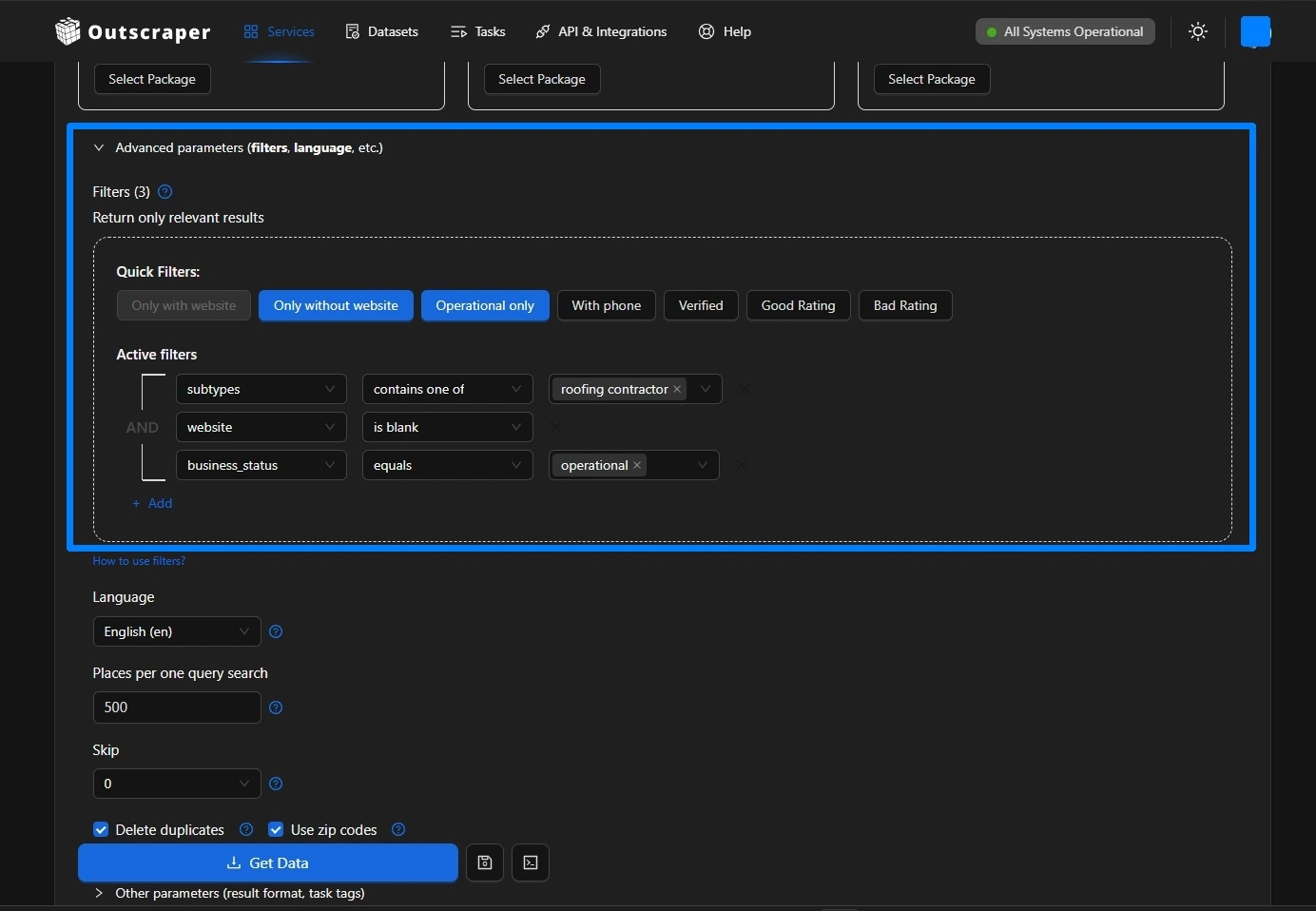
Hal ini memberi Anda daftar pilihan yang lebih berguna daripada sekadar daftar kolom situs web yang kosong. Anda dapat berfokus pada bisnis aktif yang sesuai dengan kategori, lokasi, dan kriteria situs web Anda sebelum meluangkan waktu untuk menjalin kontak atau melakukan riset.
Misalnya, sebuah agensi dapat mencari kontraktor atap di San Diego, California, lalu menerapkan Hanya tanpa situs web dan Hanya untuk keperluan operasional saring, hapus duplikat, lalu lihat daftar bisnis beserta peringkat, ulasan, nomor telepon, dan kategori layanan yang jelas.
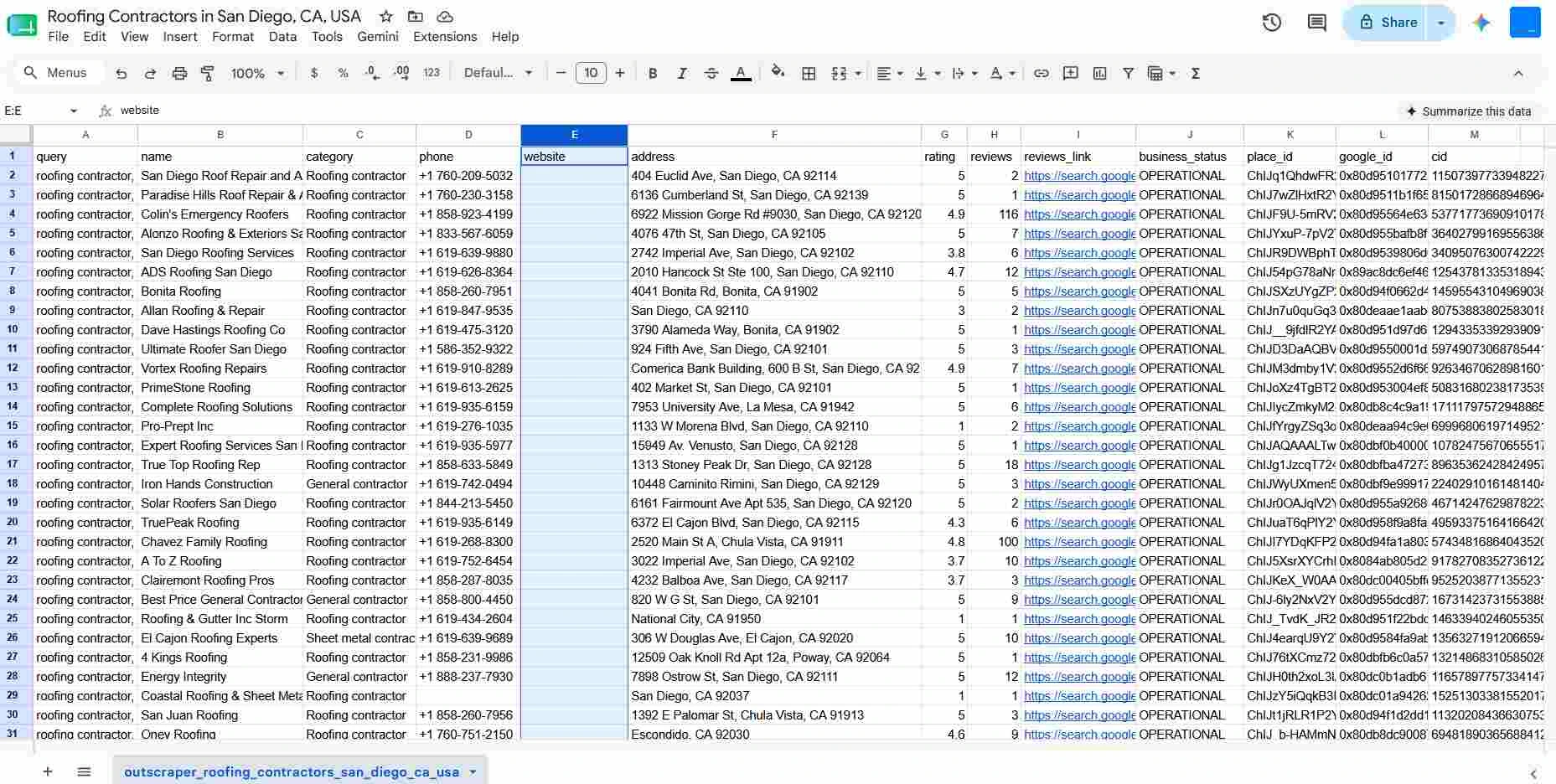
Dengan Outscraper, tim dapat menemukan prospek yang belum tercakup oleh situs web dengan lebih cepat karena proses pencarian, penyaringan, dan kolom data ditangani dalam satu alur kerja, alih-alih memeriksa daftar satu per satu.
Daftar Periksa Terakhir untuk Mencari Usaha Lokal yang Tidak Memiliki Situs Web
Sebelum melakukan kegiatan penjangkauan, periksa:
- Kategori dan lokasi sesuai dengan pasar sasaran Anda.
- Kolom situs web kosong atau tidak ada.
- Status bisnis saat ini adalah beroperasi.
- Nomor telepon, penilaian, dan ulasan tersedia.
- Iklan ganda telah dihapus.
- Bisnis ini cukup aktif sehingga layak untuk ditinjau.
Gunakan Outscraper untuk mencari berdasarkan kategori dan lokasi, terapkan filter seperti Hanya tanpa situs web dan Hanya untuk keperluan operasional, hapus data ganda, dan buat daftar prospek yang lebih rapi berdasarkan data bisnis terbaru dari Google Maps.
FAQ
Pertanyaan dan jawaban paling sering
Bisnis lokal yang tidak memiliki situs web adalah bisnis yang mungkin muncul di Google Maps, media sosial, direktori, atau platform pemesanan, tetapi tidak memiliki situs web khusus yang terdaftar untuk dikunjungi pelanggan.
Anda dapat melakukan pencarian berdasarkan kategori bisnis dan lokasi, mengumpulkan data bisnis, serta menyaring catatan yang kolom situs webnya kosong. Selanjutnya, periksa peringkat, ulasan, nomor telepon, jam operasional, kategori, dan status bisnis untuk menemukan bisnis yang masih aktif dan layak untuk diulas.
Beberapa sektor yang perlu diperiksa terlebih dahulu antara lain jasa rumah tangga, kontraktor, penataan taman, bengkel mobil, jasa kebersihan, salon, pusat penitipan anak, jasa hewan peliharaan, studio kebugaran, jasa penyelenggaraan acara, restoran, dan jasa profesional lokal.
Halaman media sosial memang bisa membantu, tetapi tidak dapat menggantikan situs web milik bisnis itu sendiri. Situs web memberikan wadah yang lebih jelas bagi pelanggan untuk melihat layanan, harga, lokasi, formulir kontak, menu, foto, langkah-langkah pemesanan, serta indikator kepercayaan.
Beberapa usaha kecil mengandalkan rekomendasi, pelanggan setia, Google Maps, Facebook, Instagram, direktori, atau aplikasi pemesanan. Sebagian lainnya menghindari situs web karena pertimbangan biaya, waktu, pemeliharaan, atau kurangnya pengetahuan teknis.
Ya. Data situs web yang tidak tersedia dapat berguna untuk mencari prospek jika dipadukan dengan tanda-tanda aktivitas, seperti ulasan yang positif, nomor telepon yang aktif, sebuah kategori layanan yang jelas, jam operasional, dan status usaha yang aktif.
Pastikan apakah bisnis tersebut masih aktif, dapat dihubungi, dan relevan dengan penawaran Anda. Periksa ulasan, peringkat, nomor telepon, kategori, foto, status bisnis, wilayah layanan, serta apakah bisnis tersebut sudah menggunakan media sosial atau tautan pemesanan dari pihak ketiga.