Índice
Introduction to Effective Email Verification
Effective email verification is essential in any company’s lead generation and marketing strategies. To keep your email list healthy and deliverable, run it through an email verification service tool at least quarterly. We will discuss the five essential tips for effective email verification that will keep your email list healthy and deliverable using the email verification tools from Outscraper.
An email list is one of the most essential marketing assets because of its impressive revenue-generating powers. However, we must overcome challenges so emails do not land in prospective customers’ spam folders. We must also keep our email list healthy and deliverable because it will affect our business reputation.
What is Email Verification?
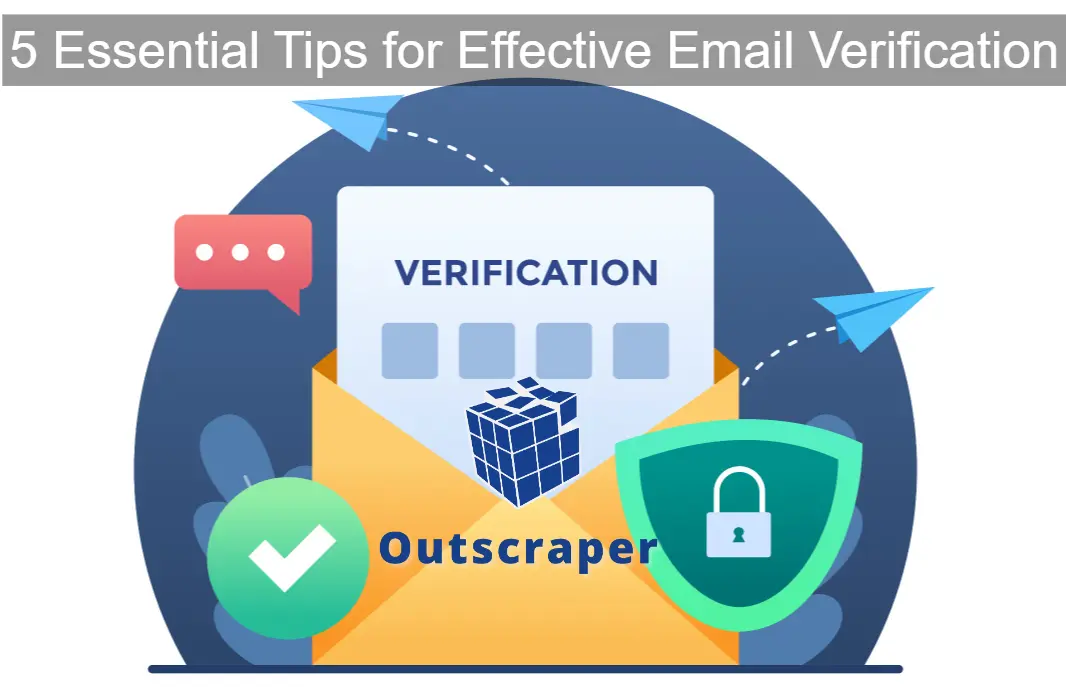
Email verification is the process of checking, confirming, validating, and ensuring that emails are authentic and the message can reach and connect you to a real person with an active email address.
A verified and valid email address could boost customer engagement, which leads to more effective communication and marketing efforts. An engaged audience is more likely to interact with and respond to the content they receive.
Email verification is used for various purposes, such as reducing bounce rates, preventing fraud, enhancing data quality, and improving user experience. Aside from the usual uses, it is also important to note that email verification has many benefits.
Benefits of Email Verification
- Campaign Effectiveness Improvement: One of the benefits of email verification is that it improves campaign effectiveness. It will increase the likelihood of reaching your business’s right people and intended recipients.
- Minimal Costs: A verified email also reduces the costs associated with undeliverable emails, in addition to losing valuable time and wasted resources.
- Sender Reputation’s Protected: Verified emails help maintain a good sender reputation with email service providers.
- Higher Engagement: Verified emails will increase engagement rates with recipients.
General Email Marketing Statistics
- Global email users are expected to reach 4.48 billion by 2024 and grow to 4.59 billion by 2025, and they are predicted to reach 4.73 billion by 2026. (Mailbutler)
- 50% of all emails are opened on mobile devices, so companies need to optimize emails for mobile viewing. (Banklinko)
- The number of emails sent and received globally per day is projected to grow to 361.6 billion by 2024 and 392.5 billion by 2026. (Mailbutler)
- Apple Mail holds the largest market share at 58.07%, followed by GMail at 29.67%. (Mailbutler)
- 47% of email recipients check the subject line before deciding whether to open or not the email received. (Mailbutler)
- Email subject lines containing 20-60 characters featuring short and concise subjects perform better. (Smartinsights)
- Email marketing remains highly effective, with 62% of B2C and B2B marketers in the US having increased their budget over the past years. (Banklinko)
Overview of the Five Tips to Keep Your Email List Healthy
One crucial strategy in maintaining a successful email marketing campaign is ensuring your email list is healthy and deliverable. We will discuss five essential tips for effective email verification. The 5 Essential Tips for Effective Email Verification will keep your email list healthy and deliverable. We will discuss the importance and benefits of each tip, make some suggestions to implement, and provide some suggested tools to be used.
Five Essential Tips for Effective Email Verification
- Regularly Clean Your Email List
- Using Double Opt-In
- Verifying Email Address in Real-Time
- Monitoring Engagement Metrics
- Segmenting Your List
1. Regularly Clean Your Email List
Cleaning our email list to remove invalid and inactive email addresses is very important. Regularly removing invalid addresses is crucial. It will improve your deliverability, enhance engagement metrics and cost efficiency, improve sender reputation, and give you accurate reporting insight.
- Improved Deliverability: Emails are delivered to an active and valid address.
- Better Sender Reputation: ISPs monitor sender behavior and reputation, and high bounce rates, spam complaints, and low engagement can harm your sender’s reputation.
- Enhanced Engagement Metrics: Engaged and active recipients are more likely to open, read, and interact with your emails.
- Cost Efficiency: Keeping your email list clean reduces costs, ensuring you only pay for contacts that generate ROI.
- Accurate Reporting and Insights: Cleaning your email list ensures that your analytics and reporting reflect the actual performance of your campaigns.
Steps for Cleaning Your Email List
- Remove hard bounces: Hard bounces occur when emails are permanently undeliverable; you can use your ISP’s reporting tools to find and remove hard bounces.
- Correct Syntax Errors: Fix email addresses with common typos or formatting mistakes.
- Segment and Re-engage Inactive Subscribers: define inactivity by setting criteria, sending a re-engagement campaign, and removing non-responders.
- Filter out unsubscribers: You should respect unsubscribe requests because they are crucial for maintaining a positive relationship with your subscribers, their trust, and your reputation.
- Eliminate duplicates: To eliminate duplicates, use your ESPs’ tools to find and merge duplicate emails and consolidate data so that all contact information is in a single entry per subscriber.
Tools, Techniques, and Methods in Automating Email Cleaning
Automating the email cleaning process involves using specialized tools and techniques to ensure your list remains valid, engaged, and up-to-date.
Tools for Email Cleaning
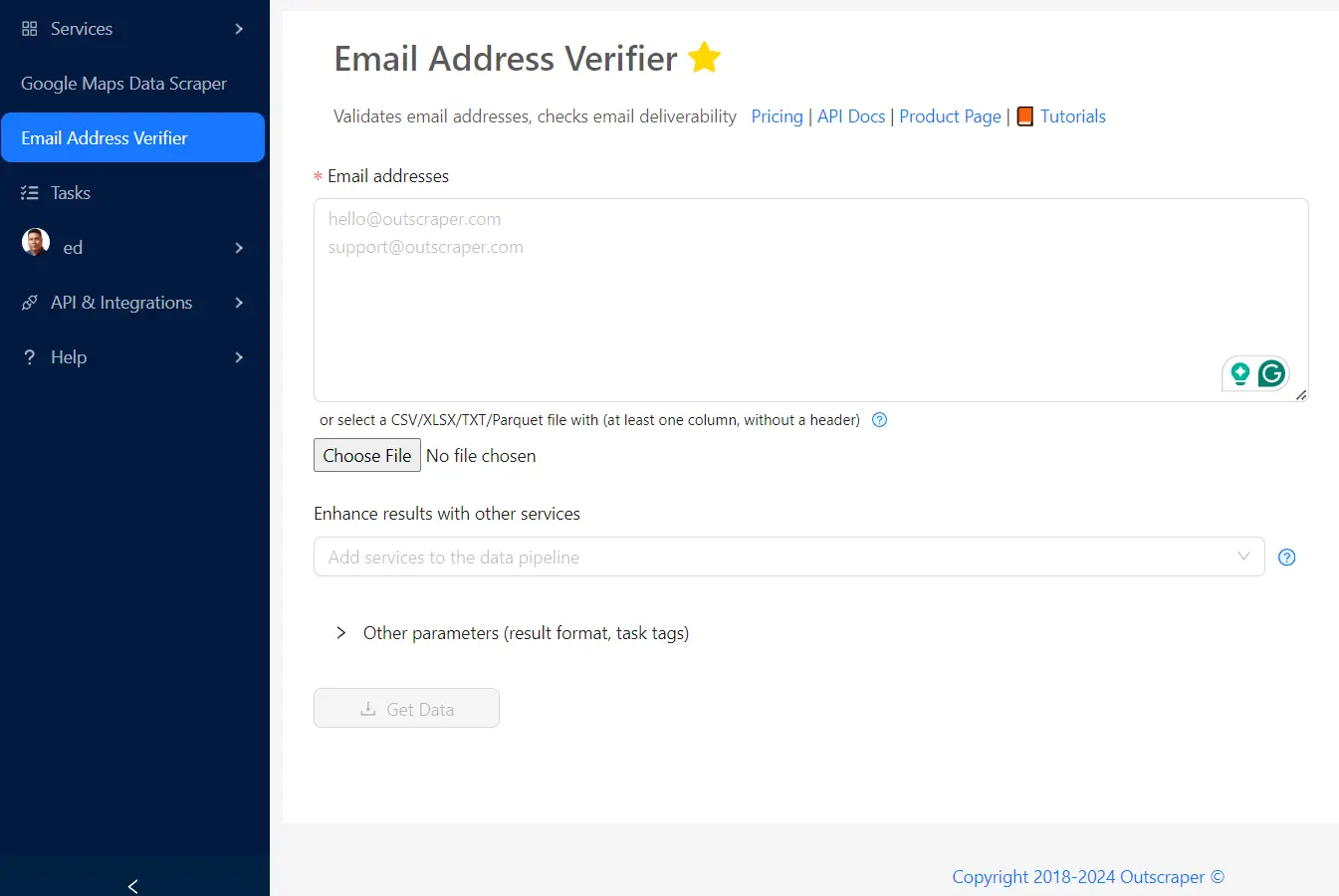
- Outscraper: Offers real-time email verification and email validation. It helps remove invalid and spammy emails to ensure they are active and deliverable.
- Hunter.io: Primarily known for finding email addresses and offers email verification to clean your email list.
- ZeroBounce: Offers email validation, spam trap detection, and abuse email checker.
2. Use Double Opt-In
The double opt-in process is a two-step method for confirming email subscriptions. It ensures that only genuinely interested and valid subscribers are added to your email list.
The process involves two steps: an initial setup and a subsequent confirmation, both of which the subscribers must complete. In the initial setup, subscribers provide their email addresses and a checkbox for consent. The next step is for confirmation; an automated email is sent to the provided address, and a confirmation link is provided to confirm their subscription.
Aside from the two-step method, there is also a final confirmation by clicking the confirmation link and a welcome email, which will be sent to engage the new subscribers further. Double Opt-in in Email strategies has benefits, such as improved deliverability, higher engagement rates, regulatory compliance, and reduced spam complaints. It will also ensure genuine interest and reduce spam.
Best Practices for Implementing Double Opt-In
Implementing a double opt-in process involves clear communication, engaging confirmation emails, and mobile optimization. Start by informing subscribers about the need for confirmation and setting expectations for the content they will receive. Ensure the confirmation email has a clear message, a prominent call to action, and matches your brand’s design. Follow up promptly with a welcome email after confirmation to keep subscribers engaged.
You can also track metrics like open and click-through rates to monitor performances and use A/B testing to optimize emails. Simplify the unsubscribe process, choose reputable email service providers, and ensure compliance with regulations like GDPR and CAN-SPAM. These practices help maintain a high-quality, engaged email list, enhancing deliverability and engagement.

3. Verify Email Addresses in Real-Time
What is the importance of real-time verification?
Real-time verification is essential for maintaining the quality and effectiveness of email marketing campaigns. By verifying email addresses as they are collected, businesses can ensure validity, which improves email deliverability, prevents invalid signups, and reduces bounce rates.
It will also enhance the sender’s reputation with ESPs, ensuring the emails reach the recipients’ inboxes rather than being filtered as spam. Real-time verification also enhances engagement rates by maintaining a clean and engaged email list, leading to higher open and click-through rates.
Tools for Real-Time Email Verification
- Outscraper
- ZeroBounce
- NeverBounce
- Hunter.io
- BriteVerify
4. Monitor Engagement Metrics
Tracking key engagement metrics in your email list is crucial for evaluating the effectiveness of your email marketing campaigns.
Key Metrics to Monitor
- Open Rate: measures the percentage of recipients who open your email, indicating the effectiveness of subject lines and the overall interest of your audience.
- Click-Through Rate (CTR): The percentage of recipients who click on links within your email shows your email content’s engagement level and effectiveness.
- Conversion Rate: Tracks the percentage of recipients who complete a desired action, such as purchasing, resulting in ROI.
- Bounce Rate: The percentage of emails that could not be delivered.
- Unsubscribe Rate: Percentage of recipients who unsubscribe from your mailing list, indicating how well your content meets expectations.
- Spam Complaint Rate: Percentage of recipients who mark your email as spam.
- List Growth Rate: Es shows the Rate at which your email list is growing, helping you gauge your effectiveness.
- Engagement Over Time: Tracks changes in recipient engagement over time, helping identify long-term trends.
- Email Sharing/Forwarding Rate: The percentage of recipients who share or forward your emails.
- Return on Investment (ROI): Measures the financial effectiveness of your email marketing efforts.
Potencia tu marketing por correo electrónico con nuestra lista de comprobación gratuita para la validación de listas de correo electrónico
Asegúrate de que tus correos electrónicos lleguen a las bandejas de entrada correctas con nuestro 5 pasos imprescindibles para validar tu lista de correo electrónico. Elimina las direcciones no válidas, comprueba la sintaxis de los correos electrónicos y protege tu reputación como remitente. Descarga la lista de comprobación de forma gratuita y empieza a mejorar tu capacidad de entrega del correo electrónico y la participación en la campaña hoy.
Analyzing and Acting on Key Metrics:
If we want to optimize our email marketing campaigns, we must analyze and act on key engagement metrics. Open rates indicate the effectiveness of subject lines and overall audience interest. Low open rates can be improved by A/B testing subject lines, personalizing them, and optimizing send times.
Enhancing Click-Through Rates (CTR) involves improving CTA placement, optimizing content for relevance, and testing different email formats. Improving Conversion rates also requires clear CTAs, optimized landing pages, and offering valuable incentives. Bounce rates highlight issues with email deliverability and list quality. Regularly cleaning the list, implementing double opt-in, and monitoring the sender’s reputation can help reduce bounce rates.
High unsubscribe rates suggest content misalignment with audience expectations, which can be addressed by segmenting the audience, optimizing email frequency, and gathering feedback from unsubscribers.
To mitigate Spam Complaint Rates, ensure email relevance, provide easy unsubscribe options, and verify consent. The list growth rate measures email list expansion and can be boosted by enhancing signup forms, offering incentives, and promoting signup opportunities.
Tracking engagement over time helps identify trends, necessitating content refresh and re-engagement campaigns. Email sharing/forwarding rates indicate content value, which can be increased by encouraging sharing and creating shareable content. Finally, ROI assesses financial effectiveness, requiring ongoing campaign optimization, cost monitoring, and focusing on high-performing strategies.
5. Segment Your Email List
Email list segmentation is the process of dividing an email list into smaller, more targeted groups based on specific criteria such as demographics, behaviors, interests, or past interactions.
Email segmentation allows marketers, business owners, and entrepreneurs to tailor their messages to meet different segments’ unique needs and preferences, enhancing the relevance and effectiveness of their email campaigns or strategies.
Some of the Benefits of Email List Segmentation
- Increased Engagement
- Mejora de la capacidad de entrega
- Higher Conversion Rates
- Efficient Resource Allocation
- Personalized Customer Experience
- Better Insights and Analytics
How to Segment Your Email List
Email list segmentation involves dividing your email subscribers into smaller, targeted groups based on specific criteria such as demographics, behaviors, and interests. Esto allows for more personalized and relevant email campaigns.
- Demographic Segmentation: Based on age, gender, job title, etc., to tailor content to different audience segments.
- Geographic Segmentation: Based on location to promote region-specific events or offers.
- Engagement Level Segmentation: This is based on how often subscribers engage with your emails, allowing you to re-engage inactive users or reward loyal ones.
- Purchase History Segmentation: Based on past purchases to recommend similar products or offer discounts.
- Behavioral Segmentation: Based on purchase history, email engagement, and browsing behavior to target users with relevant messages.
- Lifecycle Stage Segmentation: Based on where subscribers are in the customer journey, such as new or lapsed customers.
- Psychographic Segmentation: Based on interests, values, and lifestyle to create personalized content.
Tools for Email Segmentation
- Mailchimp
- Hubspot
- Campaign Monitor
Conclusión
Effective email verification is vital for maintaining a healthy email list, enhancing deliverability, and improving overall email marketing performance. By implementing regular list cleaning, using double opt-in, verifying emails in real-time, monitoring engagement metrics, and segmenting their email lists, businesses can optimize their email campaigns and achieve better results.
These practices ensure compliance with regulations and foster stronger relationships with subscribers, ultimately leading to increased customer engagement and higher ROI. It would help if you noted that one of the most essential tools you could utilize for effective email verification is the Verificador de correo electrónico y la Validador de correo electrónico tools provided by Outscraper. You can even bulk verify your email list using the tools from one of the most reliable web scraping apps today, Outscraper.
Pruebe Outscraper de forma gratuita con un nivel gratuito renovable mensualmente.
Preguntas más frecuentes
Preguntas y respuestas más frecuentes
La validación del correo electrónico es el proceso de comprobar si el correo electrónico es admisible. Todo el proceso se divide en 4 etapas.
- Validar el formato del correo electrónico es válido.
- Buscar si el correo electrónico está en las listas negras.
- Comprobar que los registros DNS son válidos.
- Comprobación de la existencia de correo electrónico en el servidor mediante la ejecución de peticiones SMTP.
- Iniciar sesión en Plataforma Outscraper.
- Introduzca su correo electrónico en el cuadro de texto de la página.
- Haga clic en validar.
- Iniciar sesión en Plataforma Outscraper.
- Inserte sus correos electrónicos o seleccione un archivo con correos electrónicos en la primera columna.
- Haga clic en validar.
- Iniciar sesión en Plataforma Outscraper.
- Seleccione su archivo con correos electrónicos.
- Haga clic en el botón "Validar".
- Espere a que termine el proceso de validación.
- Elimine todos los correos electrónicos con estado "no válido" del archivo de resultados que recibe tras el proceso de validación.
Sí. El validador de direcciones de correo electrónico de Outscraper es 100% gratuito.
La limpieza de la lista de correo electrónico, también conocida como «higiene» o «depuración» de la lista, es una práctica esencial para cualquier persona que se dedique al marketing o la comunicación por correo electrónico. A continuación, te explicamos varias razones por las que es importante limpiar periódicamente tu lista de correo electrónico:
Mejora de la capacidad de entrega: Con el paso del tiempo, es posible que algunas direcciones de correo electrónico de tu lista queden inactivas o dejen de ser válidas. Enviar correos electrónicos a estas direcciones puede provocar rebotes. Unas tasas de rebote elevadas pueden afectar negativamente a tu reputación como remitente, lo que a su vez puede afectar a la capacidad de entrega de tus correos electrónicos. Al depurar tu lista, te aseguras de que envías correos electrónicos a direcciones válidas, lo que puede mejorar tus tasas de entrega.
Mayores índices de participación: Al eliminar a los suscriptores inactivos, te quedas con una lista de personas que tienen más probabilidades de abrir, leer e interactuar con tus correos electrónicos. Esto puede traducirse en mayores tasas de apertura y de clics, que son métricas clave en el marketing por correo electrónico.
Reducción de costes: Muchos proveedores de servicios de correo electrónico (ESP) cobran en función del número de suscriptores o del volumen de correos electrónicos enviados. Al mantener una lista limpia, puedes ahorrar dinero al no enviar correos electrónicos a direcciones inactivas o no válidas.
Cómo evitar las trampas de spam: Con el tiempo, los proveedores de servicios de Internet (ISP) y las organizaciones antispam pueden convertir algunas direcciones de correo electrónico en “trampas de spam”. Enviar correos electrónicos a estas direcciones puede dañar gravemente tu reputación como remitente. Limpiar tu lista te ayuda a evitar estas trampas.
Mejor segmentación y orientación: Una lista de correo limpia permite una mejor segmentación. Al saber quiénes son tus suscriptores activos y comprometidos, podrás adaptar tu contenido de forma más eficaz a los distintos segmentos de tu público.
Aumento del retorno de la inversión: Con una lista más depurada, es más probable que tus campañas de correo electrónico lleguen a suscriptores interesados y comprometidos, lo que se traduce en mejores tasas de conversión y un mayor retorno de la inversión en tus iniciativas de marketing por correo electrónico.
Mantener una imagen de marca positiva: Enviar continuamente correos electrónicos a personas que no están interesadas o a direcciones no válidas puede dañar la imagen de tu marca. Puede dar la impresión de que se trata de spam o de una falta de consideración. Una lista depurada garantiza que tus correos lleguen a quienes les encuentran utilidad.
Cómo evitar las sanciones: Algunos países cuentan con normativas estrictas en materia de comunicaciones electrónicas, como la Ley CAN-SPAM en Estados Unidos o el RGPD en Europa. El envío de correos electrónicos a personas que no han dado su consentimiento o a direcciones no válidas puede acarrear multas cuantiosas.
Métricas precisas: Al depurar tu lista de correo electrónico, obtienes una visión más precisa del rendimiento de tus correos electrónicos. Si la lista está llena de direcciones inactivas o no válidas, métricas como la tasa de apertura y la tasa de clics pueden verse distorsionadas.
Personalización mejorada: Con una lista depurada, podrás personalizar mejor tus campañas de correo electrónico en función del comportamiento y las preferencias de los usuarios, lo que se traduce en una comunicación más eficaz.
En resumen, depurar tu lista de correo electrónico es una buena práctica que puede traducirse en un mejor rendimiento de los correos electrónicos, una mayor participación, un ahorro de costes y el cumplimiento de la normativa. Depurar tu lista con regularidad garantiza que tus campañas de marketing por correo electrónico sean lo más eficaces posible.