Das Inhaltsverzeichnis
Einführung
In der sich schnell entwickelnden Landschaft des Business-to-Business (B2B)-Marketings ist es für den Erfolg entscheidend, zu wissen, wo man hochinteressante Leads findet. Wir blicken voraus auf das Jahr 2026, Google Maps entwickelt sich zu einem leistungsstarken Werkzeug für B2B-Vermarkter, und bietet einen umfassenden Zugang zu Unternehmen, die aktiv nach Dienstleistungen und Lösungen suchen. Unternehmen haben Schwierigkeiten, mit Leads in Kontakt zu treten, die nicht nur relevant, sondern auch bereit sind, sich zu engagieren. Diese Unterbrechung führt zu niedrigeren Konversionsraten und einem weniger effizienten Verkaufsprozess.
Darüber hinaus kann der Mangel an genauen Echtzeitdaten dazu führen, dass Unternehmen entscheidende Chancen verpassen. In einem wettbewerbsorientierten Markt ist die Unfähigkeit, mit hochinteressanten Interessenten in Kontakt zu treten kann den Unterschied zwischen Erfolg und Misserfolg ausmachen. Da B2B-Unternehmen bestrebt sind, ihre Marketing-Strategien zu optimieren, wird der Bedarf an einer zuverlässigen, hochintelligenten Datenbank immer dringender.
In diesem Artikel wird untersucht, wie Google Maps ständig aktualisierte Echtzeitdaten bereitstellt, die es den Unternehmen ermöglichen, auf die aktuellsten Informationen über potenzielle Kunden zuzugreifen, und wie Outscraper als Instrument zurum diese Daten zu extrahieren. Auf diese Weise können B2B-Vermarkter Unternehmen identifizieren, die aktiv nach Dienstleistungen suchen, was die Kontaktaufnahme mit hochinteressanten Kunden erleichtert.
Verständnis von Google Maps
Google Maps hat sich weit über ein einfaches Navigationstool hinaus entwickelt. Ursprünglich entwickelt, um Nutzern bei der Suche nach einer Wegbeschreibung zu helfen, hat es sich zu einer umfassenden Plattform entwickelt, die detaillierte Informationen über Unternehmen liefert, einschließlich Bewertungen, Fotos und Öffnungszeiten. Diese Entwicklung hat es zu einer unschätzbaren Ressource für B2B-Vermarkter gemacht, die mit potenziellen Kunden in Kontakt treten wollen.
Eine der wichtigsten Funktionen, die Google Maps auszeichnen, sind die erweiterten Unternehmenseinträge. Unternehmen können detaillierte Profile erstellen, in denen sie ihre Dienstleistungen, Produkte und Alleinstellungsmerkmale präsentieren. Diese Detailgenauigkeit ermöglicht es potenziellen Kunden, schnell fundierte Entscheidungen zu treffen, was die Wahrscheinlichkeit einer Konversion erhöht.
Die lokale Suchmaschinenoptimierung (SEO) spielt eine entscheidende Rolle im B2B-Marketing. Es wird gesagt, dass etwa 92% der Kunden ziehen bei B2B-Käufen einen lokalen Anbieter in Betracht. Google Maps lässt sich nahtlos in lokale SEO-Strategien einbinden und ermöglicht es Unternehmen, in den Suchergebnissen an prominenter Stelle zu erscheinen, wenn potenzielle Kunden nach bestimmten Dienstleistungen in ihrer Umgebung suchen. Diese Sichtbarkeit ist entscheidend für die Gewinnung von hochinteressanten Kunden, die bereit sind, sich zu engagieren.
Intention und Verhalten der Nutzer
Verstehen Daten zur Nutzerabsicht sind für jede B2B-Strategie unerlässlich. Google Maps-Nutzer haben in der Regel eine hohe Suchabsicht, da sie aktiv nach bestimmten Dienstleistungen oder Produkten suchen. Diese Absicht kann in mehrere Verhaltensweisen unterteilt werden:
- Proximity-Suchen
Viele Nutzer wenden sich an Google Maps, wenn sie sofortige Lösungen benötigen. Mit der Proximity-Suche können die Nutzer angeben, wie nahe die Suchbegriffe in den Ergebnissen beieinander liegen sollen. Zum Beispiel, ein Unternehmen auf der Suche nach ein lokaler Anbieter wird verwenden. die Plattform für finden. Optionen in der Nähe. Dies ist besonders nützlich in Szenarien, in denen sich die Bedeutung eines Satzes aufgrund der Anordnung der Wörter erheblich ändern kann.
Wie die Näherungssuche funktioniert
Die Näherungssuche umfasst in der Regel die folgenden Komponenten.
- Suchalgorithmus: Die zugrundeliegende Technologie, die die Abfrage verarbeitet und Dokumente auf der Grundlage der definierten Nähe abruft.
- Suchbegriffe: Die Schlüsselwörter oder Ausdrücke, nach denen die Nutzer suchen.
- Proximity Operator: Ein spezielles Symbol oder ein Befehl, der den maximal zulässigen Abstand zwischen den Suchbegriffen angibt. Übliche Operatoren sind:
- “NEAR” bedeutet, dass die Begriffe nahe beieinander stehen müssen.
- “WITHIN” Legt eine maximale Anzahl von Wörtern zwischen dem Begriff
Forschung und Vergleich
Nutzer verwenden Google Maps häufig, um verschiedene Unternehmen zu recherchieren und zu vergleichen, bevor sie eine Entscheidung treffen. Sie können Rezensionen lesen, Bewertungen ansehen und sogar Fotos von Produkten oder Dienstleistungen betrachten. Diese Forschungsphase ist kritisch, da sie ermöglicht Unternehmen, sich wirksam gegenüber ihren Konkurrenten zu positionieren. Dies ermöglicht eine Marktanalyse, ein Wettbewerbsbenchmarking und ein strategisches Marketing für das Unternehmen.
Mobile Accessibility
With the increasing use of mobile devices, Google Maps has become even more accessible. Users can search for businesses on the go, making it easier for them to find solutions in real-time. This mobile accessibility further enhances the platform’s ability to generate high-intent leads.
Integration with Other Google Services
Google Maps does not operate in isolation; it integrates seamlessly with other Google services, enhancing its utility for B2B marketers.
Google Business Profile
By utilizing Google Business Profile, companies can manage their online presence across Google, including Maps and Search. This integration ermöglicht businesses to update their information, respond to reviews, and engage with customers directly, further increasing their visibility and credibility.
Google Ads
Google Ads can be strategically used in conjunction with Google Maps to target high-intent users. Businesses can create location-based ads that appear when users search for relevant keywords, driving traffic to their listings and increasing the likelihood of conversion.
Data Insights and Analytics
Another significant advantage of using Google Maps as a B2B database is the wealth of data insights it provides. Businesses can access analytics that reveal user behavior, such as how many people viewed their listing, requested directions, or called their business. This data is invaluable for refining marketing strategies and understanding customer preferences.
Targeted Marketing Strategies
With access to detailed analytics, businesses can develop targeted marketing strategies that resonate with their audience. For example, if a company notices a spike in interest from a specific geographic area, it can tailor its marketing efforts to that region, maximizing its chances of conversion.
Competitive Analysis
Google Maps also allows businesses to conduct competitive analysis. By examining competitors’ listings, reviews, and customer engagement, companies can identify gaps in the market and adjust their offerings accordingly.
The Future of B2B Marketing on Google Maps
As we move toward 2026, the role of Google Maps in B2B marketing is expected to grow even further. Several trends are likely to shape this evolution:
Increased Focus on User Experience
As competition intensifies, businesses will need to prioritize user experience (UX) on their Google Maps listings. This includes maintaining accurate information, responding to reviews promptly, and providing high-quality visuals that showcase their offerings. A positive UX can lead to increased customer satisfaction, loyalty, and ultimately, higher revenue. Here are some key reasons why UX is crucial in B2B:
- Complex Decision-Making: B2B purchases often involve multiple stakeholders and lengthy decision-making processes. A seamless and intuitive user experience can simplify this process, making it easier for teams to collaborate and reach consensus.
- Long-Term Relationships: B2B transactions typically involve long-term contracts and relationships. A focus on UX can enhance customer satisfaction, leading to repeat business and referrals.
- Brand Differentiation: In a crowded marketplace, a superior user experience can set a company apart from its competitors. Businesses that prioritize UX are more likely to be perceived as innovative and customer-centric.
- Increased Efficiency: A well-designed user experience can improve workflows, reduce training time, and minimize errors, ultimately saving time and resources for both the provider and the client.
Integration of AI and Machine Learning (ML)
The integration of artificial intelligence (AI) and machine learning will enhance the capabilities of Google Maps, providing even more personalized experiences for users. Businesses that use these technologies will be better positioned to capture high-intent leads.
Applications of AI and ML in B2B Transactions
1. Predictive Analytics
Predictive analytics utilizes AI and ML algorithms to analyze historical data and forecast future trends. In B2B transactions, this can help companies anticipate customer needs, optimize inventory levels, and improve supply chain management. For instance, businesses can predict demand fluctuations, allowing them to adjust their production schedules accordingly.
2. Automated Customer Service
AI-powered chatbots and virtual assistants can handle customer inquiries and support requests 24/7, reducing the need for human intervention. This not only enhances customer satisfaction but also allows companies to allocate resources more effectively. By analyzing customer interactions, these systems can continuously improve their responses and provide personalized support.
3. Fraud Detection
AI and ML algorithms can analyze transaction patterns to identify anomalies that may indicate fraudulent activity. By implementing these technologies, businesses can enhance their security measures, reduce financial losses, and build trust with their partners. Real-time monitoring and alerts enable companies to respond swiftly to potential threats.
4. Enhanced Data Management
AI and ML can automate data entry and management tasks, reducing human error and increasing efficiency. By integrating these technologies, businesses can ensure that their data is accurate, up-to-date, and easily accessible. This facilitates better decision-making and improves overall operational efficiency.
5. Personalized Marketing
AI-driven marketing solutions can analyze customer behavior and preferences to deliver targeted content and recommendations. In B2B transactions, this means that companies can tailor their marketing strategies to specific segments, increasing the likelihood of successful engagements and conversions.
Expansion of Augmented Reality (AR)
Augmented reality features may become more prevalent on Google Maps, allowing users to visualize products or services in real-time. This innovation could further enhance user engagement and drive conversions.
Applications of AR in B2B Transactions
1. Product Visualization
AR enables businesses to showcase their products in a more interactive and engaging manner. For instance, manufacturers can provide clients with AR-enabled catalogs that allow them to visualize products in their own environment. This capability is particularly beneficial for industries such as furniture, construction, and automotive, where spatial awareness is crucial.
2. Training and Development
Training employees or clients on complex products can be challenging. AR can simplify this process by providing immersive training experiences. For example, technicians can use AR glasses to receive real-time instructions while performing maintenance tasks, reducing errors and improving efficiency.
3. Enhanced Collaboration
AR facilitates remote collaboration among teams and clients. With AR tools, participants can share a virtual workspace, allowing them to visualize and manipulate 3D models together, regardless of their physical location. This capability is invaluable for design and engineering teams working on intricate projects.
4. Marketing and Sales
AR can significantly enhance marketing strategies by creating memorable experiences for potential clients. Interactive AR advertisements or virtual showrooms can capture attention and provide a deeper understanding of products. This engagement can lead to higher conversion rates and improved customer relationships.
5. Supply Chain Management
In supply chain operations, AR can improve inventory management and logistics. AR applications can provide real-time data on stock levels, helping businesses make informed decisions about restocking and distribution. This can lead to reduced costs and increased efficiency.
Outscraper for Business Data Extraction
1. Data Collection
Outscraper is a powerful tool that ermöglicht businesses to extract data from Google Maps, by automating the data collection process, Outscraper enables companies to gather large volumes of information quickly, saving time and resources.
2. Customizable Data Extraction
With Outscraper, users can customize their data extraction parameters. This means businesses can focus on specific industries, locations, or business types, ensuring that the data collected aligns with their target audience. This level of customization enhances the relevance of the data, making it more actionable.
3. Integration with Other Tools
Outscraper can seamlessly integrate with various CRM and marketing automation tools. This integration ermöglicht businesses to streamline their workflows, ensuring that die data collected from Google Maps can be easily utilized in their marketing strategies.
Steps to Implement Outscraper for B2B Transactions
Step 1: Define Target Criteria
Before initiating the data extraction process, it is crucial to define the target criteria. This may include:
- Categories/Brands: Retail, hospitality, healthcare, etc.
- Standort: Specific cities, regions, or countries.
- Business Size: Small, medium, or large enterprises.
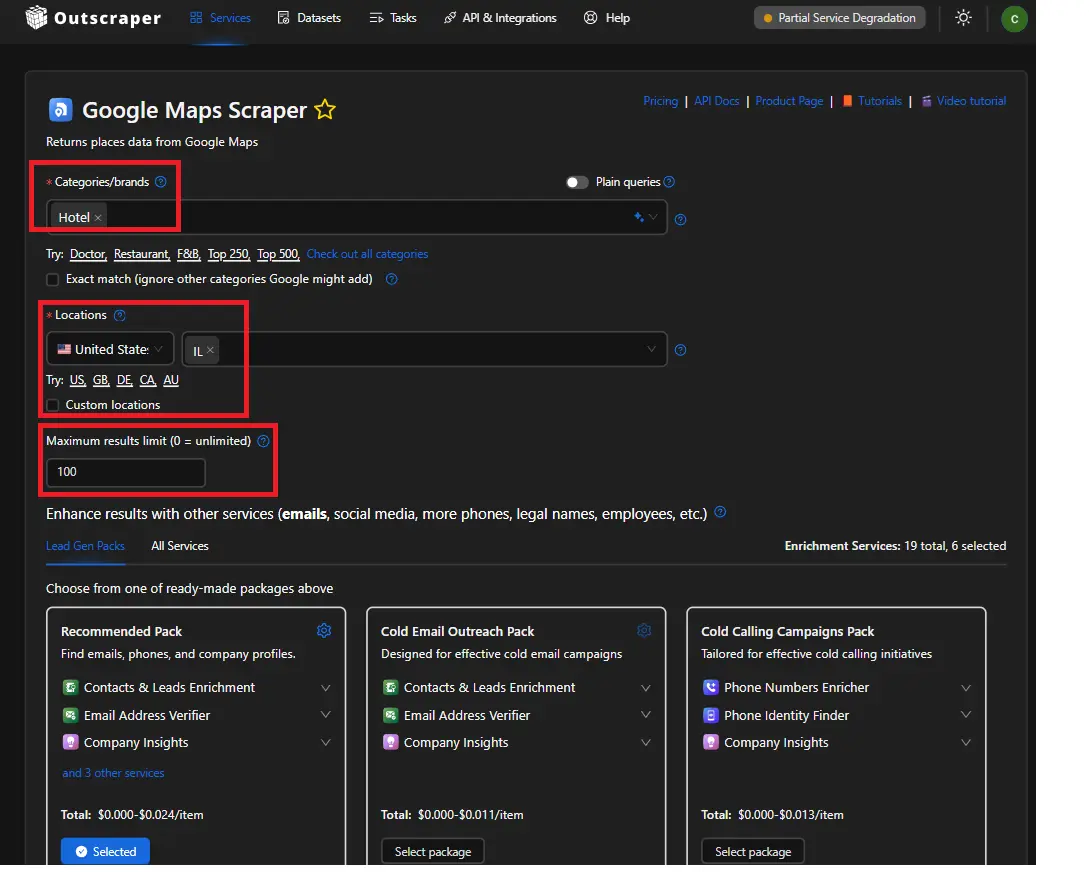
Step 2: Data Extraction with Outscraper
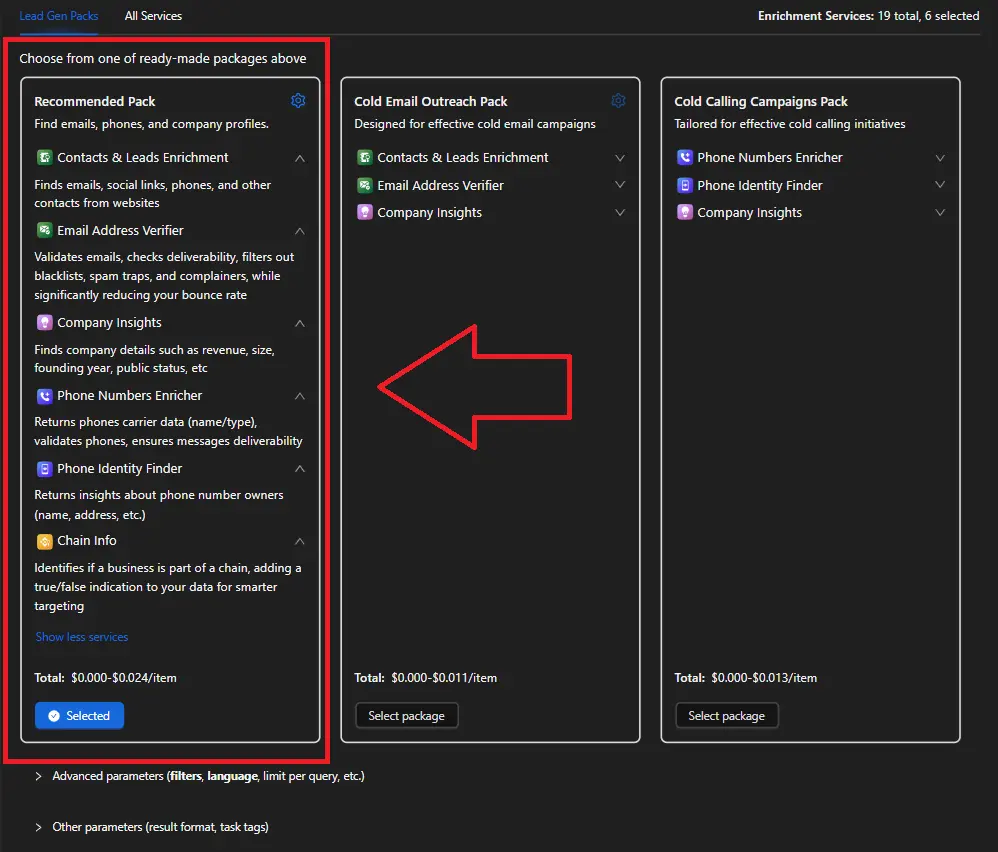
Using Outscraper, the company can extract relevant data from Google Maps. The data points may include:
- Firmenname
- Adresse
- Telefonnummer
- Website URL
- Customer Reviews and Ratings
The extraction process can be automated, allowing the company to gather large datasets efficiently.
Step 3: Data Analysis
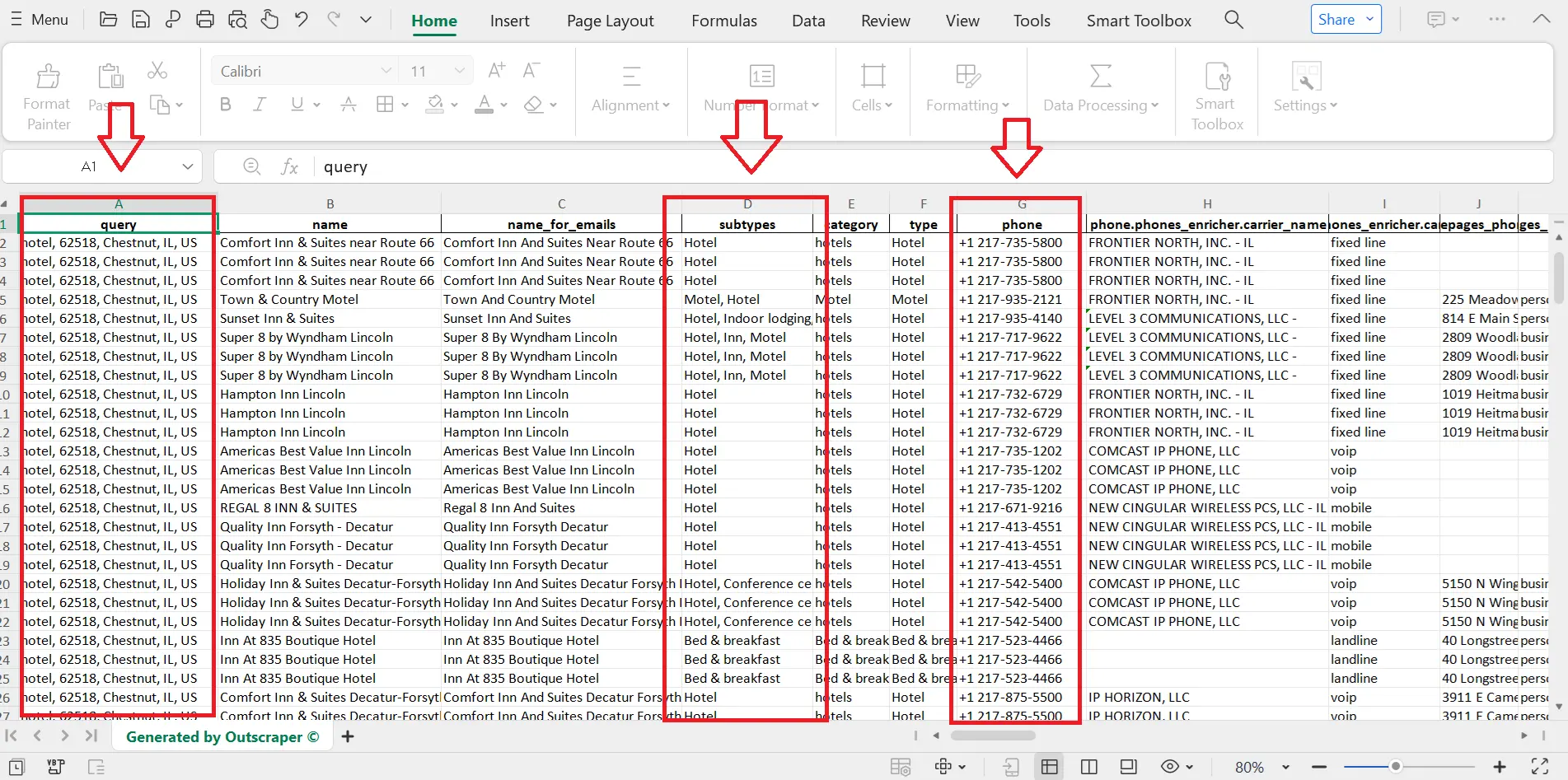
Once the data is extracted, the next step is to analyze it. The company can:
- Identify Potential Leads: Filter businesses based on size, ratings, and reviews to prioritize outreach.
- Assess Competition: Analyze competitors’ online presence and customer feedback to identify gaps in the market.
- Understand Market Trends: Use the data to identify emerging trends in the retail sector.
Step 4: Tailor Marketing Strategies
With the insights gained from the data analysis, the company can tailor its marketing strategies. This may involve:
- Individuelle Kundenansprache: Crafting personalized emails or messages for potential leads based on their business needs.
- Targeted Advertising: Running targeted ad campaigns on social media platforms to reach specific demographics.
- Content Marketing: Creating content that addresses the pain points of potential clients identified during the analysis.
Step 5: Monitor and Improve
After implementing the marketing strategies, it is essential to monitor their effectiveness. The company can:
- Track Engagement: Measure the response rates to outreach efforts.
- Adjust Strategies: Adjust marketing tactics based on what works best for different segments of the target audience.
Schlussfolgerung
Google Maps fungiert als B2B-Datenquelle mit hoher Relevanz, da die Nutzer mit klaren Bedürfnissen, Standortkontext und Dringlichkeit suchen. Unternehmenseinträge enthalten aktualisierte Details, Bewertungen und Aktivitätssignale, die den tatsächlichen Bedarf widerspiegeln. Dieses Verhalten unterstützt eine bessere Zielgruppenansprache, ein stärkeres Engagement und ein höheres Konversionspotenzial im Vergleich zu statischen oder veralteten Lead-Quellen.
The platform also provides continuous data through user interactions, local search activity, and integrated services such as Google Business Profile and Google Ads. These elements help businesses identify active prospects, analyze competitors, and adjust marketing strategies based on real signals. As user behavior shifts toward mobile and real-time decision making, Google Maps strengthens its role in B2B lead generation.
Outscraper supports this process by extracting structured data directly from Google Maps. You collect targeted business information, apply filters, and analyze datasets for lead qualification. This reduces manual research and improves data relevance for outreach campaigns.
Start using Google Maps as a direct source of high-intent B2B leads. Use Outscraper to extract, filter, and organize business data so you reach prospects who are already searching for solutions.
FAQ
Häufigste Fragen und Antworten
Google Maps functions as a high-intent B2B database because it reflects real-world business activity, not static or inferred data. It captures businesses that are operating, visible, and actively competing for customers right now.Toggle Content
High‑intent is important in a B2B database because it tells you who is actively considering or ready to buy, not just “who exists.” This radically improves conversion rates, shortens sales cycles, and lowers your cost per closed deal.
Bei der Kaltakquise per E-Mail werden unaufgefordert personalisierte E-Mails an potenzielle Kunden versandt, zu denen noch keine Geschäftsbeziehungen bestehen, um ein Gespräch zu eröffnen.
Überprüfte Kontaktlisten sind Datenbanken mit Kontaktinformationen von Kunden oder potenziellen Kunden, wie z. B. E-Mails, Telefonnummern und Unternehmensangaben, die Validierungsprozesse durchlaufen haben, um Genauigkeit, Zustellbarkeit und Relevanz sicherzustellen.
Das Reputationsmanagement umfasst die Überwachung, Beeinflussung und Aufrechterhaltung eines positiven öffentlichen Images von Einzelpersonen, Unternehmen oder Marken, insbesondere im Internet.
Die Sentiment-Analyse bestimmt die emotionale Stimmung hinter Textdaten und klassifiziert sie als positiv, negativ oder neutral. Unternehmen wenden sie auf Kundenfeedback, soziale Medien und Bewertungen an, um Meinungen zu bewerten und Trends zu erkennen.