Оглавление
The exponential growth of online reviews has transformed how consumers make decisions. It covers 97% of consumers who are considering reading reviews of local businesses. The very reason why review analysis plays a crucial role in identifying these factors. By allowing businesses to address the gaps between the customer and the business itself, they shape brand perception and influence purchasing decisions. Analyzing these reviews can provide valuable insights into consumer behavior, preferences, and satisfaction levels.
These reviews are indeed beneficial for business, with review platforms that show customers can share their experiences and opinions, creating a vast repository of data. However, manually sifting through thousands of reviews is impractical. Especially when the number is 10,000+ reviews from different websites. Imagine if it were recorded manually, the cost and time would consume much more of the budget allocation.
Automated scraping tools like Outscraper and review analysis techniques are essential for businesses to compete and gain a deeper understanding of customers’ behaviours, insights, and purchasing patterns.
Significance of Review Analysis At Scale
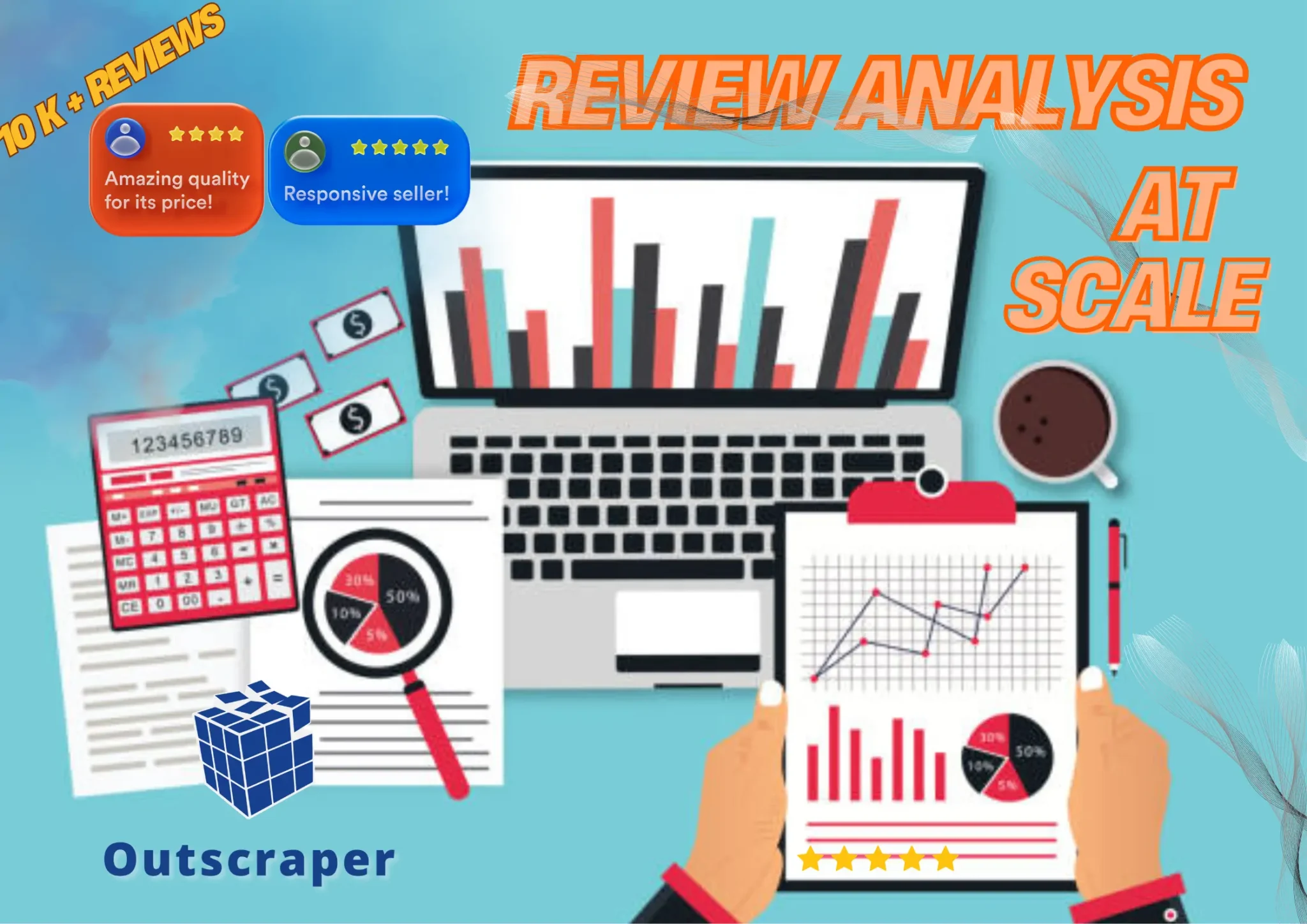
Review analysis at scale involves systematically examining large volumes of customer feedback to derive insights that can inform business decisions. Analyzing these reviews at scale allows businesses to identify trends, gauge customer sentiment, and make data-driven decisions.
Methodologies for Review Analysis
Methodologies for conducting review analysis это a critical process in evaluating literature, products, or services. Review analysis helps synthesize information, identify trends, and assess quality, making it essential in fields such as academia, marketing, and product development. Below are the methodologies to extract review analysis at scale:
1. Data Collection
The first step in review analysis is gathering data. This can be done through web scraping, APIs, or utilizing existing datasets. Key considerations include:
- Source Selection: Choose platforms that are relevant to your industry.
- Data Volume: Ensure you collect a sufficient number of reviews to draw meaningful conclusions.
- Срок: Consider the period from which the reviews are collected to capture trends over time.
2. Data Cleaning
Once the data is collected, it often requires cleaning to ensure accuracy. This involves:
- Removing Duplicates: Eliminate any repeated reviews.
- Handling Missing Values: Decide how to address reviews with incomplete information.
- Text Normalization: Standardize text by correcting typos, removing special characters, and converting to lowercase.
3. Sentiment Analysis
Sentiment analysis is a crucial technique for understanding customer emotions. It involves:
- Natural Language Processing (NLP): Use NLP libraries to analyze text based on customers’ reviews and feedback.
- Sentiment Scoring: Assign scores to reviews based on positive, negative, or neutral sentiments.
- Visualization: Create visual representations (e.g., pie charts, bar graphs) to illustrate sentiment distribution.
- Review Sentiment Mining: Review sentiment mining involves analyzing text data to determine the sentiment expressed within it (be it positive, negative, or neutral). This process is crucial for businesses and organizations that seek to understand public opinion, customer feedback, and market trends.
4. Topic Modeling
To uncover common themes within reviews, topic modeling can be employed. Techniques include:
- Latent Dirichlet Allocation (LDA): LDA is one of the most widely used topic modeling techniques. It assumes that each document is generated from a mixture of topics, with each topic characterized by a word distribution.
- Keyword Extraction: Identify frequently mentioned words or phrases to highlight key areas of concern or praise.
5. Trend Analysis
Analyzing trends over time can provide insights into how customer perceptions change. This can be achieved by:
- Time Series Analysis: Track sentiment scores or topic prevalence over specific intervals.
- Comparative Analysis: Compare reviews from different time periods to identify shifts in customer sentiment.
Upgrade your workflow with tools that collect, clean, and analyze reviews automatically. Turn raw feedback into structured insights and use them to drive measurable business outcomes. Make every review count and convert feedback into growth.
What is Bulk Review Analysis
Bulk review analysis is interchangeable with review analysis at scale, but bulk review analysis is different; it involves large volumes of feedback collected over a short period and can provide valuable insights into customer satisfaction and product performance.
Importance of Bulk Reviews Analysis
- Consumer Trust: Bulk reviews can enhance consumer trust. A product with numerous positive reviews is often perceived as more reliable.
- Market Trends: Analyzing bulk reviews helps identify market trends and consumer preferences, allowing businesses to adapt their strategies accordingly.
- Feedback Loop: Bulk reviews create a feedback loop for companies, enabling them to improve products and services based on customer input.

Pinpoint recurring complaints, feature requests, and service gaps. Detect positive trends you can amplify in marketing and sales.
Outscraper For Review Extraction
Outscraper is a web scraping tool that extracts business data that is used for business expansion, strategies, revenue increase, customer sentiment, review extraction, ratings, and many more. It covers a structured dataset that allows for efficient data analysis and data enrichment, which adds more depth to the business intelligence extracted. Allowing businesses to gain strategic and actionable insights.
Key Features of Outscraper
1. User-Friendly Interface
Outscraper offers an intuitive dashboard that simplifies the process of setting up and managing scraping tasks. Users can easily navigate through the platform, select the desired data sources, and configure their extraction parameters without needing extensive technical knowledge.
2. Integrations
Outscraper includes a variety of integrations for data enrichment and structured data. It includes integrations to various tools and applications (Zapier, n8n, HubSpot, etc.) that add more value to your dataset.
3. Customizable Extraction
Users can customize their extraction settings to focus on specific data points, such as star ratings, review text, reviewer names, and timestamps. This level of customization ensures that users can tailor the data to meet their specific needs.
4. API Access
For developers and businesses looking to integrate review extraction into their existing systems, Outscraper provides Доступ к API. This feature allows for seamless integration and automation, enabling users to pull review data directly into their applications.
5. Scheduled Tasks
Outscraper allows users to schedule scraping tasks, ensuring that they receive the latest reviews without manual intervention. This feature is particularly useful for businesses that need to monitor their online reputation continuously.
Start collecting thousands of reviews from Google Maps and other sources in minutes using Outscraper. Build a reliable dataset for sentiment analysis, competitor benchmarking, and market research without manual scraping
Using Outscraper to Simplify Review Data Collection
Step 1: Sign Up and Set Up Your Account
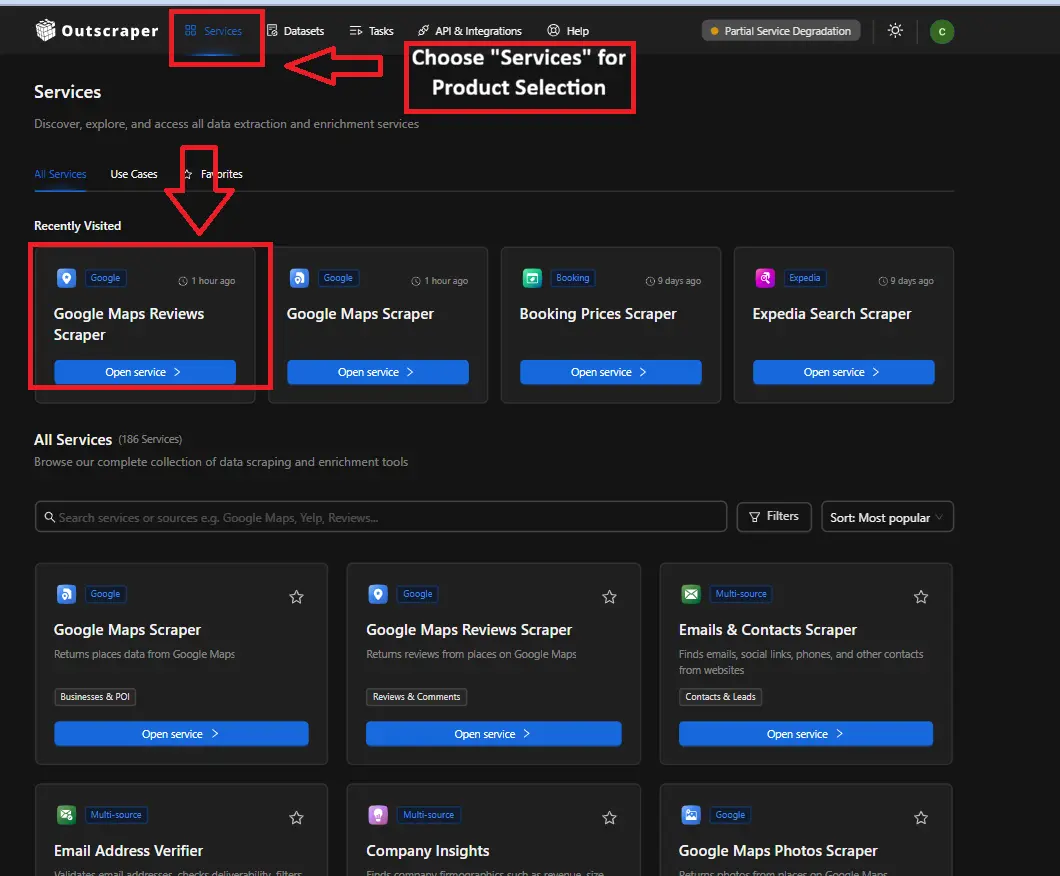
To get started with Outscraper, visit the website and create an account. Once registered, you can access the dashboard and choose a suitable scraper for review analysis. Выберите tab “Services” and find Google Maps Review Scraper.
Step 2: Configure Your Scraping Task
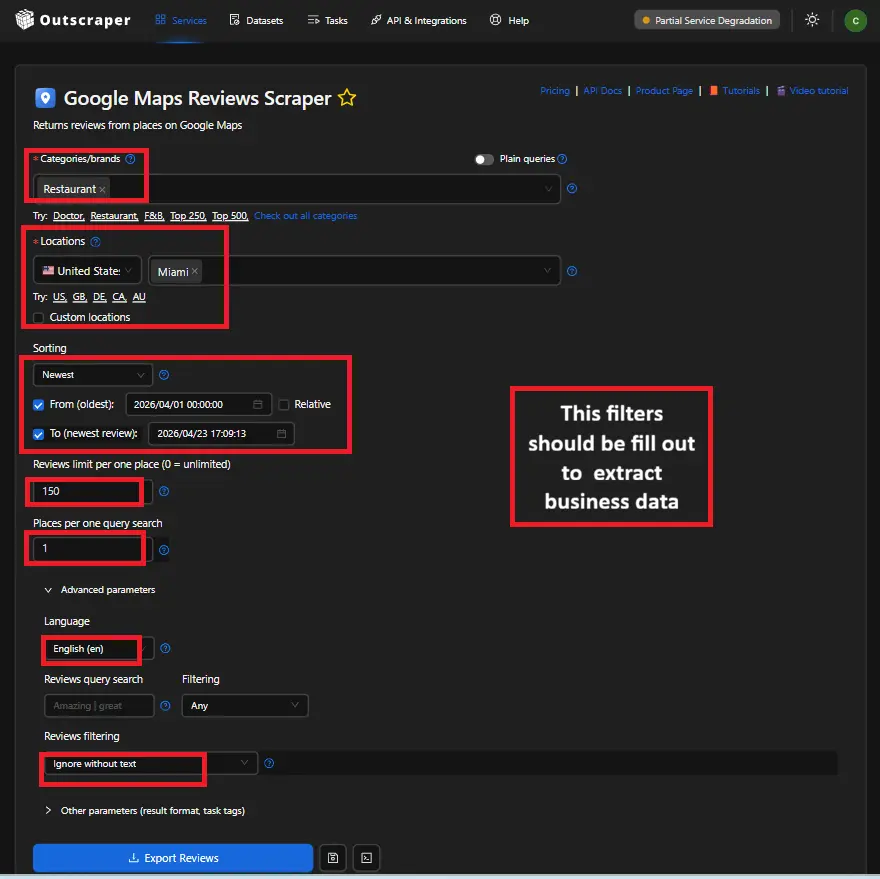
Apply filters to narrow down the data needed to be extracted. Below are the filters available and how they function;
- Categories/Brands denote the specific group or class that shows and shares distinct characteristics. For instance, doctors’ restaurants, real estate, HVAC, etc.
- Локации cover the country, zip code, and can be customized depending на сайт demand.
- Сортировка is also included from the most relevant, newest, oldest, and both highest and lowest ratings.
- Number of Reviews per place and places for every query search.
- Advance Parameters covers language selection, reviews query search (Amazing/great), filtering with any websites или из Google, and reviews filtering in terms of ignore without text or ignore with text.
- Other parameters cover the result format (XLSX, CSV, JSON, or Parquet) and task tags.
Step 3: Execute the Scraping Task
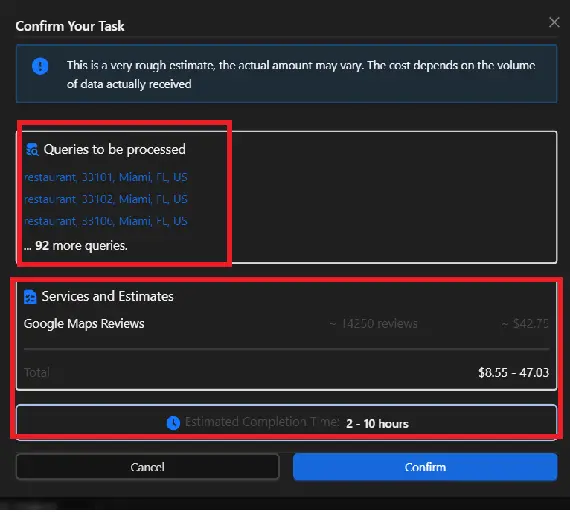
Once your task is configured, execute it through the Outscraper dashboard. The tool will begin collecting data based on your specifications. You can monitor the progress in real-time.
Step 4: Export Your Data
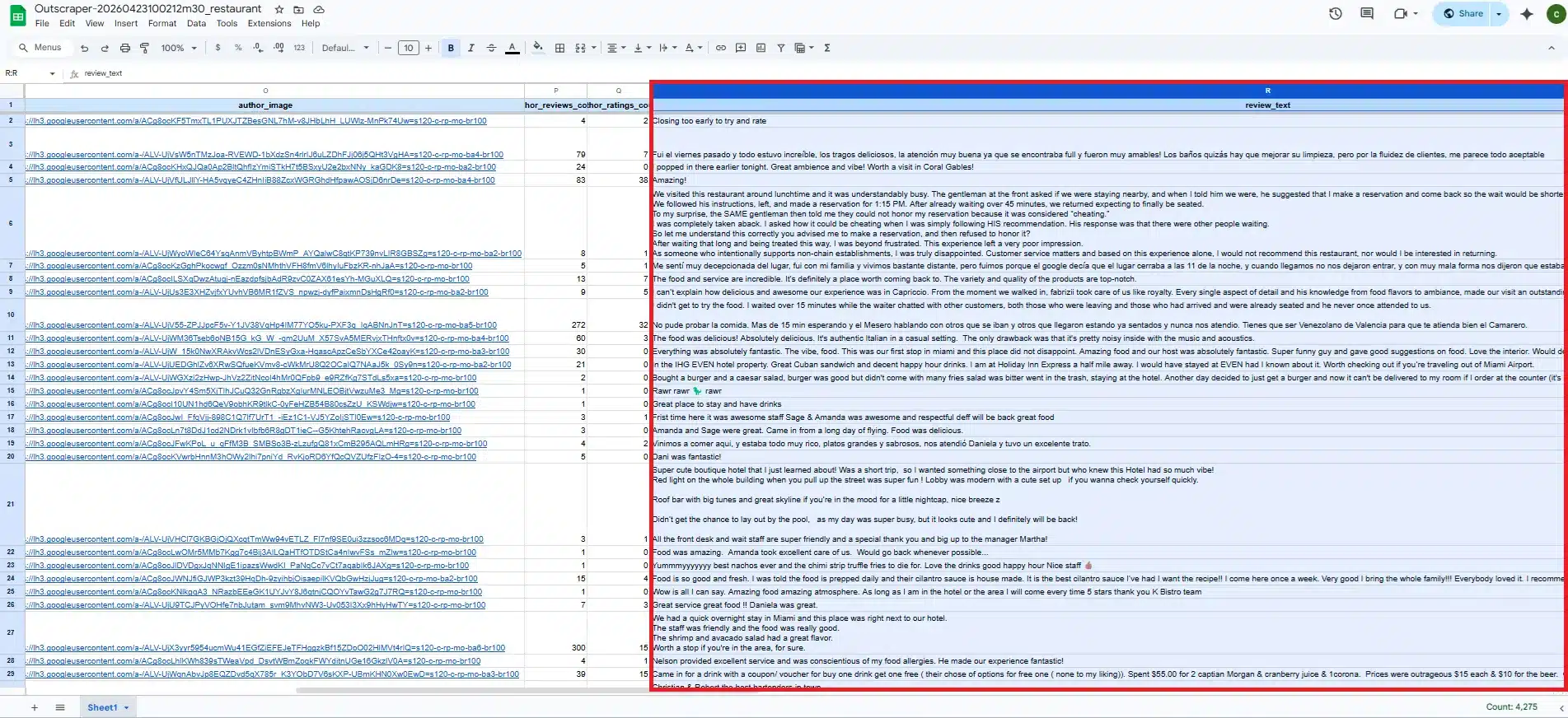
After the scraping task is complete, you can export the collected data in various formats, including CSV, JSON, XLSX, or Parquet. This flexibility allows you to easily analyze the data using your preferred tools.
Users may get data insights by referring to the actionable conclusions drawn from analyzing data sets. These insights help organizations understand trends, patterns, and correlations of customer feedback to the business itself.
Additional Feature: Schedule Your Scraping. Decide whether you want to run the scraping task once or on a recurring schedule. Regular scraping can help you keep your data up to date.
Implications for Businesses
The insights gained from mass review analysis can significantly impact business strategies:
- Product Development: Customer feedback analysis can inform product improvements and innovations.
- Marketing Strategies: Highlighting positive aspects in marketing materials can enhance brand perception.
- Customer Engagement: Addressing common concerns can improve customer satisfaction and loyalty.
- Building Trust and Credibility: Consumers often rely on reviews to gauge the credibility of a business. Positive reviews can significantly enhance a company’s reputation, while negative feedback can deter potential customers.
- Impact on Search Engine Rankings: Search engines like Google consider online reviews as a ranking factor. Businesses with higher ratings and more reviews tend to rank better in search results.
- Sales and Revenue Implications: Positive reviews can directly influence conversion rates. Customers are more likely to purchase from a business that has favorable reviews in contrast with negative customer reviews.
- Customer Retention: Review analysis not only attracts new customers but also plays a crucial role in retaining existing ones. This engagement can enhance customer satisfaction and loyalty, leading to repeat business and long-term profitability.
- Targeted Advertising: By analyzing customer feedback, companies can discern demographic trends and preferences, allowing for more targeted advertising campaigns.
- Employee Training and Development: Обратная связь related to customer service can inform training programs, ensuring что staff are equipped to meet customer expectations.
Apply review insights to refine service workflows and reduce friction in the customer experience.
Заключение
Review analysis at scale gives you a structured way to process large volumes of customer feedback and turn it into actionable insights. Whether 10,000 + or more reviews requires an automated data extraction and processing. It solves the problem by reducing time, lowering cost, and improving consistency.
Outscraper supports this process by simplifying review data collection. Extracting structured datasets, applying filters, and exporting data in formats ready for analysis. Features such as customizable extraction, integrations, API access, and scheduled tasks help you maintain a consistent flow of updated review data.
Use structured review analysis to guide product development, improve customer experience, and refine marketing strategies. Start collecting and analyzing at scale review data with Outscraper to have accurate data insights and data-driven decisions for business endeavours.
Часто Задаваемые Вопросы
Наиболее частые вопросы и ответы
Review analysis is the process of systematically examining customer reviews and feedback to uncover patterns, sentiments, and actionable insights about a product, service, or brand.
Bulk review analysis is the process of automatically analyzing a large set of customer reviews (often thousands or more) at once, instead of reading them one by one.
Outscraper is useful for review extraction because it lets you automatically pull large volumes of customer reviews from platforms like Google Maps, and other sites into structured data (CSV, Excel, JSON or Parquet).
Review analysis is implied for businesses as a way to turn raw customer feedback into strategic decisions that improve products, service, marketing, and reputation.
Review sentiment mining is the process of automatically extracting and quantifying the emotional tone (positive, negative, or neutral) from customer reviews, using techniques from natural language processing and machine learning.