目次を見る
Why Newly Opened Businesses Create a First-Mover Advantage
In the United States, millions of newly opened businesses enter the market each year. This creates a steady flow of new business leads for B2B sales teams focused on early-stage lead generation. According to recent business formation data, more than 5.1 million new business applications were filed in the first months of 2025.
This continues a strong trend that followed record highs in previous years. New companies are forming at rates well above pre-pandemic levels, which means sales teams have consistent access to fresh prospects.
毎月更新されるFree Tierで、Outscraperを無料でお試しいただけます。
Engaging these businesses early builds familiarity and trust before competitors appear. At this stage, decisions are still open, owners are involved, and conversations tend to move faster, giving you a first-mover advantage.
Why are newly opened businesses easier to sell to?
They have fewer vendors, limited processes in place, and a clear need to set things up quickly.
Where Data on Newly Opened Businesses Comes From
Finding newly opened businesses starts with knowing where early signals appear. These signals do not come from a single source, nor do they show up at the same time.
The challenge is that most sales teams rely on data that appears after a business has already made key decisions, which limits lead generation to late-stage prospects. At that point, outreach becomes reactive instead of proactive.
Early-stage data usually comes from three places. Each source offers a different level of speed, accuracy, and visibility. Understanding how they work helps you decide which signals matter most for early outreach.
Which data source appears first?
Website and domain signals usually appear before official filings or directory listings.
Business Registrations and Public Filings
One of the earliest official signals comes from business registrations. These include Secretary of State records, local business permits, and municipal registries.
These records confirm that a business exists. They often include legal names, registration dates, and location details. That makes them reliable for validation and long-term tracking.
The downside is timing. Many filings appear days or weeks after a business starts operating. Some records are updated in batches, not in real time. This data is accurate, but not fast.
Public filings work best as a confirmation layer, not as the first alert that a business is ready to buy.
Are newly registered businesses always active?
No, a newly registered business confirms intent, but activity should still be verified using listings or websites.
Maps, Directories, and Online Listings
Another common source comes from online listings. グーグルマップ often shows “recently opened” labels, updated hours, or new profile activity. Other notable directories display listing dates or first reviews.
By using these platforms, they reflect when a business becomes visible to customers. That visibility often aligns with early demand for tools, services, and vendors.
The risk is relying on these signals alone. Some businesses delay creating listings. Others update profiles long after opening. Listing dates also vary by platform, which can create gaps or false freshness.
This data works best when combined with other signals, not used in isolation.
How accurate is the “recently opened” label on Google Maps?
It is useful, but not definitive. It should be confirmed with other signals.
Websites and Domain Launch Signals
Websites often appear before a business is fully visible elsewhere. New domain registrations, fresh landing pages, and early contact forms can signal buying intent before listings go live.
A new website usually means setup work is happening. That includes marketing tools, analytics, scheduling, and operations. This is often the best moment for vendors to start a conversation.
Not every new domain becomes an active business. Some projects stall. Others stay private. When website signals are paired with listings or filings, they provide a strong early indicator that a business is new.
What are the common website signals to watch?
Service pages, contact forms, booking tools, and local location pages.
How to Find Newly Opened Businesses Near Your Area
Finding new businesses or new companies can be local or nationwide. Many sales teams focus only on nearby opportunities or wait for inbound interest. These approaches are slow and inconsistent. Without early data, outreach becomes reactive and less effective.
A practical approach combines manual research for immediate opportunities with database tools for broader coverage. This allows teams reach prospects as early as possible, whether in your city, state, or nationwide.
Manual Local Research
Local research relies on sources that reveal activity before a business becomes widely known. Google Maps allows searches by category and location, showing newly added businesses or recently updated profiles. Local news sites and Chamber of Commerce announcements also highlight openings.
This approach works well for immediate local prospects. The limitation is when scaling. Manual research takes time and is difficult to repeat consistently. It is best only for local testing but less effective for large outreach campaigns.
Using Business Databases for Fresh Business Data
Business databases track registrations, online listings, and other signals in a structured way. They allow filtering by open date, location, and industry.
The advantage is speed and reliability. Instead of relying on chance discoveries or public announcements, your sales team can access fresh business data and verified signals in one place. This improves the chances of contacting buyers before they commit to other vendors.
Combining these database insights with local manual research ensures your outreach is timely, relevant, and focused on businesses most likely to engage.
Are business databases updated daily?
Many are updated daily or weekly, depending on the source and region.
Finding Newly Established Businesses Using Outscraper
Outscraper helps identify newly established businesses that may need your services, making it easier to support early-stage lead generation. These businesses often lack existing vendors and are still setting up operations.
Newly established companies often looks for business opportunities and partnerships, so having an early connections with them could trigger a strong bond and trusts with each other.
Step-by-Step Process of Finding Newly Added Businesses
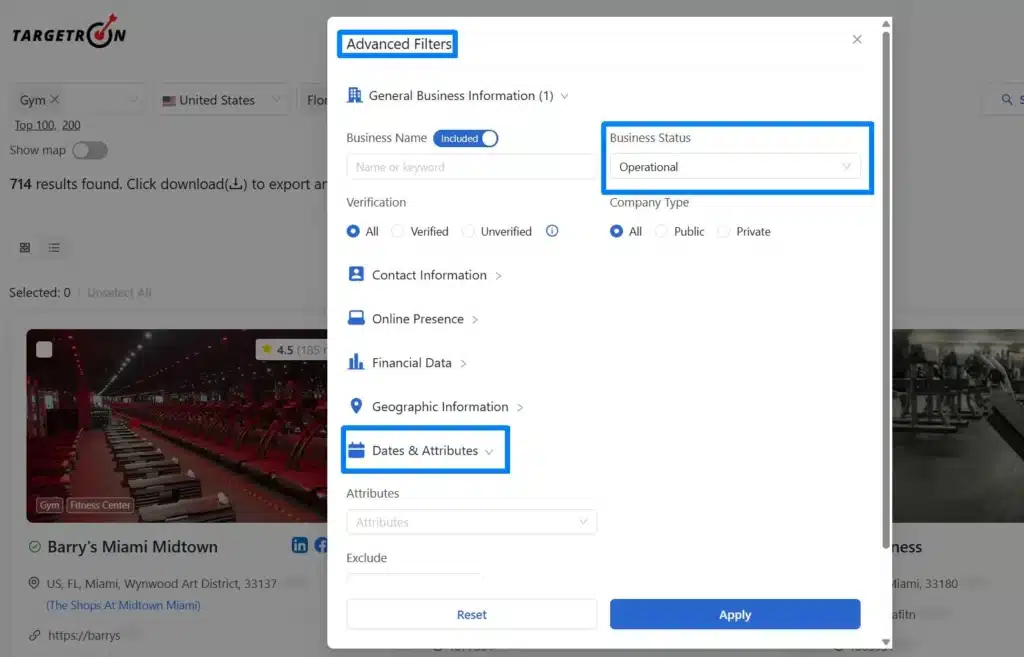
- Open the Newly Added Business Database and select Get New Companies. You can also ログイン また サインアップ with our partner B2B Leads Database Targetron.

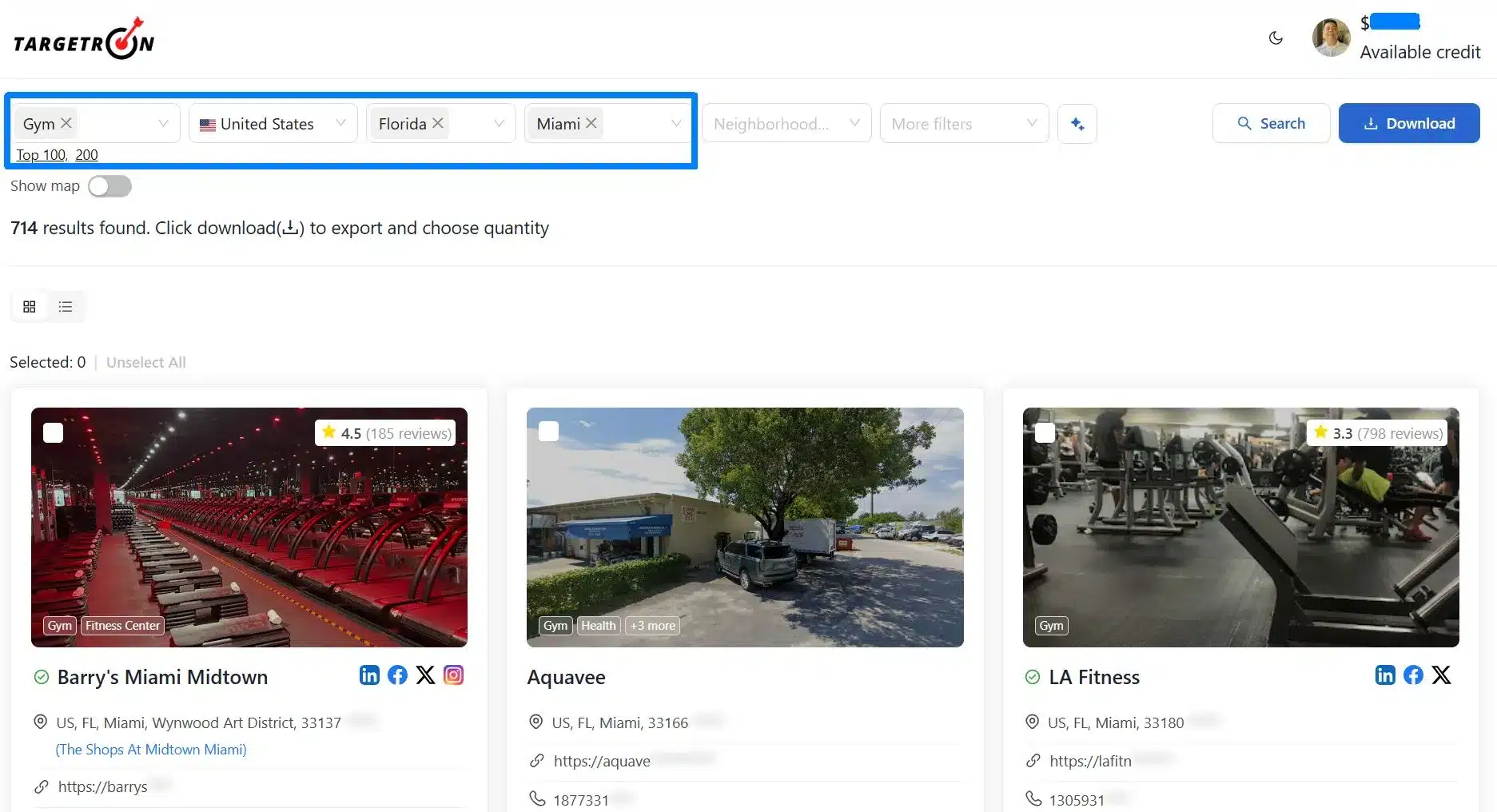
Inside Targetron Dashboard
- Choose business categories such as restaurants, gyms, or medical practices.
- Select the company location, for example, the United States, then a specific state and city.
- Click More Filters to open the Advanced Filters tab and select Operational under Business Status.

Advanced Filters inside Targetron B2B Leads Database
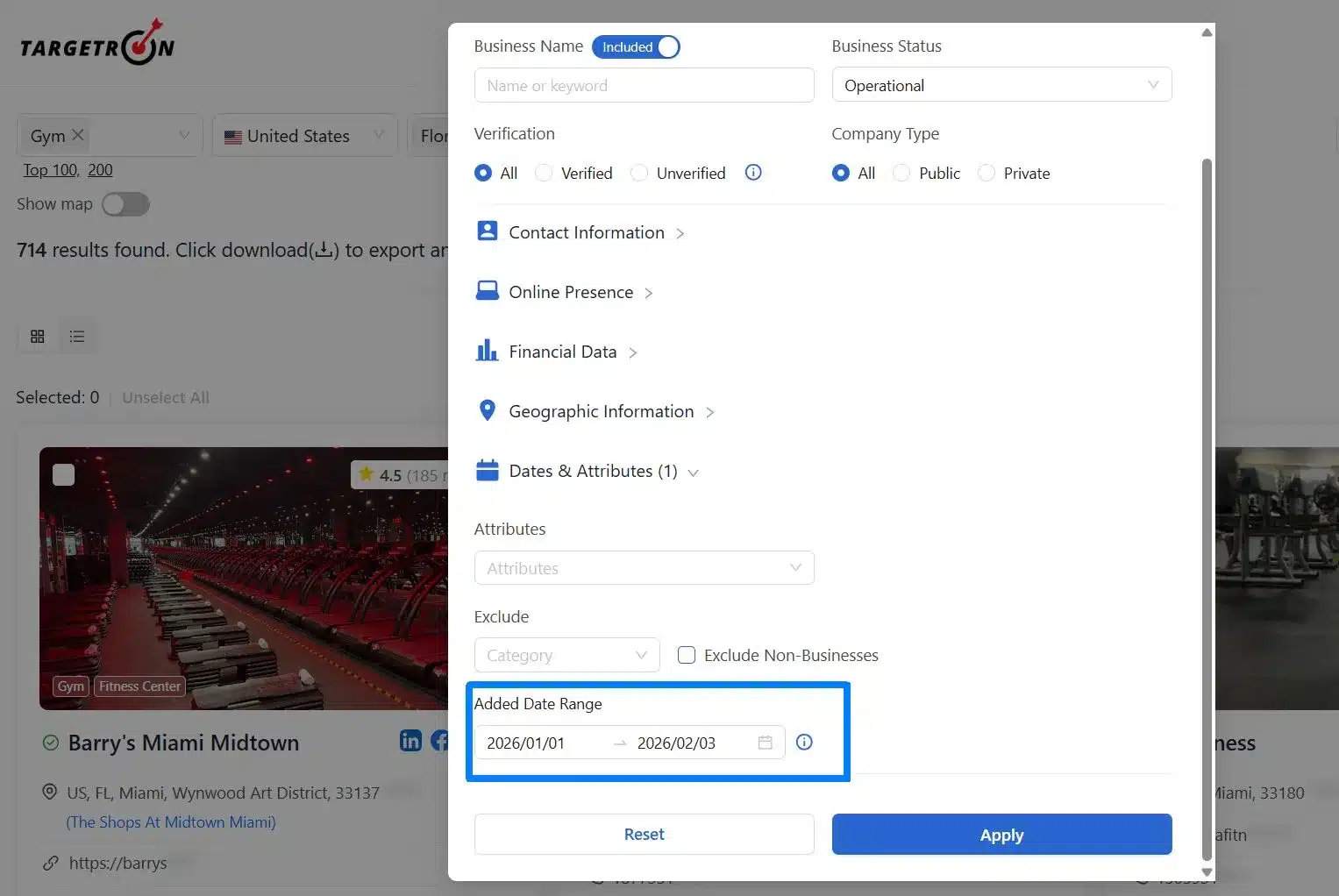
- Use Dates and Attributes to set the date range when companies were added.

Select properly the date range when the business was added
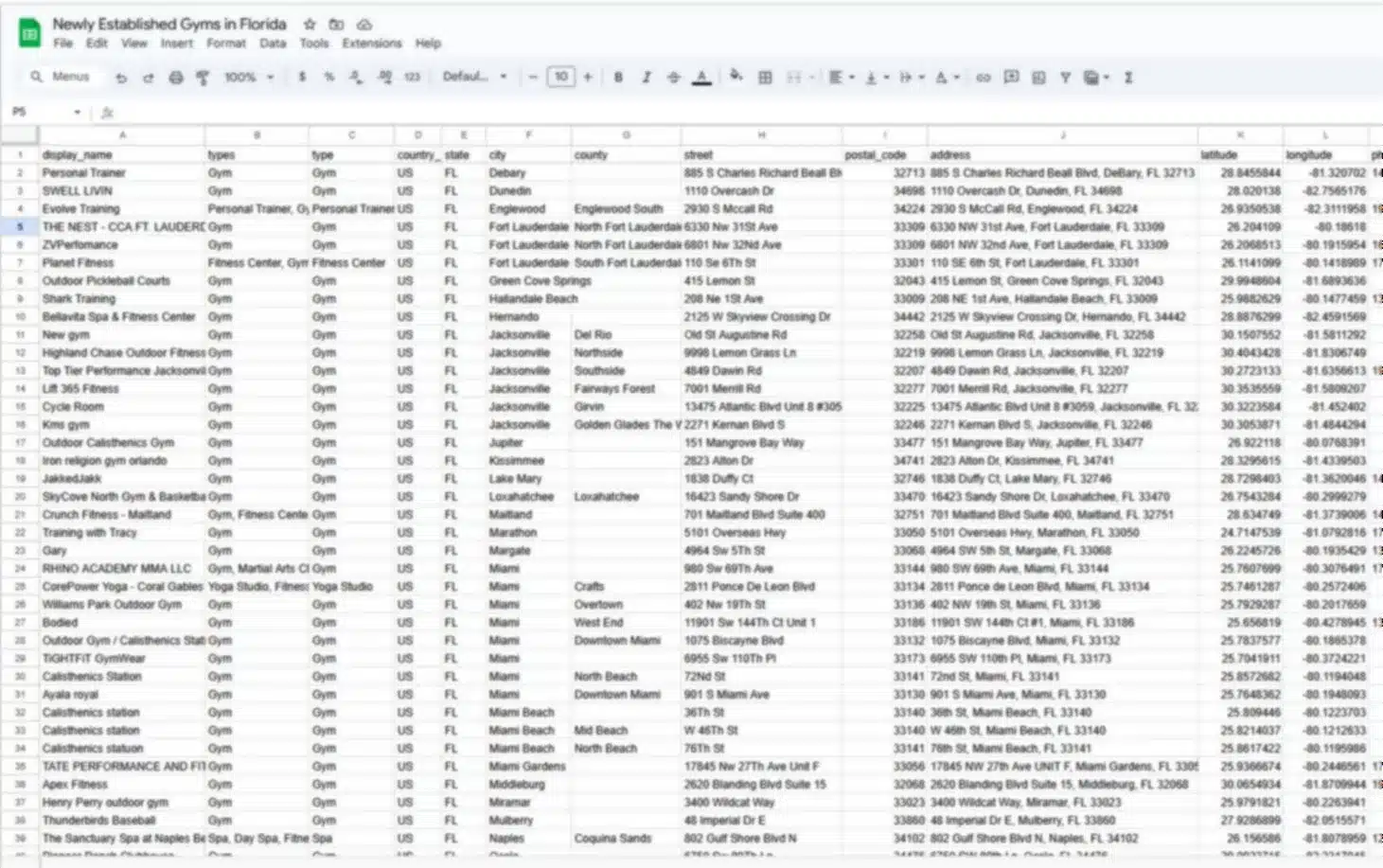
- Click Search, review the total results, then export the data in your preferred format. Below is a sample data of newly opened gyms in Florida.

Newly established gyms in Florida, USA.
How to Approach Newly Opened Businesses First
Timing is critical when reaching newly opened businesses. Many vendors reach out too late, after routines and vendor relationships are already set.
The solution is a structured approach: confirm the business is active, understand its early needs, and send precise, relevant messages. This keeps conversations open and pressure-free.
How to Confirm a Business Is Truly New
Start by cross-checking official registration dates with online listings and websites. These sources indicate when the business officially started operating.
Look for signs that the business is still owner-led. Small teams and direct contact with decision-makers are common at this stage. This makes it easier to personalize outreach and respond quickly to inquiries.
Verification prevents wasted effort and ensures your messaging reaches the right audience at the right time.
Outreach Tips for Early-Stage Companies
Reference the business’s recent opening to show awareness of their situation. Keep messages short, clear, and specific. Avoid lengthy pitches or high-pressure tactics.
The goal is to build familiarity and trust quickly. Early-stage businesses respond best to clarity and relevance. This approach works well for traditional B2B sales and startup outreach, where early conversations often shape long-term vendor relationships.
Example opening line:
“Hi, I saw your business recently opened in Austin and wanted to reach out early.”
Common mistake to avoid:
Sending long messages that focus on features instead of immediate needs.
よくある質問
最も頻繁な質問と回答
Yes, newly opened businesses are often strong B2B leads because they are still setting up operations and evaluating vendors. Early outreach reaches decision-makers before long-term relationships are established.
Restaurants, healthcare, fitness, and retail consistently see high rates of new business openings. These industries also tend to make vendor decisions early in the setup phase.
Early-stage businesses are more open to switching vendors because they are still testing tools and services. Once operations stabilize, switching becomes less likely.
In most newly opened businesses, the owner is the primary decision-maker. Reaching them early increases the chance of meaningful conversations and faster decisions.
Weekly updates are usually enough to stay ahead of competitors. Frequent refreshes help ensure you’re contacting businesses while they are still evaluating options.