İçindekiler
Giriş
In the context of the hospitality industry, hotel rate shopping tools play a crucial role in helping businesses improve their pricing strategies. The market itself is influenced by factors such as seasonality, local events, and competitor pricing, making it challenging to maintain effective pricing strategies.
The consequences of ineffective rate management can be severe. Overpricing can alienate potential guests, pushing onlar towards competitors who offer better deals.
Additionally, the manual process of rate comparison can be
time-consuming and prone to errors, further complicating decision-making. This article helps in comparing enterprise-level hotel rate shopping tools with affordable alternatives, highlighting their features, benefits, and potential drawbacks.
Relevance of Revenue Leakages
Revenue leakage refers to the loss of potential income that occurs when a hotel fails to capture all available revenue. This can happen due to various reasons, including operational inefficiencies, pricing errors, and inadequate technology. The hotel industry, characterized by its competitive nature and thin profit margins, is particularly susceptible to these leakages. Thus, hotels can lose anywhere from 5% to 20% of their potential revenue due to these leakages. This percentage can vary based on the hotel’s size, location, and operational practices.
Common Causes of Revenue Leakages
- Operational Inefficiencies: Poor management of resources, staff, and processes can lead to missed opportunities for revenue generation. For instance, overstaffing or understaffing can affect service quality and guest satisfaction, leading to lost repeat business.
- Pricing Errors: Incorrect pricing strategies can result in either undercharging or overcharging guests. Dynamic pricing models are essential, but if not implemented correctly, they can lead to significant revenue losses.
- Inadequate Technology: Many hotels still rely on outdated systems for reservations, billing, and inventory management. This can lead to errors in bookings, double bookings, and lost reservations, all of which contribute to revenue leakage.
- Poor Inventory Management: Failing to manage room inventory effectively can result in unsold rooms, especially during peak seasons. This not only affects immediate revenue but can also damage the hotel’s reputation.
- Lack of Upselling and Cross-Selling: Hotels often miss opportunities to upsell room types or cross-sell additional services such as dining, spa treatments, or excursions. Staff training and incentive programs can help address this issue.
Review how you price your products or services. Compare against market rates and adjust based on demand and value delivered. Small pricing changes often recover significant revenue.Outscraper’s Maps Scraper exports business data in CSV, JSON, or Excel — no code required
Understanding Hotel Rate Shopping Tools
Hotel rate shopping tools are essential for monitoring competitors’ pricing, understanding market trends, and maximizing revenue. While enterprise solutions offer comprehensive features and data analytics, affordable alternatives can provide significant value for smaller hotels or those with limited budgets.
This comparison aims to highlight the strengths and weaknesses of both categories, enabling stakeholders to select the most suitable tool for their specific requirements. By understanding the differences, hotel managers and revenue strategists can make informed decisions that align with their operational needs and budget constraints.
What Hotel Rate Shopping Tools Do
These tools collect and organize hotel pricing data across booking platforms. Managers rely on this data to adjust pricing strategies in near real time. Core functions include:
- Competitor rate tracking
- Historical pricing analysis
- Channel comparison across OTAs
- Alerts for price changes
- Data export for internal reporting
Enterprise Hotel Rate Shopping Tools
Enterprise hotel rate shopping tools are invaluable assets for hotels seeking to enhance their pricing strategies and improve revenue management. By using these tools, hotels can gain a competitive edge, refine their operations, and ultimately drive profitability. As the hospitality industry continues to evolve, staying informed and adaptable will be key to success.
- Comprehensive Data Analytics: Enterprise tools often provide in-depth analytics, allowing users to analyze historical data, forecast trends, and make data-driven decisions.
- Entegrasyon Yetenekleri: These tools typically integrate seamlessly with property management systems (PMS), revenue management systems (RMS), and other software, creating a unified ecosystem.
- Custom Reporting: Users can generate customized reports tailored to their specific needs, offering insights into various metrics such as occupancy rates, average daily rates (ADR), and revenue per available room (RevPAR).
- Real-Time Monitoring: Enterprise solutions typically provide real-time data updates, enabling hotels to respond promptly to market changes.
- User Support and Training: Comprehensive customer support and training programs are often included, ensuring that staff can utilize the tool effectively.
- Ölçeklenebilirlik: Designed for larger operations, these tools can handle vast amounts of data and multiple properties.
- Advanced Features: The inclusion of sophisticated algorithms and machine learning capabilities can enhance pricing strategies.
- Strategic Insights: The depth of analysis can lead to more informed decision-making, ultimately driving revenue growth.
- Automated Operations: Automating the rate shopping process reduces the time and effort required for manual data collection and analysis. This efficiency allows hotel staff to focus on other critical areas of operations.
- High Cost: The initial investment and ongoing subscription fees can be prohibitive for smaller hotels.
- Complexity: The extensive features may overwhelm users who require a simpler solution.
Track OTA listings, direct booking sites, and regional competitors in one system. See how pricing shifts by date, demand, and events.
Affordable Hotel Rate Shopping Tools
Managing a hotel, travel agency, or pricing strategy, you need visibility into competitor rates. Many teams avoid this due to high software costs. Affordable tools address this by focusing on data access rather than full automation.
Affordable tools usually fall between 10 and 300 dollars per month. They do not include advanced forecasting or AI pricing engines. You handle analysis using spreadsheets or dashboards. Automation for less cost and flexibility.
- Basic Price Comparison: Affordable tools typically focus on essential features, such as comparing competitors’ rates and availability.
- Kullanıcı Dostu Arayüz: These tools often prioritize ease of use, making them accessible for users with varying levels of technical expertise.
- Limited Reporting: While they may offer some reporting capabilities, these are generally less comprehensive than those found in enterprise solutions.
- Mobile Accessibility: Many affordable tools provide mobile apps, allowing users to monitor rates on the go.
- Basic Alerts: Users can set up alerts for price changes, ensuring they stay informed without constant monitoring.
- Maliyet Etkin: Lower upfront costs make these tools accessible for smaller hotels or independent operators.
- Simplicity: The straightforward design izin verir users to grasp the tool’s functionalities hızlı bir şekilde without extensive training.
- Flexibility: Many affordable options offer pay-as-you-go models, izin veriyor hotels to scale their usage dayalı demand.
- Limited Features: The lack of advanced analytics and reporting may hinder strategic decision-making.
- Less Integration: These tools may not integrate as seamlessly with existing systems.
Stop overpaying for complex systems. Use affordable hotel rate shopping tools to track competitor prices and market trends without large upfront investment. You gain visibility while keeping your budget under control.
Use Cases for Enterprise Hotel Rate Shopping Tools
1. Competitive Pricing Analysis
Enterprise hotels often operate in highly competitive markets. Rate shopping tools izin ver them to track competitor pricing in real-time, enabling dynamic pricing strategies. By analyzing competitors’ rates, hotels can adjust their own pricing to attract more guests while maintaining profitability.
2. Revenue Management Optimization
With advanced analytics, enterprise tools can integrate with revenue management systems (RMS) to provide insights into demand forecasting and pricing elasticity. This helps hotels optimize their pricing strategies based on market trends, occupancy rates, and seasonal fluctuations.
3. Market Segmentation Insights
Enterprise tools can segment data based on various criteria, such as geographic location, customer demographics, and booking channels. This segmentation allows hotels to tailor their marketing strategies and pricing models to specific customer groups, enhancing overall revenue.
4. Brand Positioning
For enterprise hotels, maintaining a strong brand image is crucial. Rate shopping tools help monitor how their rates compare to those of luxury competitors. This information can inform marketing strategies and promotional campaigns, ensuring that the hotel remains positioned as a premium choice in the market.
5. Multi-Property Management
Large hotel chains can benefit from centralized rate shopping tools that provide a comprehensive view of pricing across multiple properties. This enables corporate management to implement cohesive pricing strategies and identify underperforming locations that may require targeted interventions.
6. Integration with Distribution Channels
Enterprise tools often integrate with various distribution channels, including OTAs (Online Travel Agencies) and GDS (Global Distribution Systems). This integration ensures that pricing is consistent across all platforms, reducing the risk of rate discrepancies that can lead to customer dissatisfaction.
7. Performance Benchmarking
Enterprise hotels can use rate shopping tools to benchmark their performance against industry standards. By analyzing key performance indicators (KPIs) such as RevPAR (Revenue per Available Room) and ADR (Average Daily Rate), hotels can tanımlamak areas for improvement and set realistic revenue goals.
Track price changes during peak seasons, local events, and demand spikes. Update your rates immediately to capture higher-value bookings or protect occupancy during slow periods.
Use Cases for Affordable Hotel Rate Shopping Tools
1. Cost-Effective Market Monitoring
Affordable hotel rate shopping tools provide budget-friendly options for smaller hotels to monitor competitor pricing without significant investment. These tools often offer essential features that allow independent hotels to stay competitive in their local markets.
2. Simplified Pricing Strategies
For smaller establishments, complex pricing strategies can be overwhelming. Affordable tools often come with user-friendly interfaces that simplify the process of setting competitive rates based on market data, making it easier for hotel managers to make informed decisions.
3. Local Market Insights
Affordable tools can focus on local market trends, providing insights specific to the hotel’s immediate area. This localized data helps smaller hotels adjust their pricing dayalı community events, seasonal tourism, and local competition.
4. Enhanced Direct Booking Strategies
By analyzing competitor rates, affordable tools can help hotels develop strategies ...'ye encourage direct bookings. This can include offering exclusive deals or incentives that are more attractive than those available through OTAs.
5. Basic Revenue Management
While not as advanced as enterprise solutions, affordable tools can still provide basic revenue management features. They can help smaller hotels understand occupancy trends and adjust rates accordingly, ensuring they maximize revenue during peak times.
6. User-Friendly Reporting
Affordable hotel rate shopping tools often come with straightforward reporting features that allow hotel managers to easily interpret data. This accessibility ensures that even those without extensive data analysis experience can make informed pricing decisions.
7. Community Engagement
Smaller hotels can leverage affordable tools to engage with their local community. By understanding local pricing trends and customer preferences, they can tailor their offerings to better meet the needs of their guests, fostering loyalty and repeat business.
Track nearby hotel rates without complex systems. Focus on a small set of direct competitors and review pricing by date. Adjust your rates to stay competitive and avoid losing bookings.
How Outscraper is Used
Outscraper is a web scraping tool designed to extract data from various online sources. Bu izin verir users to gather information from websites without the need for extensive programming knowledge. For the hotel industry, İletişim can be particularly beneficial for collecting competitor pricing, availability, and promotional offers.
Key Features
- Veri Çıkarma: Outscraper can pull data from multiple sources, including OTAs, hotel websites, and review platforms. This allows for comprehensive market analysis.
- Customizable Scraping: Users can tailor their scraping parameters to focus on specific data points, such as room rates, amenities, and customer reviews.
- Gerçek Zamanlı Güncellemeler: The tool can be set to scrape data at regular intervals, ensuring o users have access to the most current pricing information.
- Kullanıcı Dostu Arayüz: Outscraper offers an intuitive interface that simplifies the setup process, making it accessible için users with varying levels of technical expertise.
- Data Export Options: Collected data can be exported in various formats, including CSV and JSON, facilitating easy integration with other analytical tools.
Implementation Strategies
Step 1: Define Objectives
Before using Outscraper, hotels should clearly define their objectives. Whether you are looking to monitor specific competitors, track seasonal pricing trends, or analyze customer reviews. Establishing clear goals will guide the scraping process.
Step 2: Set Up the Scraper
Kullanma Outscraper’s user-friendly interface, users can set up their scraping parameters. This includes selecting the websites to scrape, defining the data points of interestve scheduling the scraping frequency.
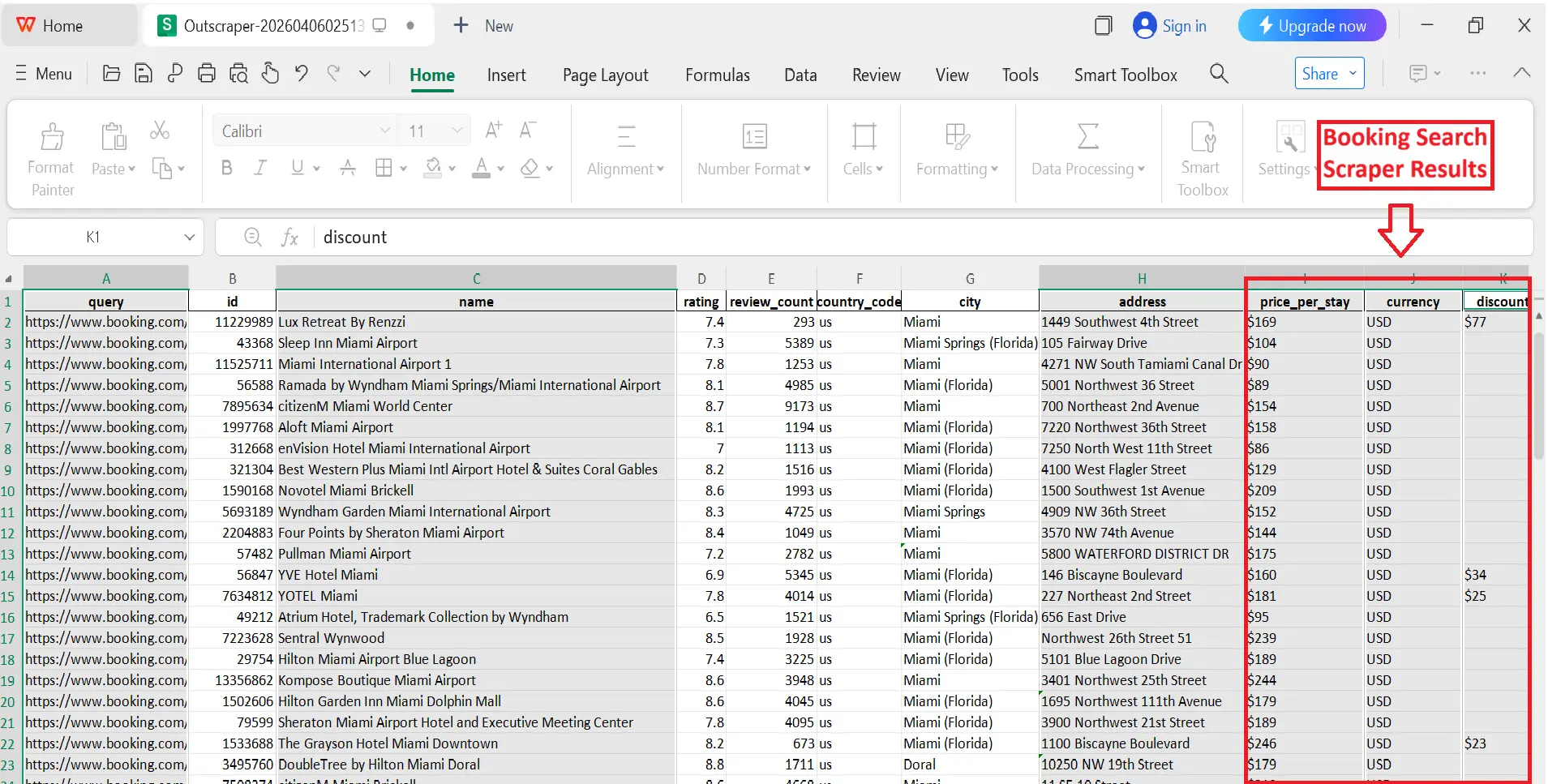
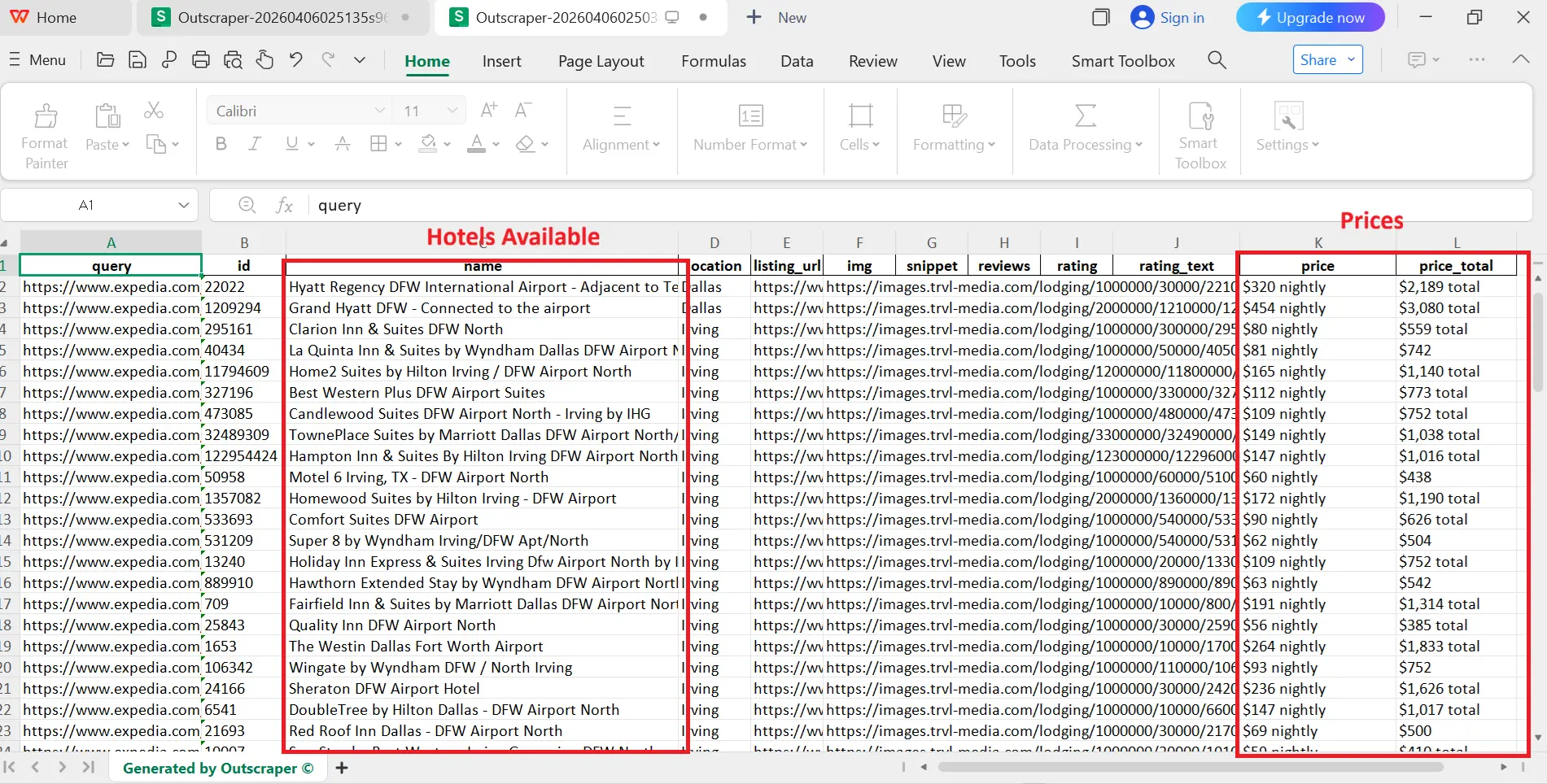
Note: URL is copied from the website into the chosen scraper (Booking Prices Scraper or Expedia Search Scraper).

Step 3: Analyze the Data
Once the data is collected, hotels should analyze it to identify trends and insights. This can involve comparing rates across competitors, assessing the impact of promotions, and evaluating customer feedback.
Step 4: Adjust Pricing Strategies
Based on the analysis, hotels can adjust their pricing strategies. This may involve implementing dynamic pricing, offering targeted promotions, or enhancing service offerings to differentiate from competitors.
Step 5: Monitor and Improve
The hospitality market is dynamic, and continuous monitoring is essential. Hotels should regularly review their scraping setup and adjust parameters as needed to ensure they are capturing relevant data.
Stop relying on manual checks. Use İletişim to collect hotel pricing data directly from Google Maps and booking platforms. Access room rates, reviews, and listing details in a structured format for analysis.
Sonuç
Hotel rate shopping tools support pricing decisions by giving visibility into competitor rates, market trends, and booking behavior. Revenue leakage often comes from pricing errors, poor inventory control, and a lack of real-time data. Without consistent rate monitoring, hotels risk losing revenue and weak market positioning.
Enterprise tools offer deep analytics, integrations, and automation. They fit large operations with multiple properties and advanced forecasting needs, but come with high cost and complexity. Smaller teams may not use all features effectively. Affordable tools focus on rate tracking, alerts, and basic reporting. They reduce cost and simplify use, but require manual analysis and offer limited integration. They fit independent hotels or budget-constrained teams.
Outscraper supports this workflow through flexible data extraction. You collect competitor rates, availability, and review data from multiple sources. You control what data to extract, how often to update it, and how to export it. This supports both enterprise and smaller teams that need direct access to pricing data without full system overhead. Choose tools dayalı your scale and data needs. Use enterprise platforms for automation and analytics. Use affordable tools or scraping workflows for cost control and flexibility.
SSS
SIKÇA SORULAN SORULAR
Hotel rate shopping tools are specialized software solutions designed for the hospitality industry to automate the monitoring and comparison of hotel room rates across competitors and distribution channels, such as Online Travel Agencies (OTAs) like Booking.com or Expedia.
Enterprise hotel rate shopping tools are advanced, scalable platforms tailored for large hotel chains, management groups, and multi-property operators, offering robust features beyond basic tools used by independents
Affordable hotel rate shopping tools are cost-effective software options designed for independent hotels, small chains, or budget-conscious operators to monitor competitor rates across OTAs without enterprise-level pricing.
Revenue leakage in hotels refers to the gradual, often undetected loss of potential profits due to operational inefficiencies, pricing errors, distribution issues, or missed opportunities that prevent hotels from capturing full revenue from bookings, services, and ancillary sales.
Outscraper in the hotel industry is primarily used for large-scale data scraping from platforms like Google Maps, Hotels.com, Booking.com, and Google Hotels to extract structured data on hotel listings, including names, addresses, phone numbers, emails, prices, availability, reviews, ratings, amenities, and photos.