Índice
As avaliações dos clientes vão além de notas e depoimentos. Quando as empresas coletam e organizam os dados dessas avaliações, elas conseguem identificar problemas recorrentes dos clientes, compreender o que os clientes valorizam, comparar as expectativas do mercado e descobrir oportunidades que talvez não sejam evidentes a partir de avaliações individuais.
É aí que analisar informações entra em cena.
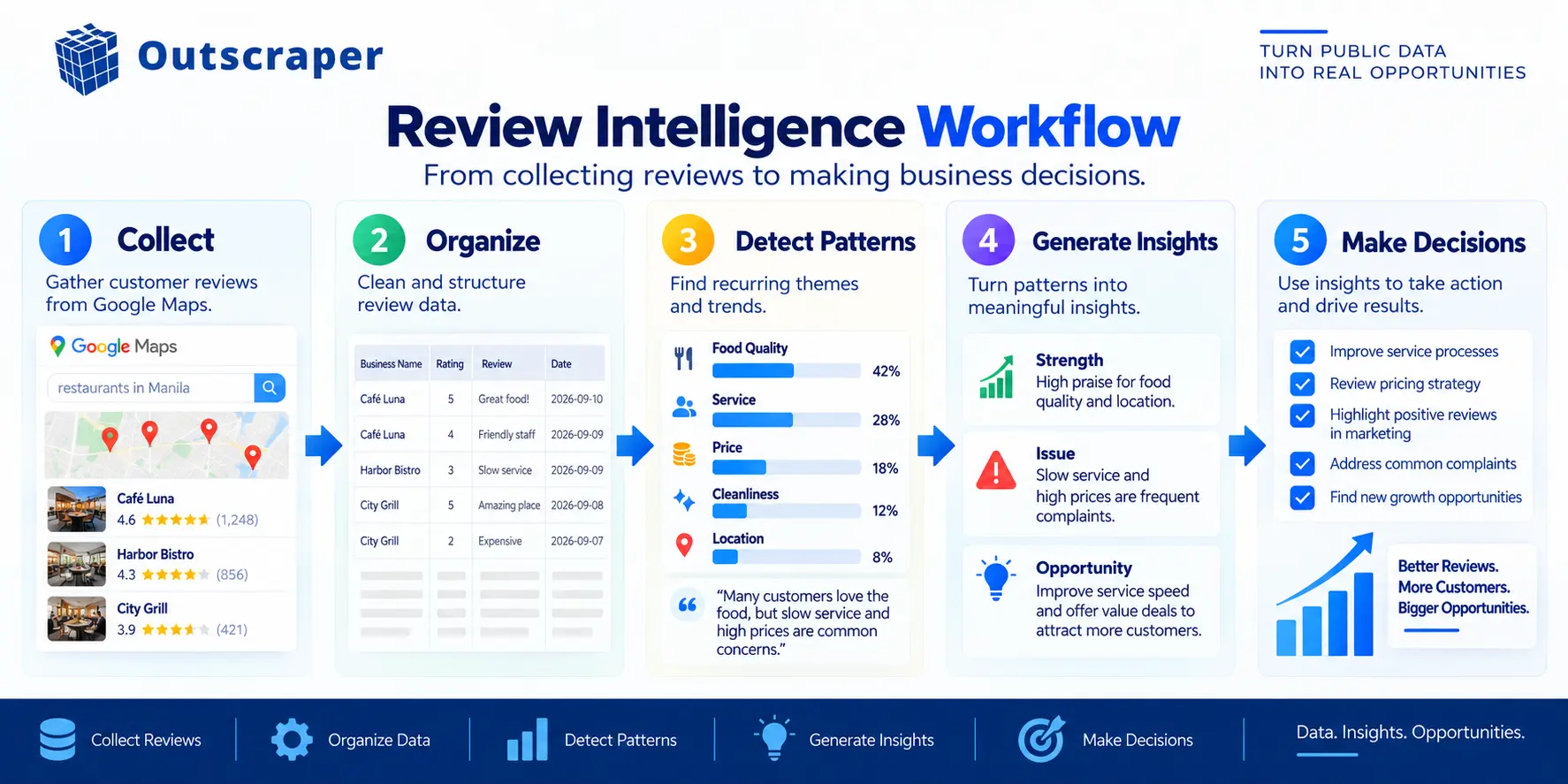
Em vez de tratar as avaliações como algo a ser monitorado uma a uma, o Review Intelligence transforma o feedback dos clientes em um processo estruturado: coletar os dados, identificar padrões significativos, compreender o que esses padrões podem indicar e utilizar as conclusões para orientar as decisões de negócios.
Para equipes que atuam nas áreas de marketing, experiência do cliente, produto, operações, inteligência competitiva ou pesquisa de mercado, isso proporciona uma maneira mais sistemática de aprender com o que os clientes já estão dizendo.
Em termos simples: A análise de avaliações é o processo de transformar dados de avaliações de clientes em padrões, insights de negócios e decisões fundamentadas.
Resposta rápida: O que é o Review Intelligence?
A análise de avaliações é o processo de analisar dados de avaliações de clientes para identificar padrões significativos, compreender o que esses padrões podem significar para uma empresa e orientar as decisões.
Isso vai além de coletar avaliações ou calcular notas médias. Um processo eficaz de análise de avaliações (Review Intelligence) relaciona os comentários individuais a temas mais amplos, como reclamações recorrentes, preferências dos clientes, diferenças em relação aos concorrentes, mudanças nas expectativas ou possíveis problemas operacionais.
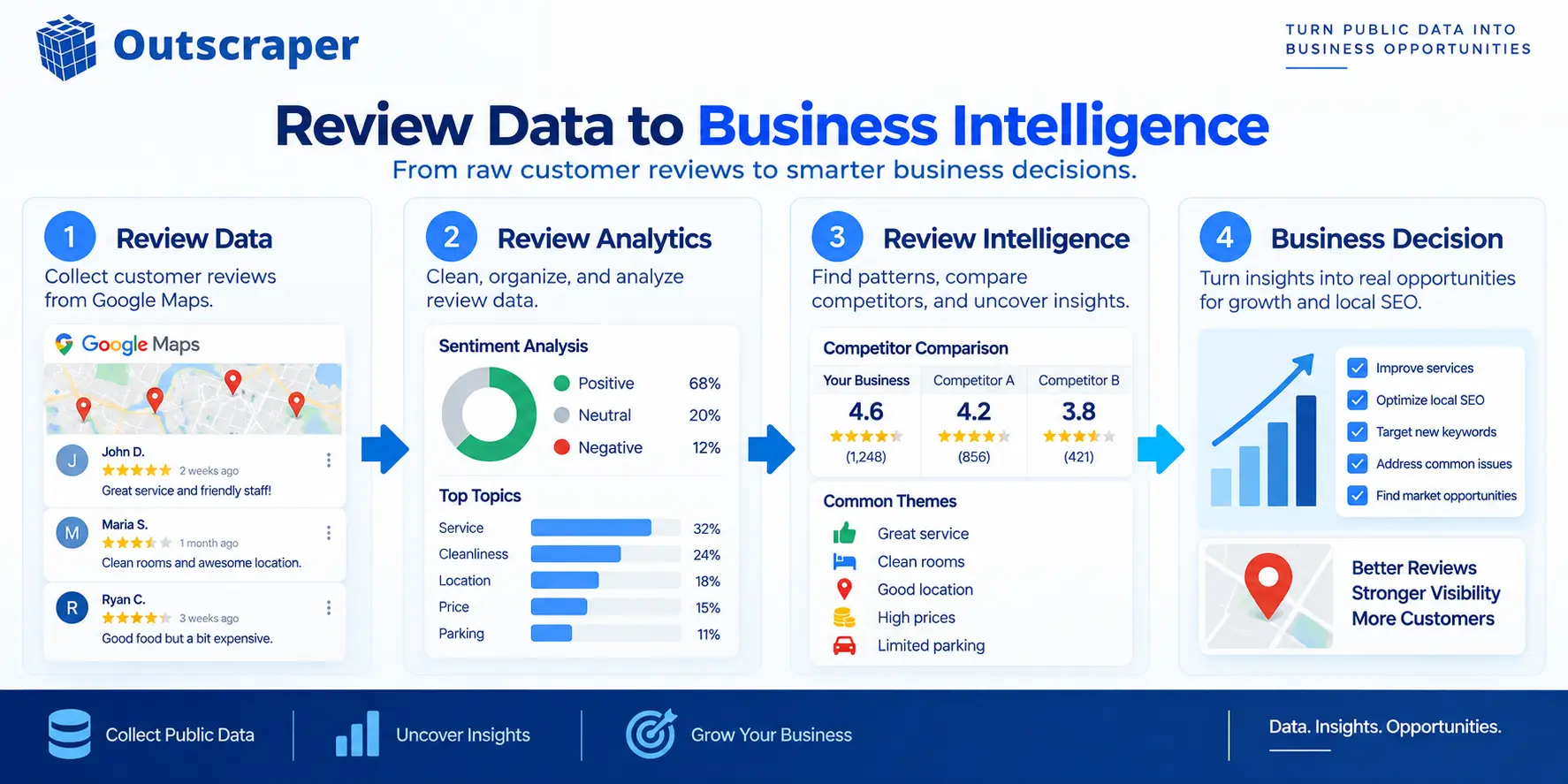
A distinção importante é que Os dados descrevem o que os clientes disseram, a análise identifica o que está acontecendo e a inteligência conecta essas descobertas ao contexto empresarial e às decisões.
Dados de avaliações × Análise de avaliações × Inteligência de avaliações
Analisar dados
Os dados de avaliações são as informações brutas contidas nas avaliações dos clientes.
Dependendo da fonte e do método de coleta, isso pode incluir informações como:
- Texto da resenha
- Classificação
- Data da revisão
- Informações sobre o revisor
- Informações comerciais
- Respostas dos proprietários
- Localização
- Identificadores de revisão
Nesta fase, o objetivo é, principalmente, reunir e organizar o que os clientes disseram.
Por exemplo, um restaurante pode coletar avaliações que contenham comentários sobre a qualidade da comida, a rapidez do atendimento, os preços, o comportamento dos funcionários, o ambiente e a localização.
Os dados, por si só, não explicam automaticamente o que a empresa deve fazer com eles.
Isso exige análise e contexto.
Análise de avaliações
A análise de avaliações tem como foco identificar padrões nos dados das avaliações.
Em vez de ler cada avaliação separadamente, uma empresa pode procurar temas recorrentes, padrões de opinião, classificações, mudanças ao longo do tempo ou diferenças entre empresas.
Por exemplo, suponha que as avaliações mencionem repetidamente:
- Longos tempos de espera
- Processamento lento de pedidos
- Equipe atenciosa
- Alta qualidade dos alimentos
A análise de dados pode revelar que esses temas aparecem repetidamente ao longo do conjunto de dados.
A pergunta passa a ser:
“O que um cliente disse?”
para:
“Que padrões estão surgindo entre muitos clientes?”
Isso facilita a comparação e a priorização das informações.
Análise de Inteligência
O Review Intelligence acrescenta contexto empresarial a essas conclusões analíticas.
O objetivo não é simplesmente descobrir que existe um tema. O objetivo é compreender o que esse tema pode significar para a empresa e que decisão ou investigação ele pode apoiar.
Considere um exemplo hipotético:
Dados da revisão:
Muitos clientes mencionam longos tempos de espera.
Análises:
Reclamações sobre o tempo de espera aparecem repetidamente nas avaliações recentes.
Inteligência:
A velocidade do atendimento pode representar um ponto fraco recorrente na experiência do cliente que merece ser investigado.
Decisão empresarial:
A empresa poderia analisar os processos relacionados à equipe, à programação, ao atendimento de pedidos ou aos serviços antes de decidir qual mudança operacional testar.
A decisão final ainda requer critério empresarial e, quando for o caso, provas adicionais.
É essa distinção que faz com que o Review Intelligence seja mais do que simplesmente contar avaliações ou calcular o sentimento.
É difícil identificar padrões significativos quando os dados das avaliações estão espalhados por páginas individuais. A coleta de avaliações estruturadas proporciona à sua equipe um conjunto de dados que pode ser organizado, comparado e analisado como parte de um fluxo de trabalho repetível de Inteligência de Avaliações.
O que a análise de avaliações pode revelar?
As avaliações dos clientes podem revelar padrões que são difíceis de perceber quando os comentários são analisados uma avaliação por vez.
Problemas recorrentes dos clientes pode indicar áreas em que os clientes enfrentam dificuldades de forma recorrente.
Isso pode incluir:
- Tempos de espera
- Qualidade do produto
- Atendimento ao cliente
- Comunicação
- Preços
- Disponibilidade
- Entrega
- Limpeza
- Processos de reserva ou pedido
Uma única reclamação pode ser um caso isolado. Um tema recorrente em um conjunto de dados maior pode merecer uma análise mais detalhada.
Preferências dos clientes pode ser tão esclarecedor quanto um feedback negativo.
Os clientes podem elogiar repetidamente aspectos específicos:
- Produtos
- Serviços
- Funcionalidades
- Comportamentos dos funcionários
- Lugares
- Experiências
- Relações preço-valor
Esses padrões podem ajudar as equipes a entender quais aspectos de uma oferta os clientes já valorizam.
Pontos fortes e lacunas dos concorrentes também podem surgir a partir de comparações entre análises.
A comparação dos temas das avaliações entre as empresas pode revelar em que aspectos os clientes descrevem uma empresa de maneira diferente da outra.
Por exemplo, um concorrente pode receber elogios frequentes pelo atendimento, enquanto outro recebe mais comentários sobre a variedade de produtos.
Essas observações não comprovam automaticamente por que uma empresa apresenta um desempenho diferente, mas podem sugerir questões úteis para pesquisas futuras.
Para os leitores interessados especificamente em pesquisa local e análise da concorrência, consulte nosso guia sobre Análise de avaliações da concorrência para SEO local. Esse artigo se concentra especificamente na comparação de avaliações da concorrência para o SEO local, em vez da metodologia mais ampla de “Review Intelligence” abordada aqui.
Mudanças ao longo do tempo pode fornecer outro sinal útil.
Uma empresa pode perceber que uma reclamação que era incomum há alguns meses está se tornando cada vez mais frequente.
Essa mudança poderia justificar uma investigação mais aprofundada.
Para empresas que precisam acompanhar as novas avaliações ao longo do tempo, Rastreador de avaliações do Google Maps pode dar suporte a um fluxo de trabalho de cobrança recorrente.
Sinais do mercado também podem surgir quando as empresas analisam grandes conjuntos de comentários gerados pelos clientes.
As avaliações podem contribuir para a pesquisa de mercado, revelando o que os clientes mencionam repetidamente sobre produtos, serviços, locais e concorrentes.
Para um exemplo mais detalhado, consulte Como usar 10.000 avaliações do Google Maps para pesquisa de mercado local.
Como transformar dados de avaliações em insights úteis
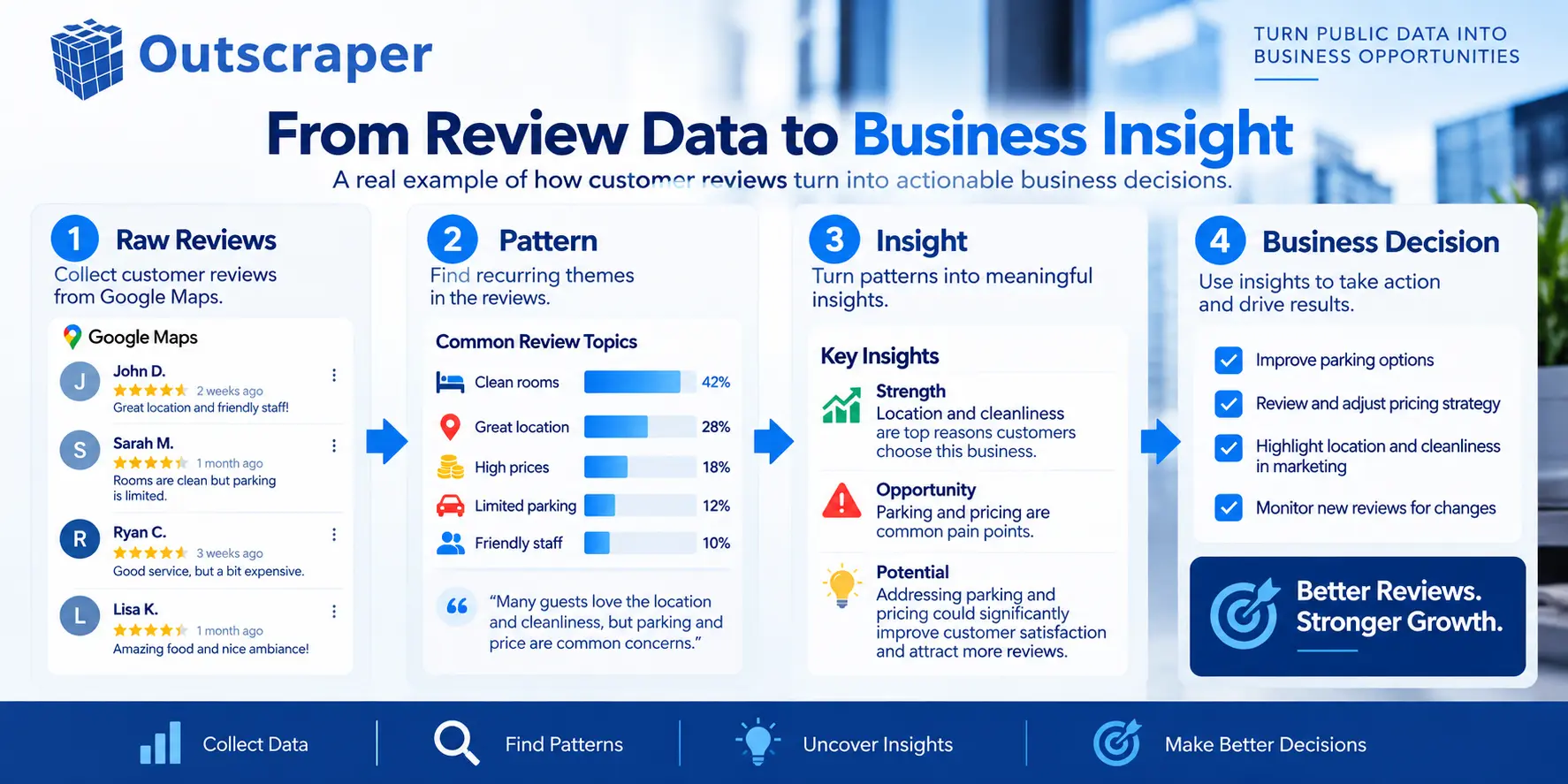
O passo importante é passar de padrões para significado.
Um conjunto de dados pode conter milhares de avaliações, mas um conjunto de dados extenso não gera automaticamente uma percepção útil.
O fluxo de trabalho precisa de uma questão de negócios clara e de uma maneira de interpretar os padrões dentro do contexto.
De padrões a insights
Comece com uma pergunta específica.
Em vez de perguntar:
“O que dizem os clientes?”
pergunte algo mais útil, como:
“Quais são os problemas que os clientes mencionam repetidamente em relação ao nosso serviço?”
ou:
“O que os clientes elogiam nos concorrentes que devemos analisar?”
Em seguida, organize os dados da revisão em torno de temas relacionados a essa questão.
Por exemplo:
Comentários sobre a revisão do Raw
“Tive que esperar 40 minutos.”
“O atendimento foi muito lento.”
“A comida estava boa, mas a espera foi muito longa.”
Padrão detectado
Vários clientes mencionam atrasos no atendimento.
Possível percepção
A velocidade do atendimento pode ser um aspecto recorrente da experiência do cliente que merece ser analisado.
A conclusão deve permanecer proporcional às evidências. Os dados da análise podem revelar padrões, mas não determinam automaticamente a causa subjacente.
Das percepções às decisões
Assim que um padrão significativo for identificado, relacione-o a uma possível ação comercial.
Um modelo útil é:
Padrão → Interpretação → Pergunta → Decisão
Por exemplo:
Padrão: Os clientes mencionam repetidamente a lentidão do atendimento.
Interpretação: A velocidade do serviço parece ser uma questão recorrente no conjunto de dados de avaliações.
Pergunta: O problema está relacionado à equipe, à programação, ao volume de pedidos ou a outra parte do processo?
Decisão: Analise o processo operacional em questão e determine se uma mudança deve ser testada.
Isso evita um erro comum: passar diretamente de um comentário de revisão para uma decisão empresarial importante sem antes validar a questão subjacente.
Como as empresas utilizam a inteligência de avaliações
A análise de feedback pode ser útil para diferentes equipes, pois o feedback dos clientes contém informações relevantes para várias áreas de uma empresa.
Equipes de marketing É possível utilizar padrões de avaliações para compreender a linguagem que os clientes usam naturalmente ao descrever produtos, serviços, pontos fortes e problemas. Isso pode ajudar a orientar a elaboração de mensagens e a pesquisa de conteúdo.
Equipes de experiência do cliente podem identificar reclamações recorrentes e experiências positivas que merecem ser investigadas. Em vez de responder apenas a avaliações individuais, podem examinar padrões mais amplos nos comentários dos clientes.
Equipes de produto é possível procurar comentários recorrentes sobre recursos do produto, funcionalidades ausentes, problemas de usabilidade ou aspectos que os clientes sempre valorizam.
Equipes de operações pode investigar problemas recorrentes de atendimento, atrasos, questões de disponibilidade ou reclamações relacionadas a processos.
Equipes de inteligência competitiva pode comparar o feedback dos clientes entre as empresas para identificar diferenças nos pontos fortes e fracos percebidos, bem como nas expectativas dos clientes.
Pesquisadores de mercado podem utilizar conjuntos de dados de avaliações como uma fonte de informações geradas pelos clientes ao analisar produtos, serviços, locais ou mercados.
O importante é que a Review Intelligence não pertence a apenas um departamento.
Os mesmos dados de análise subjacentes podem servir de base para diferentes questões, dependendo da equipe que os utiliza.
Por exemplo, uma reclamação recorrente sobre atrasos na entrega poderia estar relacionada a:
- Operações que investigam o cumprimento
- Experiência do cliente: investigação sobre a insatisfação
- Marketing: avaliação das expectativas dos clientes
- Inteligência competitiva: comparação entre concorrentes
- Equipes de produto analisando recursos relacionados à entrega
O valor advém da conexão entre o padrão de análise e a questão de negócios correta.
Como criar um fluxo de trabalho repetível de análise de avaliações
Um processo repetível torna o Review Intelligence mais útil do que uma análise pontual de avaliações.
1. Definir a questão de negócios
Comece pela decisão ou pelo problema que você está tentando entender.
Alguns exemplos são:
- Sobre o que os clientes reclamam repetidamente?
- O que os clientes mais valorizam?
- De que maneira os concorrentes são percebidos de forma diferente?
- Quais problemas estão se tornando mais comuns?
- Quais temas relacionados a produtos ou serviços merecem ser investigados?
Uma pergunta específica facilita a identificação dos dados que realmente importam.
2. Reunir avaliações relevantes
Reúna avaliações que correspondam à questão de negócios, ao mercado, à localização, aos concorrentes, à categoria de produto ou ao período em análise.
Para pesquisas com base no Google Maps, Coletor de avaliações do Google Maps pode fornecer dados de revisão estruturados que, em seguida, podem ser exportados e analisados.
O objetivo não é simplesmente coletar o maior número possível de avaliações. O conjunto de dados deve ser relevante para a questão que está sendo investigada.
3. Organizar os dados
Fica mais fácil trabalhar com o texto bruto da revisão quando os campos relacionados são estruturados de maneira consistente.
Dependendo da tarefa de pesquisa, organize informações como:
- O negócio
- Localização
- Classificação
- Data da revisão
- Texto da resenha
- Temas de revisão
- Sentimento
- Produto ou serviço mencionado
- Concorrente
- Período
Uma boa organização facilita a comparação e a análise.
4. Identificar padrões
Procure temas recorrentes em todo o conjunto de dados, em vez de se concentrar apenas em comentários individuais.
Você pode identificar:
- Reclamações mais frequentes
- Atributos frequentemente elogiados
- Solicitações comuns sobre produtos
- Problemas recorrentes com o serviço
- Diferenças entre os concorrentes
- Evolução dos temas das revisões ao longo do tempo
Nesta fase, é importante distinguir entre um padrão recorrente e um comentário isolado.
5. Validar os resultados
Antes de transformar um padrão em uma conclusão comercial, verifique as evidências.
Pergunte:
- Esse tema aparece várias vezes?
- Isso se concentra em um determinado período?
- Isso afeta uma empresa ou várias?
- Será que esse padrão poderia ter sido causado por um evento específico?
- Outras evidências disponíveis corroboram essa interpretação?
A validação ajuda a evitar que as empresas reajam de forma exagerada a avaliações individuais ou a padrões enganosos.
Ao utilizar as avaliações do Google Maps, lembre-se de que o Google afirma que as avaliações são contribuições públicas dos usuários e que o Google modera as avaliações e o conteúdo relacionado de acordo com suas políticas. Os dados das avaliações devem, portanto, ser tratados de acordo com os termos da plataforma aplicáveis, os requisitos de privacidade e outras obrigações legais ou contratuais. Consulte Orientações do Google sobre avaliações e classificações no Google Maps para obter informações atualizadas.
6. Gerar o insight
Agora, relacione o padrão validado ao contexto de negócios.
O objetivo é responder:
Por que esse padrão é importante?
Por exemplo, reclamações repetidas sobre a disponibilidade podem indicar mais do que apenas insatisfação. Dependendo do contexto, elas podem apontar para problemas relacionados ao estoque, ao agendamento, à demanda ou à comunicação que exigem uma investigação mais aprofundada.
Os dados da análise fornecem o sinal; o contexto empresarial ajuda a determinar seu significado.
7. Decida o que vai acontecer a seguir
Uma percepção se torna útil quando orienta o próximo passo adequado.
Isso poderia significar:
- Investigação de um problema operacional
- Testando uma melhoria no produto
- Modificação de um processo de experiência do cliente
- Análise do posicionamento dos concorrentes
- Atualização das mensagens de marketing
- Realização de pesquisas de mercado adicionais
- Acompanhar se um problema sofre alterações ao longo do tempo
Nem toda percepção exige uma ação imediata. Às vezes, o próximo passo correto é simplesmente coletar mais evidências.
8. Repita
A análise de inteligência funciona melhor como um processo contínuo, e não como um único relatório.
Novas avaliações podem mudar o panorama.
Para empresas que precisam de monitoramento contínuo das revisões, Rastreador de avaliações do Google Maps pode dar suporte a um fluxo de trabalho de coleta recorrente, de modo que novos dados de revisão possam ser incorporados a análises futuras.
Com o tempo, isso cria um ciclo de retroalimentação:
Coletar → Organizar → Identificar padrões → Gerar insights → Tomar decisões → Coletar novamente
Perguntas frequentes
Perguntas e respostas mais frequentes
A análise de avaliações concentra-se na identificação de padrões nos dados das avaliações, como temas recorrentes, notas, tom das avaliações ou mudanças ao longo do tempo. O Review Intelligence vai um passo além, relacionando esses padrões ao contexto empresarial e a questões que possam exigir investigação ou ação.
Sim. As empresas podem comparar os temas das avaliações entre concorrentes para compreender as diferenças nas experiências dos clientes, os pontos fortes mais citados, as reclamações recorrentes e as áreas que possam merecer uma investigação mais aprofundada. Para uma aplicação mais específica de SEO local, consulte nosso guia sobre Análise de avaliações da concorrência para SEO local
O método de coleta depende da questão de pesquisa e da fonte da avaliação. No caso das avaliações do Google Maps, Coletor de avaliações do Google Maps pode fornecer dados estruturados de avaliações que podem ser exportados e analisados. O importante é coletar dados que sejam relevantes para as empresas, locais, concorrentes, períodos ou questões que estão sendo investigadas.
Não existe um cronograma único que sirva para todas as empresas. Uma análise pontual pode ser adequada para um projeto de pesquisa específico, enquanto empresas que lidam com feedback dos clientes em constante mudança podem se beneficiar de análises recorrentes. Rastreador de avaliações do Google Maps pode ajudar as empresas a coletar e acompanhar novas avaliações ao longo do tempo, para que essas mudanças possam ser incorporadas em análises futuras.
Colete dados estruturados de avaliação, identifique os padrões relevantes e utilize essas descobertas como ponto de partida para uma análise de negócios mais aprofundada.